Guides
How to Choose an Oral Surgeon
Choosing an oral surgeon usually starts with understanding the process. In simple terms, you compare credentials, meet one or more surgeons for a consultation, review the proposed plan and costs, and decide whether you feel comfortable moving forward.

What choosing an oral surgeon usually looks like
Oral and maxillofacial surgeons handle procedures such as wisdom teeth removal, dental implants, surgical extractions, bone grafting, corrective jaw surgery, and facial injury repair. The first step is not picking the first name you see. It is learning what kind of procedure has been discussed, then finding a surgeon with the right training and experience for that type of care.
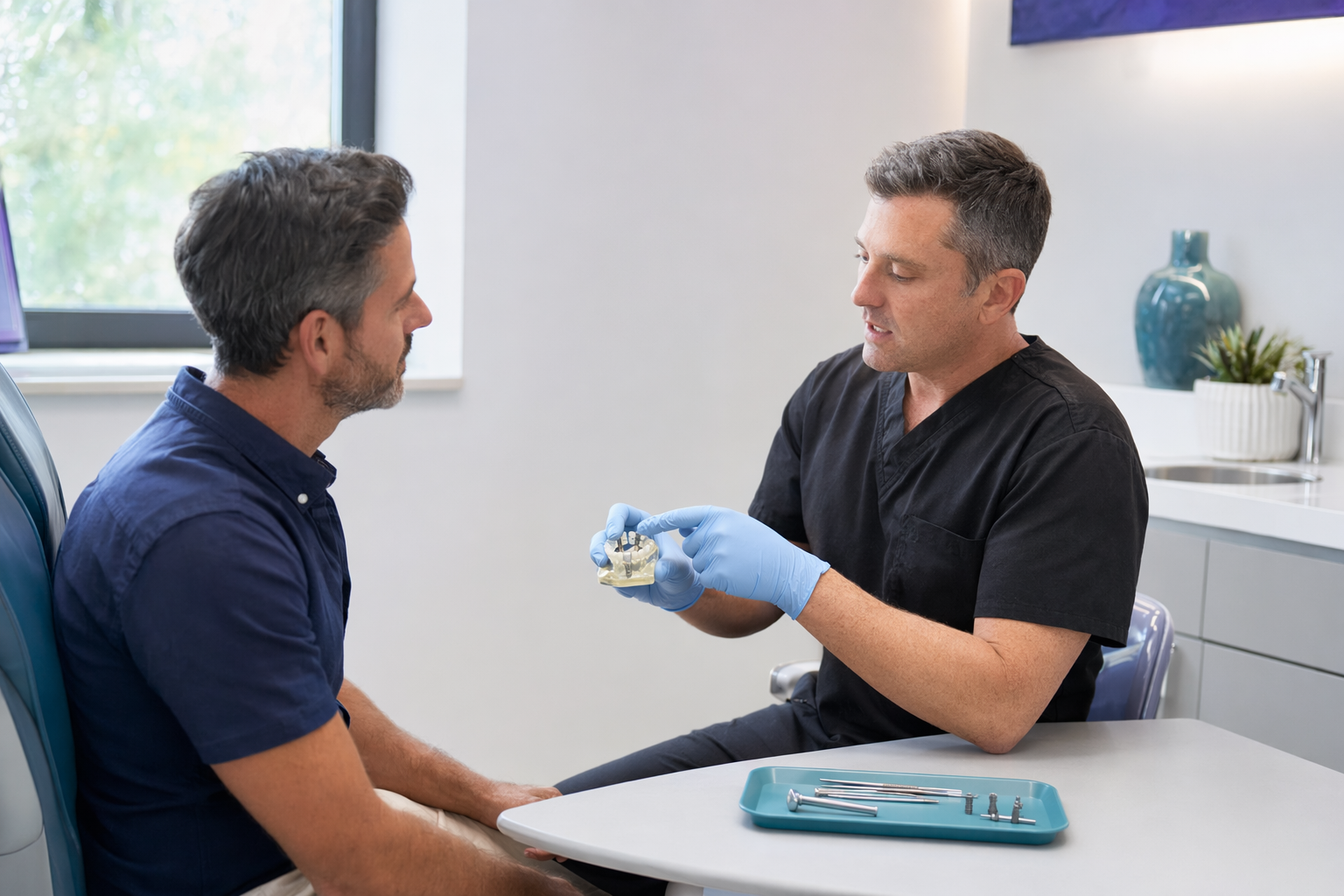
In many cases, the process is straightforward. First, you gather a few names. Next, you schedule a consultation. Then the surgeon explains the problem in general terms, reviews options that may be appropriate, discusses sedation choices, outlines typical recovery, and gives a written treatment plan and cost estimate. After that, you decide whether to schedule, get more information, or seek a second opinion.
If you are still early in the process, it may help to browse common treatments on our procedures page. That can make consultations easier to follow, especially if English is not your first language.
- Look for a surgeon who treats your type of problem often
- Expect a consultation before scheduling surgery
- Ask for the plan and full cost in writing
Start with board certification and credential checks
A strong place to begin is board certification. In the US, many patients look specifically for a board-certified oral and maxillofacial surgeon. This shows the surgeon has completed specialty training and met additional standards. It is still smart to verify credentials yourself rather than relying only on an ad or office listing.
You can also ask where the surgeon completed residency training, whether they hold hospital privileges, and how often they perform the procedure being discussed. For some people, this matters just as much as office location or scheduling speed. You are allowed to slow down and confirm details before saying yes.
A good consultation should feel clear, not rushed. The surgeon or staff should explain things in plain language. If you need help in another language, ask. Language support is often available, and our matching service is free if you want help finding a surgeon to contact through /get-matched/.
- Verify board certification yourself
- Ask about residency training and hospital privileges
- Confirm the office can explain the plan in a language you understand
What to ask at the consultation
A consultation is your chance to compare surgeons, not just hear a recommendation. It is reasonable to ask what the procedure involves, why it may be suggested, what alternatives might exist, what sedation options are offered, and what risks and benefits are commonly discussed for a case like yours. This is general education, and your own plan should come from the surgeon who evaluates you.
Recovery should also be explained honestly. Ask what a typical healing timeline looks like, what is commonly normal after surgery, when patients are usually able to return to school or work, and when they should contact the surgeon's office. Recovery times are not a promise. Everyone heals differently.
You may want to bring a short list of questions so you do not forget anything. That can help if you feel nervous or overwhelmed.
- How often do you perform this procedure?
- What sedation options do you offer, and how are they explained?
- What is the typical recovery timeline?
- When should a patient call the office after surgery?
Compare cost, sedation, and the written treatment plan
Cost matters, and it is best discussed clearly before scheduling. Oral surgery costs in the US vary widely based on the procedure, complexity, imaging, bone grafting or other added steps, sedation type, insurance, and your area. For example, simple oral surgery visits may cost far less than complex jaw surgery. The real number depends on the case.
As a very general guide, many common office-based oral surgery procedures can range from a few hundred dollars to several thousand dollars, while larger hospital-based procedures can be much higher. These are ranges, not quotes. Ask for the full expected cost in writing, including consultation fees, imaging, facility charges if any, sedation or anesthesia fees, follow-up visits, and whether separate bills may come from other providers.
Sedation is also worth comparing carefully. Some offices offer several options, while others may be more limited. A surgeon should explain what is commonly used for the type of procedure being discussed, what the monitoring process looks like, and what instructions apply before and after surgery. You can read more educational topics in our guides section before your visit.
- Get the full expected cost in writing before scheduling
- Ask whether there may be separate anesthesia or facility bills
- Cost ranges are not personal quotes
Second opinions, warning signs, and getting matched for free
A second opinion is always reasonable. Many people get one if the treatment plan seems large, the costs are very different between offices, or they simply want more confidence before making a decision. A professional office should not pressure you for asking questions or wanting time to think.
Some warning signs are simple. Be cautious if an office will not clearly explain credentials, avoids giving the plan and fees in writing, pressures you to schedule immediately, or does not answer basic questions about recovery, sedation, or follow-up care. You are the decision-maker.
If you want help finding surgeons to contact, our matching service is free to patients. We can help you connect with oral and maxillofacial surgeons in your area, and help is often available in multiple languages. You can start here: /get-matched/.
If there is heavy bleeding, trouble breathing or swallowing, or a serious facial injury, call your local emergency number first.
- A second opinion is normal, especially for complex or costly plans
- Do not feel rushed into scheduling
- For emergencies, call your local emergency number first

Choose a board-certified oral surgeon, verify credentials yourself, compare consultations and written costs, ask about sedation and recovery, and get a second opinion if you want one.
Common questions
Why does board certification matter?
Many patients look for a board-certified oral and maxillofacial surgeon because it shows specialty training and additional professional standards. It is still important to verify credentials yourself.
Is it okay to get a second opinion before oral surgery?
Yes. A second opinion is a normal part of making an informed decision, especially if the treatment plan is complex, expensive, or unclear.
What should I ask about sedation?
Ask what sedation options the office offers, how they are explained, what monitoring is used, and what typical before-and-after instructions apply.
How much does oral surgery cost?
Costs vary by procedure, complexity, sedation type, insurance, and location. Any numbers you see online should be treated as ranges, not quotes. Ask for the full cost in writing.
Can Oral Surgery Path tell me which surgery I need?
No. Oral Surgery Path is an educational and free matching service, not a clinic or provider. Decisions about diagnosis and treatment are between you and a licensed board-certified surgeon.
Can I get help in my own language?
Often, yes. Language support may be available depending on the office, and our free matching service can help you find surgeons to contact.