Procedures
Dental implants: how the surgery works, healing, and cost
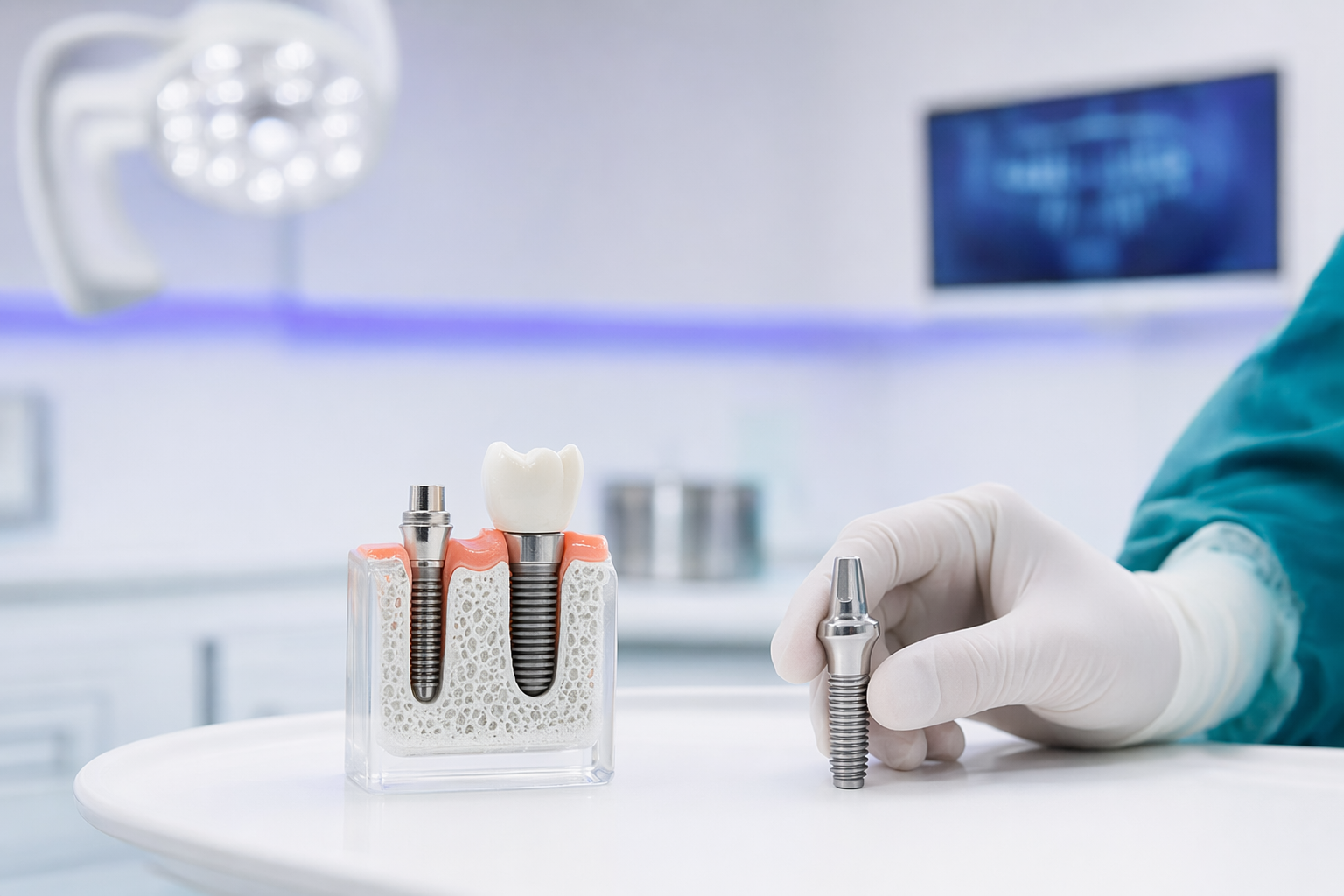
A dental implant is a small titanium or ceramic post placed in the jawbone to act like a tooth root. In simple terms, the surgery usually happens in stages: evaluation, implant placement, healing, and then the final tooth replacement placed by the dental team.
What a dental implant procedure usually involves
Dental implant treatment is not usually one single appointment from start to finish. In many cases, it begins with an exam, imaging, and a discussion of the plan. The surgeon looks at bone level, nearby nerves or sinuses, and whether any other steps may be needed before or during implant placement.
During the surgical step, an oral and maxillofacial surgeon places the implant into the jawbone. The gum is then closed around or over the implant, depending on the case. After that, the bone and implant are given time to heal together. This process is often called osseointegration.
Once healing is far enough along, the next stage may include a small connector piece called an abutment and then the visible tooth replacement, often called a crown. In some cases, timing is different. Some patients have an implant placed where a tooth was recently removed. Others need more healing time or a bone graft first. A board-certified oral and maxillofacial surgeon can explain which approach may be appropriate in your situation.
- Typical stages: consultation, imaging, implant placement, healing, final restoration
- Some cases need tooth removal first
- Some cases need bone grafting or sinus-related procedures before an implant
Before surgery: consultation, imaging, and treatment planning
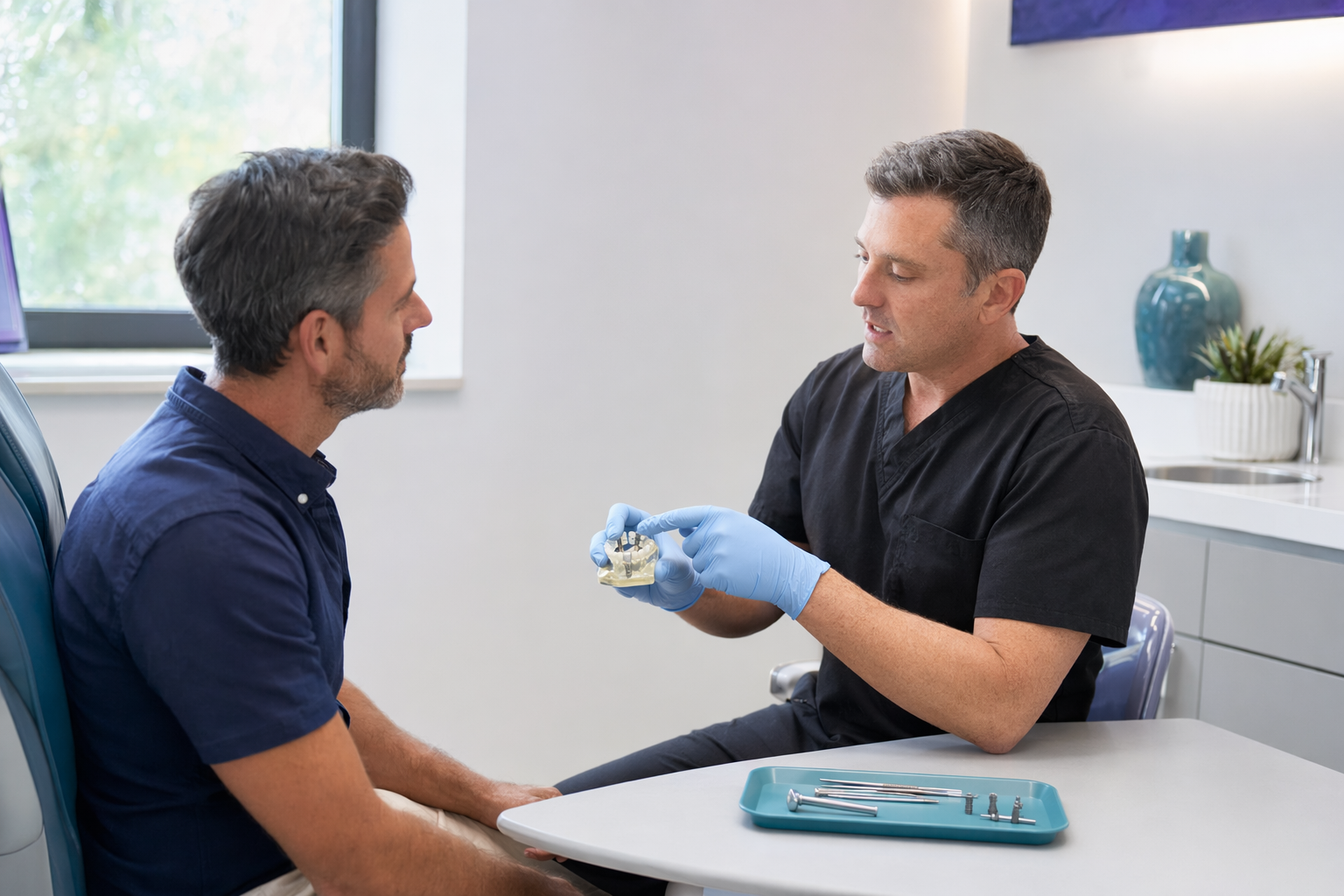
A consultation is the time to slow down and get clear answers. The surgeon may review your imaging, explain the procedure steps, discuss possible risks, and talk about the likely timeline. This is also a good time to ask whether the surgeon is board-certified and to verify credentials yourself.
If you are comparing options, a second opinion is reasonable. Dental implants can be straightforward in some people and more complex in others. The exact plan may depend on how long the tooth has been missing, bone volume, gum condition, and where the implant will go.
You can also ask about who does each part of treatment. In many cases, the oral surgeon places the implant and a general dentist or prosthodontist provides the final crown. In other cases, one office coordinates more of the process. If you want help finding surgeons to compare, get matched is free, and language support is often available.
- Ask for the treatment plan in writing
- Ask for the full expected cost in writing before scheduling
- Ask who places the implant and who places the final crown
- A second opinion is always okay
Bone grafting and when extra steps may be part of implant surgery
Not every implant needs extra procedures, but some do. If the jawbone is too thin or too short in the planned area, a surgeon may discuss bone grafting. In the upper back jaw, sinus-related bone procedures are sometimes part of planning because the sinus can sit close to where implants are placed.
Bone grafting can happen before implant placement or at the same time, depending on the case. This can add cost and healing time. It can also change how many visits are needed. That is one reason a written plan matters.
The details vary a lot from person to person, so online information should be treated as background only. This page is general education, not a diagnosis or treatment recommendation. Your own surgeon is the right person to explain whether any grafting is being considered and why.
- Bone grafting may add time, visits, and cost
- Same-day implant placement is possible in some cases, but not all
- The final plan depends on anatomy and the surgeon's evaluation
Sedation, the day of surgery, and what recovery is usually like
Implant surgery may be done with local anesthesia alone, or with additional sedation depending on the procedure and the patient. Common options may include numbing medicine, oral medication, nitrous oxide, IV sedation, or general anesthesia in some settings. You can read more in this guide: sedation options for oral surgery.
On the day of surgery, the visit is often shorter than people expect for a single straightforward implant, but the full appointment length depends on the number of implants, whether teeth are removed, and whether grafting is done. The office should explain what to expect before and after the procedure.
Typical healing after implant placement often includes mild to moderate soreness, swelling, and some minor oozing for a short time. Many people return to desk-type work quickly, but everyone heals differently. Full integration of the implant with bone usually takes longer than the first few days of feeling better.
Call the surgeon's office if you have concerns about worsening pain, increasing swelling after the first few days, fever, bad taste or drainage, or anything that feels unusual to you. For heavy bleeding, trouble breathing or swallowing, or a serious facial injury, call your local emergency number first.
- Short-term soreness and swelling are common
- Healing of the bone usually takes longer than surface gum healing
- Recovery times are typical, not a promise
How long the full process takes
People often ask, "How long does a dental implant take?" The honest answer is that it depends on the case. A simple implant in healthy bone may move faster than a case that includes extraction, bone grafting, or a longer healing period.
In many situations, the surgery itself is just one step inside a longer process. The gum may look healed before the implant is fully ready for the final tooth. That is normal. The visible end point, the crown, often happens only after the surgeon and restorative dentist decide the site is ready.
A simple timeline might be: consultation and imaging, implant placement, a healing period over the next several weeks to months, and then the final restoration. Some timelines are shorter. Some are much longer. Ask the office to explain the expected sequence for your case and put it in writing so you know what you are agreeing to before scheduling.
- A single visit is rarely the whole treatment from start to finish
- Healing and final restoration often happen in separate stages
- Written timelines help avoid surprises
Real dental implant cost in the US
The cost of a dental implant is usually discussed in parts, because the total may include several different services. A single implant post alone may be around $1,500 to $3,500 in many US markets. The abutment and crown can add roughly $1,000 to $3,000 or more. If imaging, sedation, tooth removal, or bone grafting are needed, the total can rise.
For many patients, a realistic total range for one implant with the surgical and restorative parts combined is often about $3,000 to $6,500+. More complex cases can exceed that. These are ranges, not quotes. The real number depends on the exact procedure, the type of restoration, sedation choice, insurance benefits, and where you live.
If you are comparing surgeons, ask for a written estimate that clearly shows what is included and what is not. Ask whether the quote covers the implant, abutment, crown, imaging, follow-up visits, sedation, temporary tooth options, and any grafting. You can also review general costs information and browse other procedures to understand how implant treatment fits into the bigger picture.
Most important, choose a board-certified oral and maxillofacial surgeon when surgery is involved, verify credentials yourself, and do not feel rushed. Matching through Oral Surgery Path is free to the patient, and it can help you compare offices, ask about language support, and get the plan and price in writing before you decide.
- Single implant total often falls around $3,000 to $6,500+
- Bone grafting, sedation, and complex restoration can increase cost
- Cost ranges are not quotes

What to expect with oral surgery
Most procedures follow this path. Your surgeon will confirm the details for your case.
- 1 Consultation & imaging
The surgeon examines you, reviews X-rays or a 3D scan, explains your options, and answers your questions. Ask about board certification, the plan, sedation, and the full cost before you agree to anything.
- 2 Choosing sedation
Many oral surgeries use local anesthesia, IV sedation, or general anesthesia depending on the case and your comfort. The surgeon explains the options, the risks, and how you'll feel during and after.
- 3 The procedure
On the day, the surgical team prepares you, confirms the plan, and performs the procedure. Most outpatient oral surgeries take from under an hour to a few hours depending on complexity.
- 4 Recovery & aftercare
You go home the same day with written aftercare instructions for swelling, pain, diet, and rest. The surgeon explains what's normal and exactly when to call if something isn't.
- 5 Follow-up
A follow-up visit checks healing and removes sutures if needed. For implants or jaw surgery, the full timeline can run weeks to months as the bone heals.
Dental implants are usually a multi-step process with surgery, healing, and a final tooth, and the best next step is to compare board-certified surgeons, ask clear questions, and get the plan and full cost in writing.
Common questions
Is getting a dental implant painful?
The procedure is usually done with anesthesia and sometimes sedation, so the goal is to keep the patient comfortable during surgery. Some soreness and swelling after surgery are common, but the experience varies from person to person.
How long does a dental implant take from start to finish?
It depends on the case. Some straightforward cases move faster, while others take longer because of healing time, extraction sites, or bone grafting.
Do all dental implants need bone grafting?
No. Some cases have enough bone already, and some do not. The need for grafting depends on the location and the surgeon's evaluation.
How much does one dental implant cost?
A common overall range for one implant case is about $3,000 to $6,500 or more, depending on the implant, crown, imaging, sedation, grafting, insurance, and your area. These are ranges, not quotes.
Should I get a second opinion before implant surgery?
A second opinion is always reasonable, especially if the plan is complex, the cost is high, or you do not feel fully informed.
What should I ask at an implant consultation?
Ask whether the surgeon is board-certified, what steps are planned, whether grafting is being discussed, what sedation options exist, what the risks and alternatives are, how long the process may take, and what the full expected cost includes.