Procedures
Corrective jaw surgery: what's involved, recovery, and cost
Corrective jaw surgery, also called orthognathic surgery, is an operation used to move the upper jaw, lower jaw, chin, or a combination of these so the jaws line up better. It is usually planned carefully over time with imaging, bite records, and orthodontic treatment, then performed by a board-certified oral and maxillofacial surgeon in a hospital or surgery center.
What corrective jaw surgery involves
In simple terms, corrective jaw surgery changes the position of the jaw bones. The goal may be to improve how the teeth fit together, how the jaws balance, facial symmetry, speech, chewing, or airway-related issues. The exact plan depends on the person. In many cases, the surgeon works together with an orthodontist.
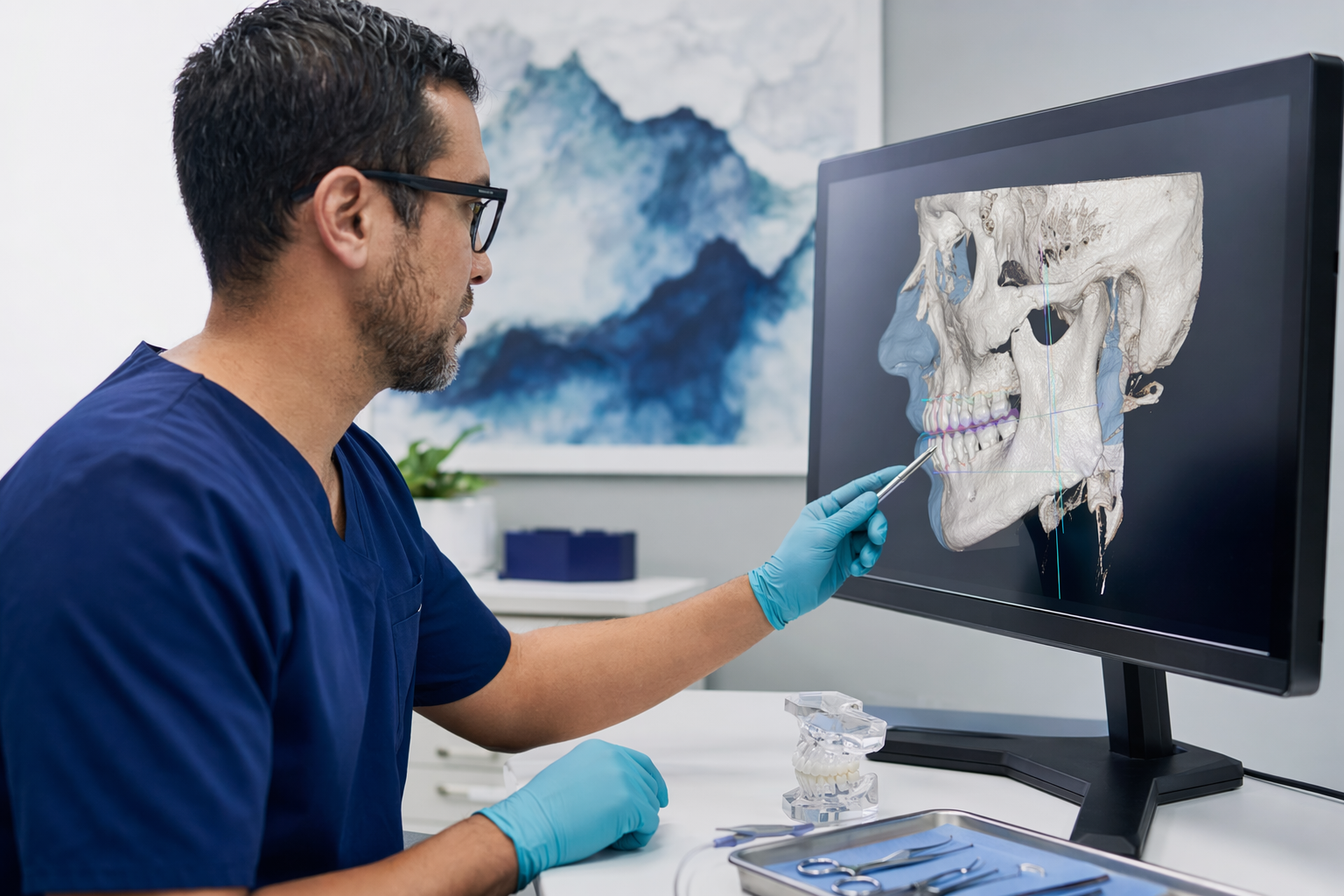
A typical process has several steps. First comes a consultation and records. This may include X-rays, 3D imaging, photos, dental models, and a review of your bite. Then there is a treatment plan. Some people have braces or clear aligner preparation before surgery. The operation itself is usually done from inside the mouth, so visible facial scars are often limited or avoided, depending on the case.
During surgery, the surgeon may reposition the upper jaw, the lower jaw, the chin, or more than one area. Small plates and screws are commonly used to hold the bones in the planned position while they heal. After surgery, follow-up visits help the team check healing and bite changes over time.
If you are still learning the basics of oral surgery options, the overview at /procedures/ can help you compare common procedures.
- Often planned with an orthodontist
- Usually involves imaging and bite analysis before surgery
- May include upper jaw, lower jaw, chin, or combined movements
- Fixation plates and screws are commonly used during healing
Why a surgeon may suggest it and how planning works
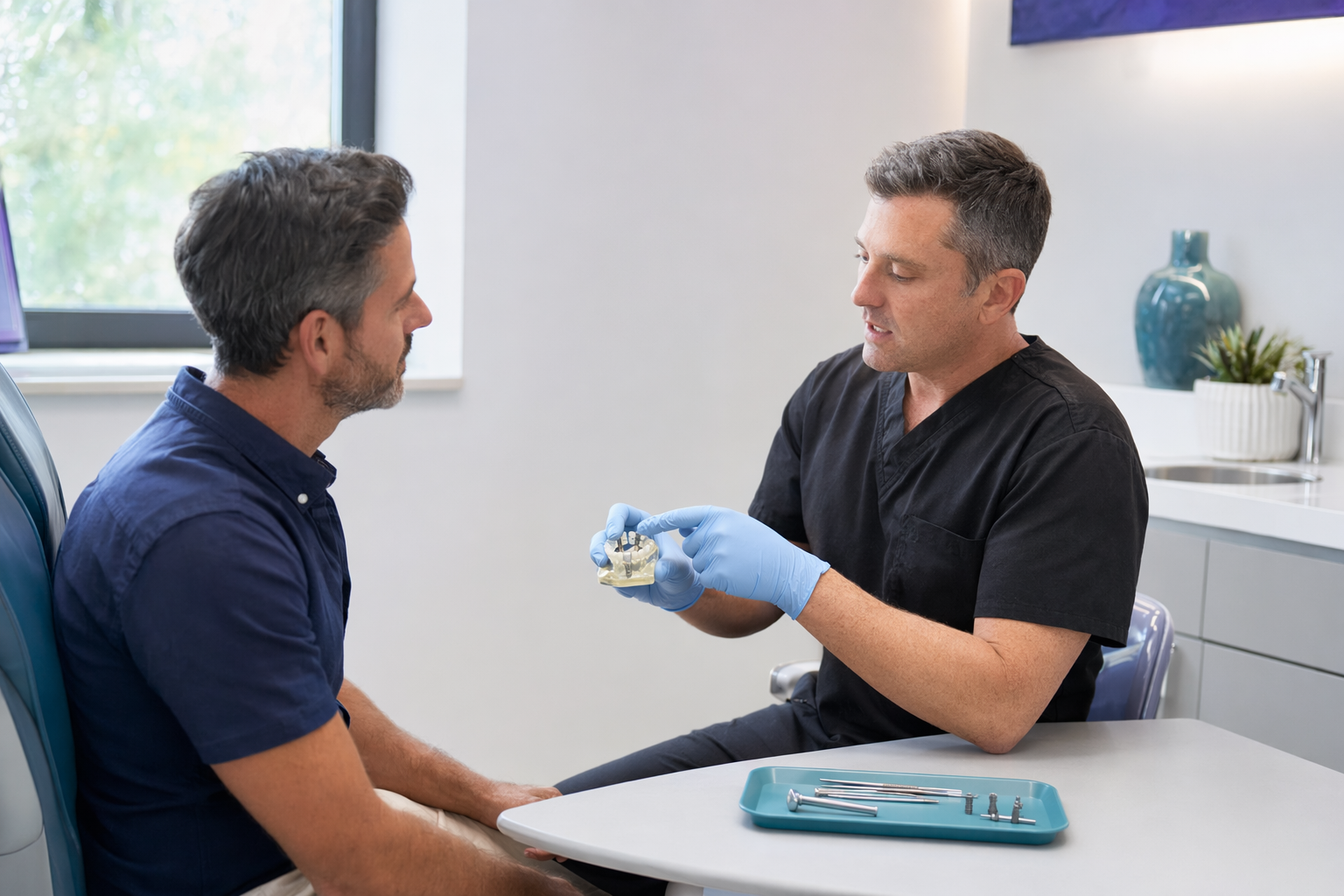
People are referred for corrective jaw surgery for different reasons. Common examples include a significant underbite or overbite, an open bite, jaw asymmetry, problems with chewing, or jaw position concerns that cannot be corrected with orthodontics alone. Some cases also involve breathing or airway concerns. Only a licensed surgeon and treating team can say what applies in a specific case.
Planning is usually detailed. The surgeon may review how the teeth meet, how the jaws look from different angles, and how jaw position affects daily function. Digital planning tools are often used to map movements before surgery. This planning helps the surgeon explain what they expect to change and what the limits or tradeoffs may be.
This is also the stage when many people choose to get a second opinion. That is reasonable. You can compare explanations, ask whether the surgeon is board-certified, and verify credentials yourself before moving forward. It is smart to get the proposed plan, expected facility setting, and the full estimated cost in writing before scheduling.
- A second opinion is common and reasonable
- Ask whether the surgeon is board-certified in oral and maxillofacial surgery
- Get the treatment plan and full cost estimate in writing
Consultation, anesthesia, and questions to ask
A consultation is your chance to understand the process, not to be rushed into it. In general, people ask what bones will be moved, whether orthodontic treatment is needed before or after surgery, where the operation will take place, how long the procedure usually takes, and what the follow-up schedule looks like. Ask who will be involved in your care and how to reach the office if questions come up later.
Anesthesia is also an important topic. Corrective jaw surgery is often done with general anesthesia in a hospital or accredited surgery setting, but the exact anesthesia plan depends on the case and the facility. You can ask what type of anesthesia is commonly used, who provides it, what monitoring is used, and what risks and side effects are generally discussed. Our guide to /guides/sedation-options-for-oral-surgery/ explains the main terms in plain language.
If English is not your first language, ask whether interpreter support is available. Clear communication matters. Oral Surgery Path can help you look for a board-certified surgeon, and the matching service is always free to patients through /get-matched/. The form should only ask for contact details and basic interest, not medical records or financial account information.
- Ask about board certification and where the surgery is performed
- Ask what anesthesia is typically used and who provides it
- Ask for language help if you need it
Recovery: typical timeline, what is common, and when to call
Recovery after corrective jaw surgery takes time. Swelling, soreness, tiredness, limited jaw movement, and changes in eating are common early on. Numbness or altered feeling in parts of the face or lips can also happen, depending on the area treated. Typical recovery is not a promise. Everyone heals differently, and the surgeon's instructions for diet, cleaning, activity, and follow-up matter.
In the first days to weeks, many people focus on rest, hydration, and a modified diet. Swelling often peaks early and then slowly improves. It can take longer for the jaw to feel more normal again. Some people return to desk work or school within a few weeks, while full recovery and bite settling may continue for months. Orthodontic treatment may continue after surgery in some cases.
Your surgeon should explain what is expected for your specific operation, including what is normal and what is not. In general, people are told to contact the surgeon's office if they have worsening pain, fever, increasing swelling after initial improvement, trouble taking in fluids, or concerns about the bite or incision areas. For heavy bleeding, trouble breathing or swallowing, or a serious facial injury, call your local emergency number first.
A careful surgeon will also explain longer-term follow-up. Corrective jaw surgery is not usually a one-visit process. It often involves staged appointments to monitor healing, jaw function, and how the bite comes together over time.
- Typical recovery varies by procedure and person
- Swelling and diet changes are common early on
- Call the surgeon's office about concerning changes
- For breathing trouble, heavy bleeding, or serious injury, call emergency services first
Cost in the US: honest ranges, not quotes
Corrective jaw surgery is one of the more expensive oral and maxillofacial procedures because it often involves advanced imaging, careful planning, anesthesia, and a hospital or surgery-center fee. In the US, a broad self-pay range is often about $20,000 to $60,000+ for a single-jaw or more complex case. Combined upper and lower jaw surgery, hospital-based care, and more involved planning can push the total higher. These are ranges, not quotes.
The real number depends on the exact procedure, whether one jaw or both are treated, whether chin surgery is included, the anesthesia type, facility fees, imaging, pre-op testing, follow-up care, your region, and whether orthodontic treatment is part of the total picture. Insurance may cover part of the cost in some medically necessary cases, but plans differ. Coverage rules, documentation requirements, deductibles, and out-of-pocket amounts vary a lot.
Before you schedule, ask for a written breakdown. That should clearly separate the surgeon's fee, anesthesia fee, facility fee, imaging, lab work if needed, hardware, and follow-up visits. Ask what is included and what might be billed separately. You can review more general surgery pricing information at /costs/.
It is reasonable to compare more than one surgeon and more than one facility if you have options. The lowest price is not always the best value. Experience, board certification, communication, facility standards, and a clear plan all matter.
- Typical US range: about $20,000 to $60,000+
- Ranges are not quotes
- Ask for itemized costs in writing before scheduling
Choosing a surgeon and using a free matching service
This page is for education only. It cannot tell you whether you personally need corrective jaw surgery. That decision belongs with a licensed, board-certified oral and maxillofacial surgeon and, when involved, your orthodontist. A good consultation should leave you with a clear explanation of the plan, the alternatives discussed, the expected recovery process, and the likely total cost.
When comparing surgeons, verify board certification yourself. Ask how often they perform jaw surgery, where they operate, whether the facility is accredited or hospital-based, and how follow-up is handled after surgery. Ask what risks they commonly discuss with patients and how they coordinate with orthodontists. You are allowed to take your time and get another opinion.
If you want help finding surgeons to compare, Oral Surgery Path offers a free matching service. Participating surgeons pay a flat fee to be listed, but matching is free to patients. You can start at /get-matched/. Many people also ask for help in their own language, which may make the process easier to understand.
The key is simple: choose carefully, verify credentials, and get the full treatment plan and cost in writing before you book anything.
- Education only, not a diagnosis or treatment recommendation
- Verify board certification yourself
- Free matching can help you compare options

What to expect with oral surgery
Most procedures follow this path. Your surgeon will confirm the details for your case.
- 1 Consultation & imaging
The surgeon examines you, reviews X-rays or a 3D scan, explains your options, and answers your questions. Ask about board certification, the plan, sedation, and the full cost before you agree to anything.
- 2 Choosing sedation
Many oral surgeries use local anesthesia, IV sedation, or general anesthesia depending on the case and your comfort. The surgeon explains the options, the risks, and how you'll feel during and after.
- 3 The procedure
On the day, the surgical team prepares you, confirms the plan, and performs the procedure. Most outpatient oral surgeries take from under an hour to a few hours depending on complexity.
- 4 Recovery & aftercare
You go home the same day with written aftercare instructions for swelling, pain, diet, and rest. The surgeon explains what's normal and exactly when to call if something isn't.
- 5 Follow-up
A follow-up visit checks healing and removes sutures if needed. For implants or jaw surgery, the full timeline can run weeks to months as the bone heals.
Corrective jaw surgery is a carefully planned operation to reposition the jaws, and if you are considering it, compare board-certified surgeons, ask clear questions about recovery and anesthesia, and get the full plan and cost in writing.
Common questions
Is corrective jaw surgery the same as braces?
No. Braces move teeth. Corrective jaw surgery moves jaw bones. Many cases involve both orthodontic treatment and surgery, but the plan depends on the person.
Will there be visible scars?
Many jaw surgery procedures are done through cuts inside the mouth, which can limit visible scarring. Some cases may be different, so ask the surgeon how they plan the incisions.
How long is recovery?
Early recovery often takes weeks, while full healing and bite settling may take months. Typical timelines are not a promise, and everyone heals differently.
Does insurance cover corrective jaw surgery?
Sometimes. Coverage depends on the insurance plan, the reason for surgery, documentation, and medical-necessity rules. Ask for a written estimate of your expected out-of-pocket cost.
Can I get a second opinion?
Yes. A second opinion is common and reasonable, especially for a major procedure like jaw surgery.
How do I find a qualified surgeon?
Look for a board-certified oral and maxillofacial surgeon, verify credentials yourself, and ask for the treatment plan and full cost in writing before scheduling.