Guides
What to Expect With Oral Surgery
Oral surgery usually follows a simple path: consultation, planning, the procedure itself, recovery, and follow-up. This guide explains those steps in plain language so you know what is commonly involved and what questions to ask before you schedule.
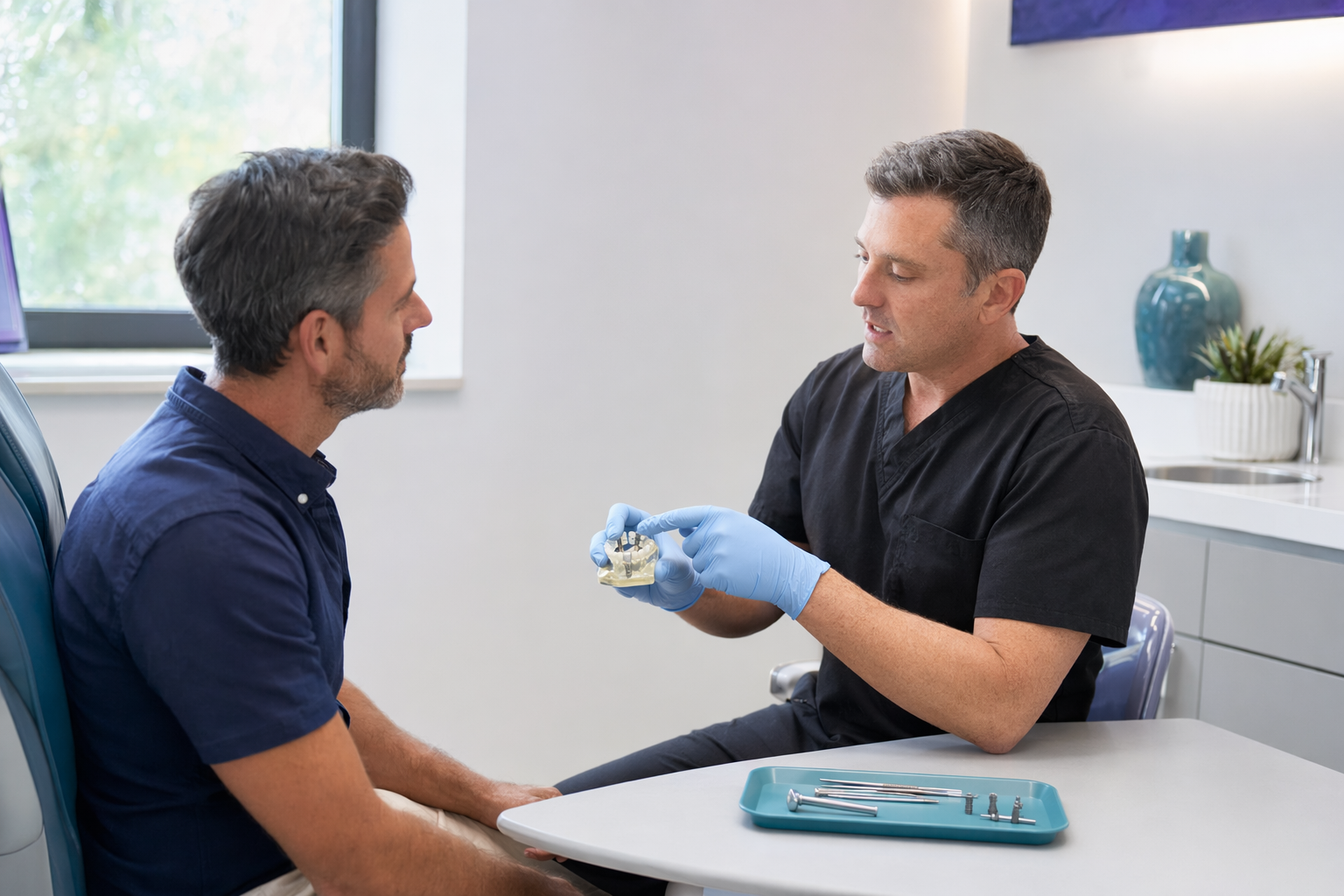
What oral surgery usually involves
Oral surgery is a broad term. It can include wisdom teeth removal, surgical tooth extractions, dental implant surgery, bone grafting, corrective jaw surgery, and treatment for some facial injuries. The exact plan depends on the problem being treated, your anatomy, the number of teeth or areas involved, and whether sedation or anesthesia is used.
In many cases, the process starts with an exam and imaging, then a written treatment plan, then the procedure day, and then recovery visits if needed. Some procedures are short and done in one visit. Others happen in stages over weeks or months. Your surgeon should explain the steps in a way you understand before you decide.
This site is for education and free matching only. It is not a clinic or surgical practice. A licensed, board-certified oral and maxillofacial surgeon should tell you what applies to your case. You can browse common procedures and use guides to compare what different treatments may involve.
- Typical path: consultation, imaging, written plan, procedure, recovery, follow-up
- Some surgeries are one visit; others happen in stages
- A second opinion is always reasonable

The consultation and treatment plan
At the consultation, the surgeon or office team often reviews the reason for the referral, takes or reviews images, and explains what surgery may involve. They may talk about timing, how many visits are likely, and whether the procedure is done with local anesthesia, deeper sedation, or another anesthesia option. This is also the time to ask what the goals are, what the main risks are, and what the alternatives may be.
Try to leave the visit with the plan in writing. That usually means the name of the procedure, how many areas are being treated, the type of sedation or anesthesia expected, the estimated total cost, and what follow-up visits are included. Costs should be clear before scheduling. A written plan helps you compare offices more fairly.
It is smart to choose a board-certified oral and maxillofacial surgeon and verify credentials yourself. You can also ask how often they perform the procedure you are considering. If anything feels rushed or unclear, getting a second opinion is reasonable. If you want help finding surgeons to compare, matching is free to patients.
- Ask for the plan and full cost in writing
- Ask about sedation options, risks, and recovery expectations
- Verify board certification yourself
How to prepare for procedure day
Preparation depends on the type of surgery and the sedation plan. The office usually gives instructions before the appointment. These may cover arrival time, arranging a ride home if sedation is used, what to wear, and when to stop eating or drinking if that is required for your anesthesia plan. Follow the surgeon's office instructions carefully because they are specific to the planned procedure.
Many people feel nervous before oral surgery. That is normal. It can help to ask the office what will happen step by step when you arrive, how long you may be there, and what the first day of recovery is usually like. If English is not your first language, ask whether language help is available. Many offices can communicate in more than one language or arrange interpretation support.
You do not need to rush into scheduling on the same day as the consultation. Take time to compare surgeons, confirm credentials, review the written estimate, and make sure you understand what is included. This page is general education only. It is not a substitute for the instructions from your own surgeon.
- Read pre-op instructions carefully
- If sedation is planned, you may need a ride home
- Ask if language support is available
What happens during the procedure
On procedure day, the team usually checks you in, reviews the planned treatment, and answers final questions. Depending on the case, the area may be numbed with local anesthesia, and some patients also receive sedation or another anesthesia option. The type used can affect your total cost, how long you stay in the office, and what recovery feels like in the first several hours.
The surgery itself varies by procedure. For example, a simple surgical extraction is different from placing an implant or repairing a jaw problem. In general, the surgeon works to treat the area in the most controlled way possible and then gives aftercare instructions before you go home. Some people leave with gauze, stitches, swelling, or temporary limits on eating, speaking, or activity.
If you are comparing offices, ask plainly: What exactly will be done? Who provides the sedation or anesthesia? How long does the appointment usually take? What follow-up is included? Written answers are helpful when you compare options.
- The exact steps depend on the procedure
- Sedation and anesthesia can affect cost and recovery
- Ask who is providing anesthesia and what follow-up is included
Recovery, follow-up, and when to call the surgeon
Recovery is different for every person and every procedure. In general, the first 24 to 72 hours are when swelling, soreness, and bleeding or oozing are most noticeable for many types of oral surgery. Some people return to light routines quickly. Others need more downtime. Typical timelines are not a promise. Everyone heals differently.
It is common for the office to give written instructions about eating, cleaning the area, activity, and follow-up visits. Read them closely. Some procedures need only one check-in. Others need several follow-ups over time, especially if treatment is being done in stages. If something in the recovery instructions is unclear, call the surgeon's office and ask.
In general, patients are often told to contact the surgeon if bleeding seems heavy or does not slow, pain or swelling seems to worsen instead of improve, or they have a fever, trouble opening the mouth, or another concern after surgery. For emergencies such as heavy bleeding, trouble breathing or swallowing, or a serious facial injury, call your local emergency number first.
You can read more background in our guides and compare procedure types in procedures. A board-certified surgeon should always be the one to explain what is normal for your case and what needs urgent attention.
- Typical recovery depends on the procedure and the person
- Follow written aftercare instructions from the surgeon
- For severe symptoms or breathing trouble, call emergency services first
Costs, insurance, and comparing surgeons
Oral surgery costs in the US vary a lot. The real number depends on the procedure, how complex the case is, how many teeth or areas are involved, the type of sedation or anesthesia, whether imaging is needed, whether treatment happens in stages, your insurance, and where you live. Honest ranges are useful, but they are ranges, not quotes.
As a broad example, a straightforward surgical extraction may cost a few hundred dollars per tooth, while impacted wisdom teeth, implant surgery, bone grafting, or jaw procedures can range much higher. Sedation and anesthesia can add significantly to the total. Ask for an itemized estimate in writing so you can see the procedure fee, imaging, sedation or anesthesia charges, facility costs if any, and follow-up costs.
You are the decision-maker. Compare at least a few offices if you can. Ask whether the surgeon is board-certified, what is included in the estimate, whether there may be extra costs, and what the expected treatment timeline is. If you want help finding offices to contact, get matched. The matching service is always free to patients, and you can ask whether language support is available.
- US prices vary by procedure, complexity, sedation, insurance, and location
- Ask for an itemized written estimate before scheduling
- Cost ranges are not quotes
Oral surgery usually means a consultation, a written plan, the procedure, and recovery follow-up, and you should compare board-certified surgeons, ask clear questions, and confirm the plan and cost in writing before scheduling.
Common questions
How long does oral surgery usually take?
It depends on the procedure. Some are short office visits, while others take longer or happen in stages. The surgeon's office should tell you the expected appointment length before scheduling.
Will I be asleep for oral surgery?
Not always. Some procedures use local anesthesia only, while others may involve sedation or another anesthesia option. The best choice depends on the procedure and the surgeon's plan.
How long is recovery after oral surgery?
Typical recovery varies widely. Many people notice the most swelling and soreness in the first few days, but full healing can take longer depending on the surgery. Timelines are typical, not a promise.
What questions should I ask at the consultation?
Ask what the procedure includes, what the risks and alternatives are, what type of sedation is planned, how recovery usually works, whether follow-up is included, and what the full estimated cost is in writing.
How much does oral surgery cost?
Costs vary by procedure, complexity, sedation, imaging, insurance, and location. Any online numbers should be treated as ranges, not quotes. Ask the office for an itemized written estimate.
Can I get a second opinion before scheduling?
Yes. A second opinion is reasonable, especially if the plan, price, or timing is unclear. Many patients compare more than one board-certified oral and maxillofacial surgeon.