Guides
Dental Implant vs. Bridge
A dental implant and a bridge are two common ways to replace a missing tooth. They work differently, involve different steps, and can differ a lot in cost, timeline, and how long they may last.
What each option involves
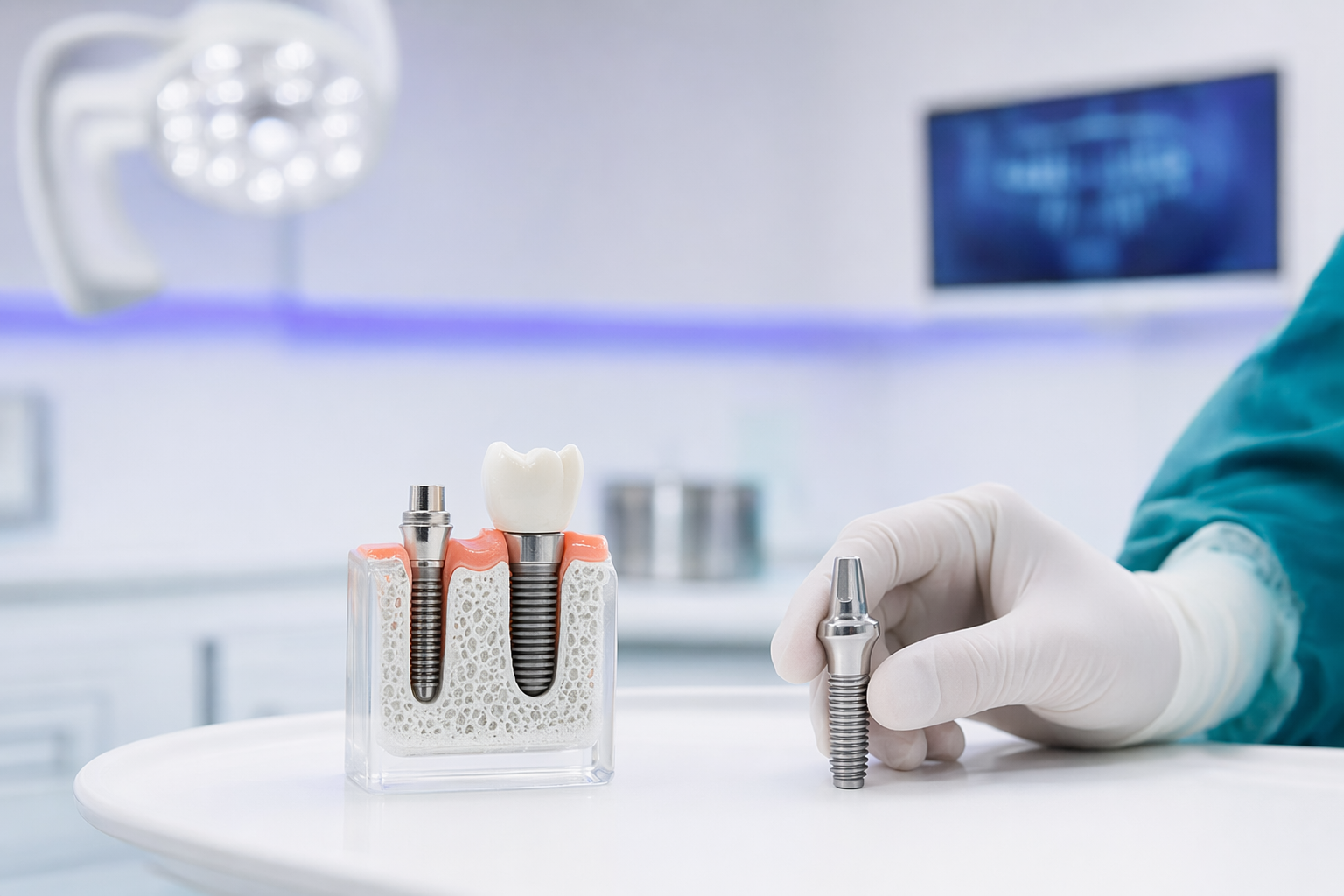
A dental implant usually replaces the root and the visible tooth. In general, a surgeon places a small titanium post in the jawbone. After healing, another piece called an abutment and a crown are attached. In some cases, bone grafting is discussed first if the bone is too thin or too short.
A bridge usually replaces the visible missing tooth by connecting a false tooth to nearby teeth. A common traditional bridge uses the teeth on each side for support. Those nearby teeth are prepared so crowns can hold the bridge in place. Some bridges use other designs, depending on the situation.
Both options are common. Neither is automatically better for every person. The right plan depends on the condition of the nearby teeth, the jawbone, the bite, the location of the missing tooth, overall goals, and what a licensed surgeon or dentist finds during an exam.
If you are still learning the basics, our procedures overview and more surgery guides can help you compare common terms before a consultation.
- Implant: post in bone, then crown
- Bridge: false tooth supported by nearby teeth
- The final plan depends on the case
Surgery, timeline, and recovery
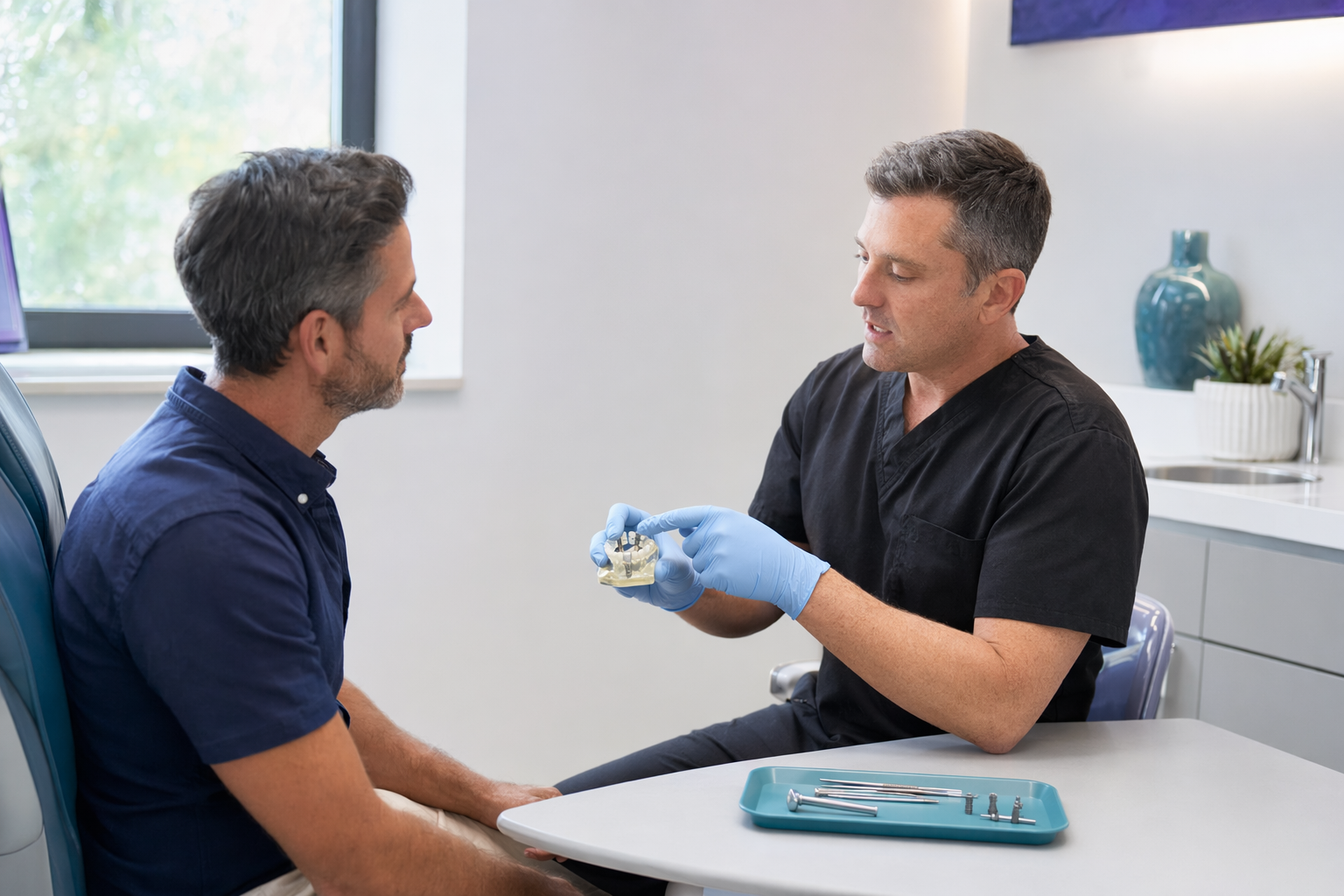
The biggest difference for many people is that an implant usually involves surgery, while a bridge often does not involve placing anything into the jawbone. With an implant, the first step is usually a consultation, imaging, and a written treatment plan. The surgical visit may include local anesthesia, and sometimes sedation options are discussed. After the post is placed, healing can take a few months before the final tooth is attached. Some cases take less time, and some take more.
A bridge often has a shorter path to the final tooth. In many cases, it involves preparing the nearby teeth, taking scans or impressions, and then placing a temporary or final bridge. The total timeline may be shorter than implant treatment, but the exact timing depends on the lab work, the teeth involved, and whether other treatment is needed first.
Typical implant recovery after the surgery itself is often measured in days for soreness and swelling, while the deeper bone healing takes much longer. A bridge may involve less surgical recovery, but the prepared support teeth can still feel sensitive for a period of time. These are typical patterns, not a promise. Everyone heals differently.
After any oral surgery, the surgeon's office usually explains what is normal and when to call. In general, people are told to call their surgeon if bleeding seems heavy or does not slow, swelling keeps getting worse instead of better, fever develops, or pain feels uncontrolled. If there is trouble breathing or swallowing, or a serious facial injury, call your local emergency number first.
- Implants usually take longer from start to finish
- Bridges may be completed faster in many cases
- Healing time is typical, not guaranteed
Longevity, bone support, and nearby teeth
People often compare implants and bridges by asking, "Which lasts longer?" In general, implants are often discussed as a longer-term option because they are placed in the bone and do not depend on grinding down nearby teeth. But real lifespan varies. Home care, smoking, grinding or clenching, bite forces, gum health, and regular follow-up all matter.
A bridge can also work well for many years. One important difference is that a traditional bridge usually relies on the teeth next to the gap. If those teeth already have large fillings or crowns, that may affect the discussion. If those teeth are healthy and untouched, some people want to understand what preparing them may mean over time.
Jawbone changes are another part of the comparison. When a tooth root is gone, bone in that area can change over time. Because an implant sits in bone, surgeons often explain that it may help support the area differently than a bridge. That does not mean it is right for everyone. It is simply one reason implants are sometimes considered.
The most useful conversation is often a practical one: What condition are the neighboring teeth in now? Is there enough bone? What maintenance will each option need? A board-certified oral and maxillofacial surgeon can explain how those factors may affect the plan in your specific case.
- Implants do not usually use neighboring teeth for support
- Traditional bridges usually depend on nearby teeth
- Daily care and follow-up matter with either option
Cost in the US: honest ranges, not quotes
Cost is a major reason people compare these options. In the US, a single dental implant with abutment and crown often falls in a broad range of about $3,000 to $6,500 or more for one tooth. If imaging, extraction, bone grafting, sinus lifting, sedation, or specialist fees are added, the total can be higher.
A traditional bridge for one missing tooth often falls in a broad range of about $2,000 to $5,000 or more, depending on the materials used, the number of units, the condition of the support teeth, and local fees. In some areas or more complex cases, costs can go beyond these ranges.
These are ranges, not quotes. The real number depends on the case, your area, who performs which part of treatment, sedation type, imaging, insurance benefits, lab materials, and whether other work is needed first. That is why it is smart to get the full plan and total expected cost in writing before you schedule.
If you want help finding a board-certified surgeon to discuss implant surgery, our free matching service can connect you with participating offices. The service is free to patients, and help is often available in more than one language.
- Implant with crown: often about $3,000 to $6,500+
- Bridge: often about $2,000 to $5,000+
- Written treatment plan and written cost matter
How to compare consultations and make a careful decision
A consultation is the right place to ask plain questions. You can ask what each option would involve, how many visits are likely, who places the implant if one is planned, whether grafting may be discussed, what sedation options are available, and what risks and maintenance come with each choice. You can also ask what happens if treatment is delayed.
Try to compare surgeons and offices in a simple way. Confirm that the surgeon is board-certified in oral and maxillofacial surgery, and verify credentials yourself. Ask for the treatment steps, estimated timeline, and full cost in writing. If something is unclear, ask for it to be explained in plain language. A second opinion is always reasonable.
It also helps to ask who will do each part of treatment. In some cases, one office handles surgery and another provides the final crown or bridge. Knowing that in advance can make costs and scheduling easier to understand.
This page is general education only. It is not a diagnosis or a treatment recommendation. The decision about whether an implant, a bridge, or another option makes sense belongs with you and a licensed clinician after an exam. If you want to keep learning first, visit our guides or procedures pages.
- Verify board certification yourself
- Ask about sedation options and risks
- A second opinion is reasonable

An implant and a bridge both replace a missing tooth, but they differ in surgery, timeline, cost, and how they affect the bone and nearby teeth.
Common questions
Is a dental implant always better than a bridge?
No. Each option has pros and limits. The better choice depends on the nearby teeth, bone, bite, goals, budget, and what a licensed clinician finds on exam.
Does getting an implant hurt?
People often worry about that. During treatment, local anesthesia is commonly used, and some offices discuss sedation options. Afterward, soreness and swelling are common for many people, but the experience varies.
Is a bridge cheaper than an implant?
Often yes at the start, but not always. Costs vary by the case, materials, imaging, sedation, insurance, and your area. Always get the full written cost before scheduling.
How long does implant treatment take?
It often takes several months from placement to the final crown because bone healing takes time. Some cases move faster, and some take longer.
Can I get a second opinion before deciding?
Yes. A second opinion is reasonable, especially if the plan is expensive, complex, or unclear.
How do I find a qualified surgeon?
Look for a board-certified oral and maxillofacial surgeon and verify credentials yourself. You can also use our free [matching service](/get-matched/) to connect with participating offices.