Guides
Questions to Ask an Oral Surgeon
Before any oral surgery, it helps to understand the process in simple steps and know what to ask. A good consultation should leave you clear on the plan, sedation choices, risks, recovery, and cost before you decide.

Start with the basics: what is actually being done?
Oral surgery can sound bigger and scarier than it is. In many cases, the process is straightforward: the surgeon reviews your exam and images, explains why surgery may be recommended, talks through sedation or anesthesia options, performs the procedure, and gives aftercare instructions for healing.
That is why the first questions should be simple and direct. Ask the surgeon to explain the procedure in plain language, step by step. If something is unclear, ask them to say it another way. You should know what part of the mouth or jaw is involved, how long the appointment may take, and what the goal of the surgery is.
You can also ask whether there are different ways the surgery may be done, and why one approach may be preferred. This is not about deciding your own treatment. It is about understanding the plan well enough to give informed consent and compare options if you are speaking with more than one surgeon.
If you are still learning about different types of oral surgery, our procedures and guides pages can help you prepare for that conversation.
- What procedure are you recommending, and why?
- Can you explain the steps in plain language?
- How long does the surgery usually take?
- Will anything else be done at the same visit?
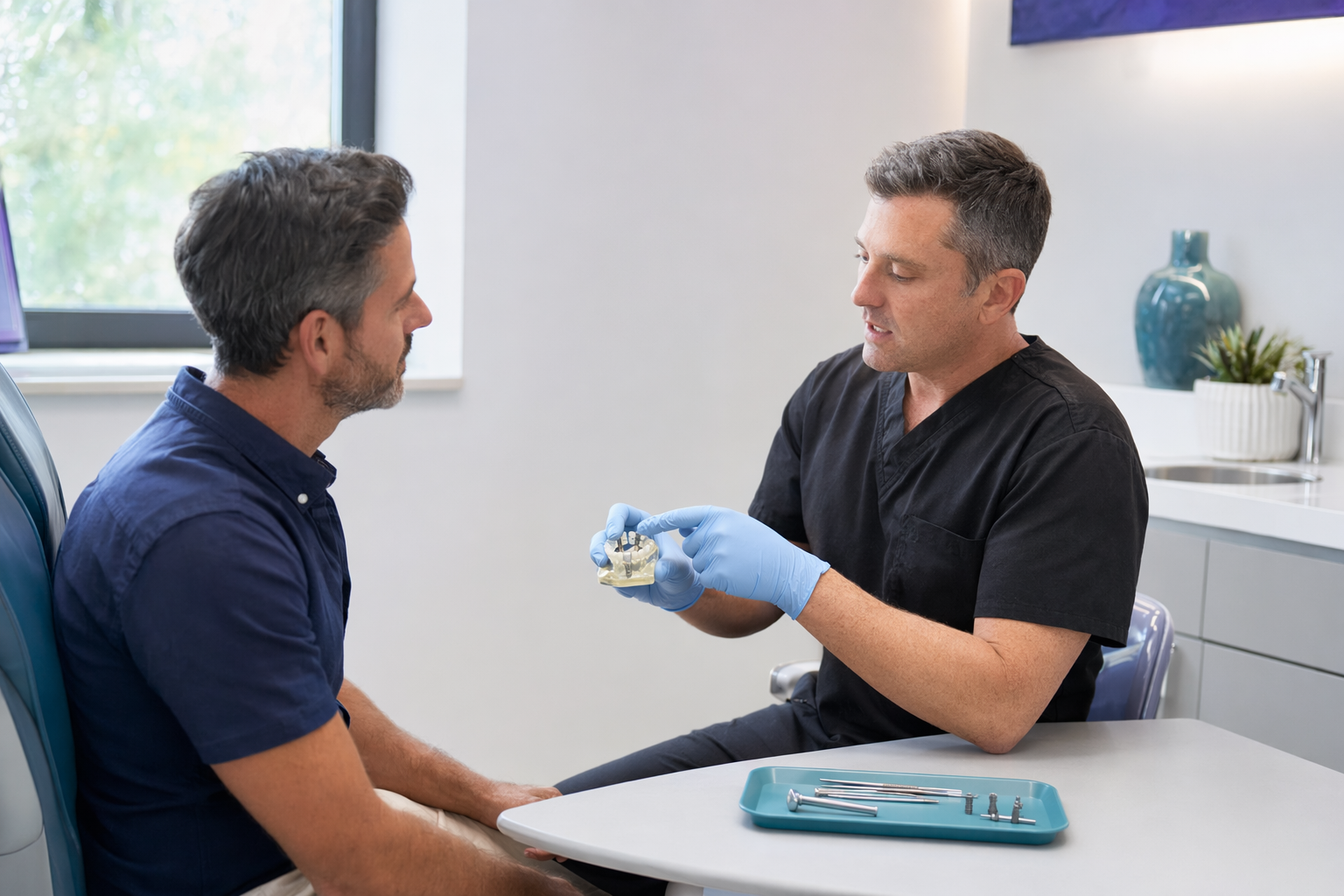
Ask about the surgeon's training and credentials
You are allowed to compare surgeons. In fact, it is wise to do so. A key question is whether the surgeon is a board-certified oral and maxillofacial surgeon. Board certification is one important sign of specialized training and professional standards, but you should still verify credentials yourself before scheduling.
You can ask how often they perform your type of procedure and where it will take place. Some surgeries are done in an office setting, while others may be done in a hospital or surgery center. The setting can affect the experience, the cost, and what kind of sedation is available.
A second opinion is always reasonable, especially if the plan feels rushed, the explanation is vague, or the cost is much higher than expected. A careful surgeon should be able to explain the reasoning behind the plan without pressure.
- Are you board-certified in oral and maxillofacial surgery?
- How often do you perform this procedure?
- Where will the surgery take place?
- Is getting a second opinion reasonable in my situation?
Discuss sedation, anesthesia, and safety questions clearly
Many people worry most about being awake, feeling pain, or not knowing what will happen during surgery. That is normal. An oral surgeon may offer different sedation or anesthesia options depending on the procedure, the setting, and the patient's health history. Ask what options are commonly used for your type of surgery and what the experience is usually like.
It also helps to ask who will monitor you during the procedure, what kind of recovery area is available, and what instructions apply before and after sedation. For example, some people may need a ride home or may need to stop eating or drinking for a certain period before the appointment. The surgeon's office should explain these details clearly.
No procedure or anesthetic is risk-free, so ask about common side effects, less common complications, and what the office does to prepare for emergencies. This is not about becoming fearful. It is about understanding the process and making an informed choice.
If you want more background before your consultation, see our guides and then bring your questions to a board-certified surgeon.
- What sedation or anesthesia options are typically used?
- Who monitors me during the procedure?
- What are the common side effects and possible risks?
- What should I do before the appointment, and what help will I need after?
Get the recovery plan explained honestly
Recovery is one of the most important topics to ask about before scheduling. Ask what a typical recovery looks like for this procedure, including swelling, soreness, bleeding, diet changes, time away from work or school, and follow-up visits. Typical timelines are helpful, but they are not a promise. Everyone heals differently.
It is also smart to ask what is considered normal during healing and what should prompt a call to the surgeon's office. Offices usually give written aftercare instructions, and it is worth asking for them in advance if you want time to review them. For true emergencies such as heavy bleeding, trouble breathing or swallowing, or a serious facial injury, call your local emergency number first.
If English is not your first language, ask whether instructions are available in your language or whether interpreter help is available. Clear communication matters before surgery and during recovery.
- What is the typical recovery timeline for this procedure?
- What symptoms are normal, and when should I call the office?
- When can most people return to work, school, or exercise?
- Will I receive written aftercare instructions?
Ask for the full cost and plan in writing before you schedule
Cost should be discussed before you commit to surgery. Ask for the full treatment plan and expected charges in writing. That should include the surgeon's fee, imaging if needed, sedation or anesthesia fees, facility charges if any, follow-up visits, and possible added costs if the procedure becomes more complex.
Honest U.S. price ranges vary a lot by procedure. Simple office-based oral surgery may sometimes be in the hundreds of dollars, while more involved surgery with sedation, grafting, implants, hospital care, or jaw surgery can run into the thousands or much more. The real number depends on the case, sedation type, insurance, and your area. These are ranges, not quotes.
Also ask what insurance may cover, what is considered out-of-pocket, and whether there are cancellation or rescheduling fees. Do not rely on verbal estimates alone. Confirm the final plan and expected costs before scheduling.
If you want help finding surgeons to compare, get matched is free to patients. You can ask for options, compare credentials, and choose who you contact.
- Can I get the treatment plan and full cost in writing?
- What fees are included, and what could increase the cost?
- How do insurance and out-of-pocket costs usually work?
- What happens financially if I need to reschedule?
Before oral surgery, ask the surgeon to clearly explain the procedure, credentials, sedation, risks, recovery, and full written cost so you can make an informed decision.
Common questions
What is the most important question to ask an oral surgeon?
A good starting question is: "Can you explain the plan in plain language and why you are recommending it?" That opens the door to questions about steps, alternatives, risks, recovery, and cost.
Should I ask if the surgeon is board-certified?
Yes. It is reasonable to ask whether the surgeon is a board-certified oral and maxillofacial surgeon and to verify credentials yourself before scheduling.
Is it okay to get a second opinion?
Yes. A second opinion is often reasonable, especially if you want to compare treatment plans, sedation options, credentials, or cost.
How should I ask about recovery?
Ask what a typical recovery looks like, what symptoms are normal, when most people return to usual activities, and when the office wants to hear from you. Typical timelines are not a promise.
Can I ask for the price before scheduling?
Yes. Ask for the full plan and expected cost in writing before you schedule. The final number can vary by procedure, sedation, insurance, and location.
Does Oral Surgery Path provide surgery?
No. Oral Surgery Path is a free educational and matching service. It is not a dental practice, medical practice, or surgical provider.