Quick answers
Does dental insurance cover implants?
A dental implant usually involves a few steps. First, a surgeon evaluates the area and bone. Then the implant post is placed in the jaw, healing happens over time, and later the final tooth replacement is attached. After that, one of the biggest questions is cost and whether insurance helps.
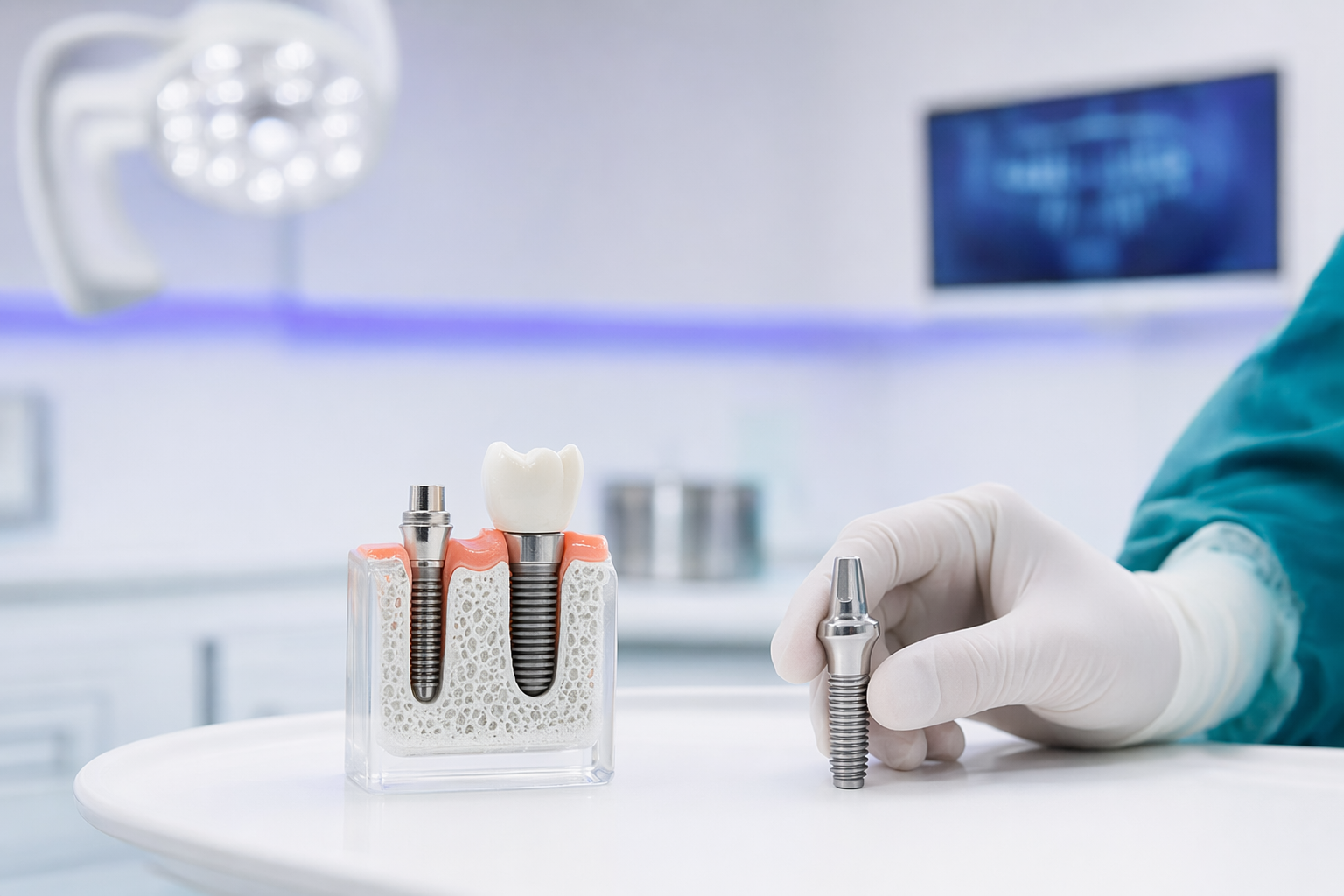
What a dental implant includes
A dental implant is not usually one single charge. In many cases, the full process includes the consultation, imaging, the implant post, possible tooth removal, possible bone grafting, follow-up visits, and the final crown or other restoration.
That is why insurance questions can feel confusing. One part may be billed by an oral surgeon. Another part may be billed by a general dentist or prosthodontist who makes and places the final tooth. When you compare offices, ask for the treatment plan in writing so you can see each part clearly.
A board-certified oral and maxillofacial surgeon may recommend a certain sequence based on the tooth position, bone condition, and overall surgical plan. This page is general education only. The decision about whether implants are appropriate, and what steps are needed, belongs to you and your licensed surgeon.
- Implant cost often includes several separate parts
- The surgeon and restoring dentist may bill separately
- Written treatment plans make insurance questions easier
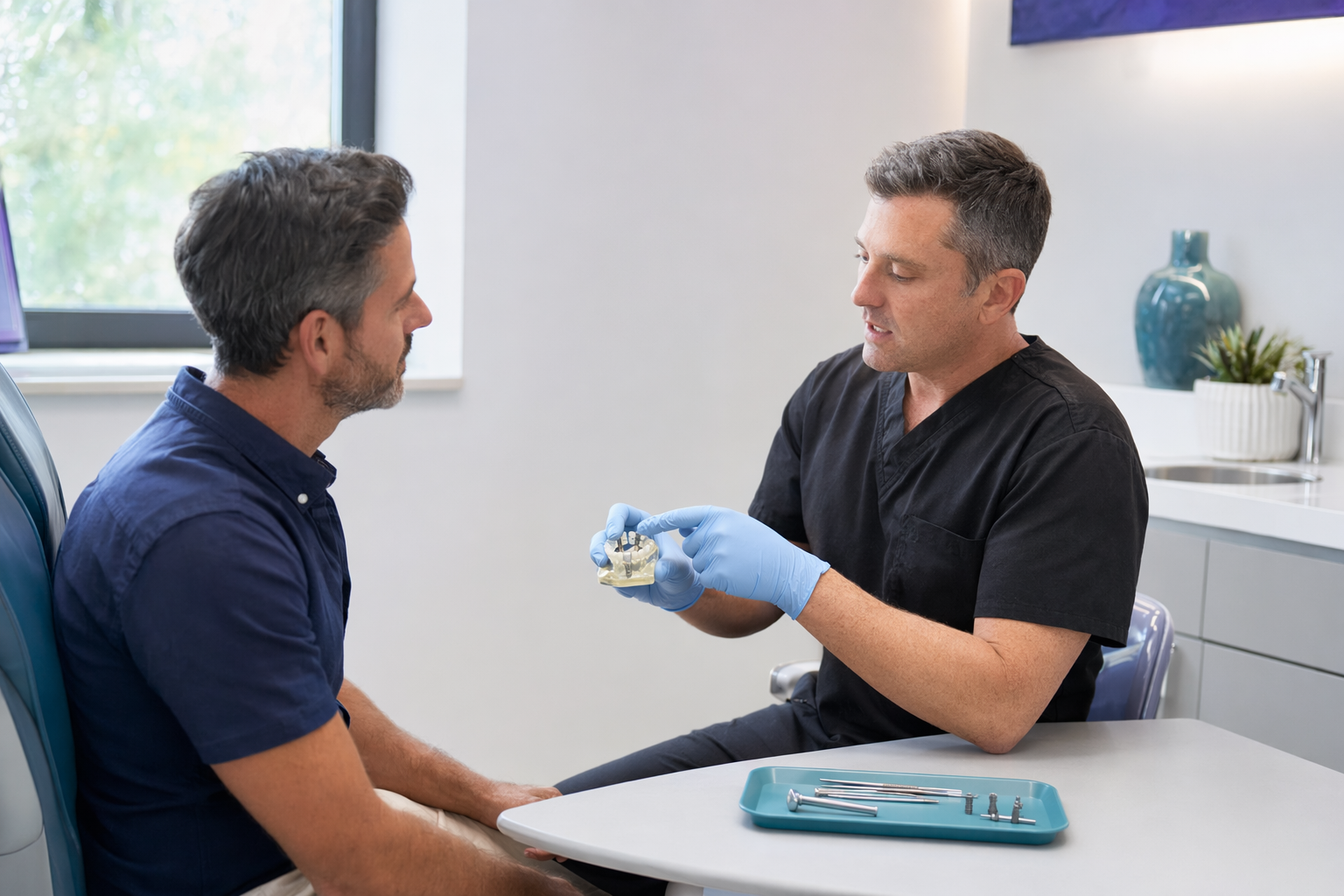
Does dental insurance cover implants?
Sometimes yes, sometimes no. Many dental plans in the US offer limited implant coverage, while others exclude implants completely. Some plans may help with part of the process but not all of it.
For example, a plan might contribute to the extraction but not the implant. Another plan might help with the crown but not bone grafting. Some plans have waiting periods, annual maximums, deductibles, missing-tooth clauses, or rules about whether the tooth was lost before the policy started.
Medical insurance may help in certain situations, such as major facial trauma, pathology, or reconstructive needs, but that depends on the policy and the reason for treatment. It is not something to assume. Before scheduling, ask for a written estimate and ask the office which parts are being submitted to dental insurance, medical insurance, or neither.
If you want a broader overview of pricing, visit /costs/ or browse more insurance and payment topics in /help/.
- Coverage varies widely by plan
- Annual maximums can limit what insurance pays
- Bone grafting and sedation are often separate cost questions
Typical US cost ranges
In the US, a single dental implant often costs about $3,000 to $6,500 or more from start to finish. That range is not a quote. The real number depends on the case, the need for grafting, the type of restoration, imaging, sedation, insurance benefits, and your local area.
If bone grafting or sinus lift procedures are needed, total costs can rise. Sedation may also be a separate fee depending on the office and the type used. If more than one tooth is missing, the plan may involve several implants, an implant bridge, or implant-supported dentures, each with different cost structures.
Ask for an itemized written estimate before you commit. It should show what is included now, what may be needed later, and what is not included. That helps you compare surgeons and avoid surprises.
A second opinion is always reasonable, especially if one office says grafting is needed and another proposes a different timeline or price.
- Single implant total often falls around $3,000 to $6,500+
- These are ranges, not quotes
- Your final price depends on the complexity of your case and your location
Recovery and time off: what is typical
After implant placement, many people have mild to moderate swelling, soreness, and some minor bleeding or oozing at first. Typical early recovery is often a few days to about a week for the initial surgical discomfort, but everyone heals differently.
The bigger timeline is the healing of the bone around the implant, which often takes several months before the final tooth is attached. If grafting is involved, the overall process may take longer. This is one reason the total cost and insurance timing can be hard to predict at the start.
Your surgeon's office will explain what is normal after surgery, what restrictions may apply, and when to call them. In general, patients are often told to contact the surgeon's office if bleeding seems heavy, pain seems to worsen instead of improve, swelling keeps increasing after the first few days, or there are concerns about infection or the implant site. For trouble breathing, trouble swallowing, or serious facial injury, call your local emergency number first.
If sedation is part of the plan, recovery for the day of surgery may also depend on the type used. It is reasonable to ask what type of sedation is offered, who provides it, and what separate fees may apply.
- Initial soreness often improves over days, not months
- Bone healing usually takes much longer than the first week
- Typical timelines are not a promise
How to compare surgeons and insurance information
You are allowed to slow down and ask clear questions. Choose a board-certified oral and maxillofacial surgeon when possible, and verify credentials yourself before scheduling. Ask the office to explain the surgical plan in plain language, including imaging, grafting, sedation options, follow-up visits, and the expected timeline.
It also helps to ask who is responsible for each part of treatment. In many implant cases, the surgeon places the implant and another dentist provides the final crown. Make sure you understand which office is charging for what, and whether the estimate includes both parts.
Helpful questions include: 1. Is this estimate itemized? 2. What does insurance appear to cover, and what is not guaranteed? 3. Are there waiting periods or annual maximum issues? 4. Is bone grafting included? 5. Is sedation included? 6. What are the expected follow-up visits? 7. What could change the final price?
If you want help finding a board-certified surgeon, /get-matched/ is a free matching service for patients. Basic contact and treatment-interest details are enough to start. Help is often available in more than one language, which can make consultations easier to understand.
Dental insurance may cover some parts of an implant, but often not all of it, so get the full plan and price in writing and compare board-certified surgeons before you schedule.
Common questions
Will my dental insurance pay for the whole implant?
Usually not. Some plans help with part of the treatment, while others exclude implants or limit payment with annual maximums and waiting periods.
Does insurance usually cover the crown too?
Sometimes. The implant post and the final crown are often billed separately, so coverage for one does not guarantee coverage for the other.
Are bone grafts covered by dental insurance?
It depends on the plan. Some policies help, some do not, and some cover only part of the cost.
Can medical insurance ever help with implant-related surgery?
In some situations, it may. That can depend on the reason for treatment, the policy language, and how the case is documented.
What should I ask before scheduling?
Ask for the plan and full estimated cost in writing, ask what is included and excluded, ask about sedation fees, and verify the surgeon's board certification yourself.
Is it okay to get a second opinion?
Yes. A second opinion is reasonable if you want to compare the plan, timeline, and cost.