Quick answers
Does wisdom teeth removal hurt?
Wisdom teeth removal usually does **not** hurt during the procedure itself because the surgeon uses numbing medicine, and sometimes sedation, to help keep you comfortable. The part most people mean by “does it hurt?” is usually the soreness, swelling, and limited mouth opening that can happen afterward for a few days.
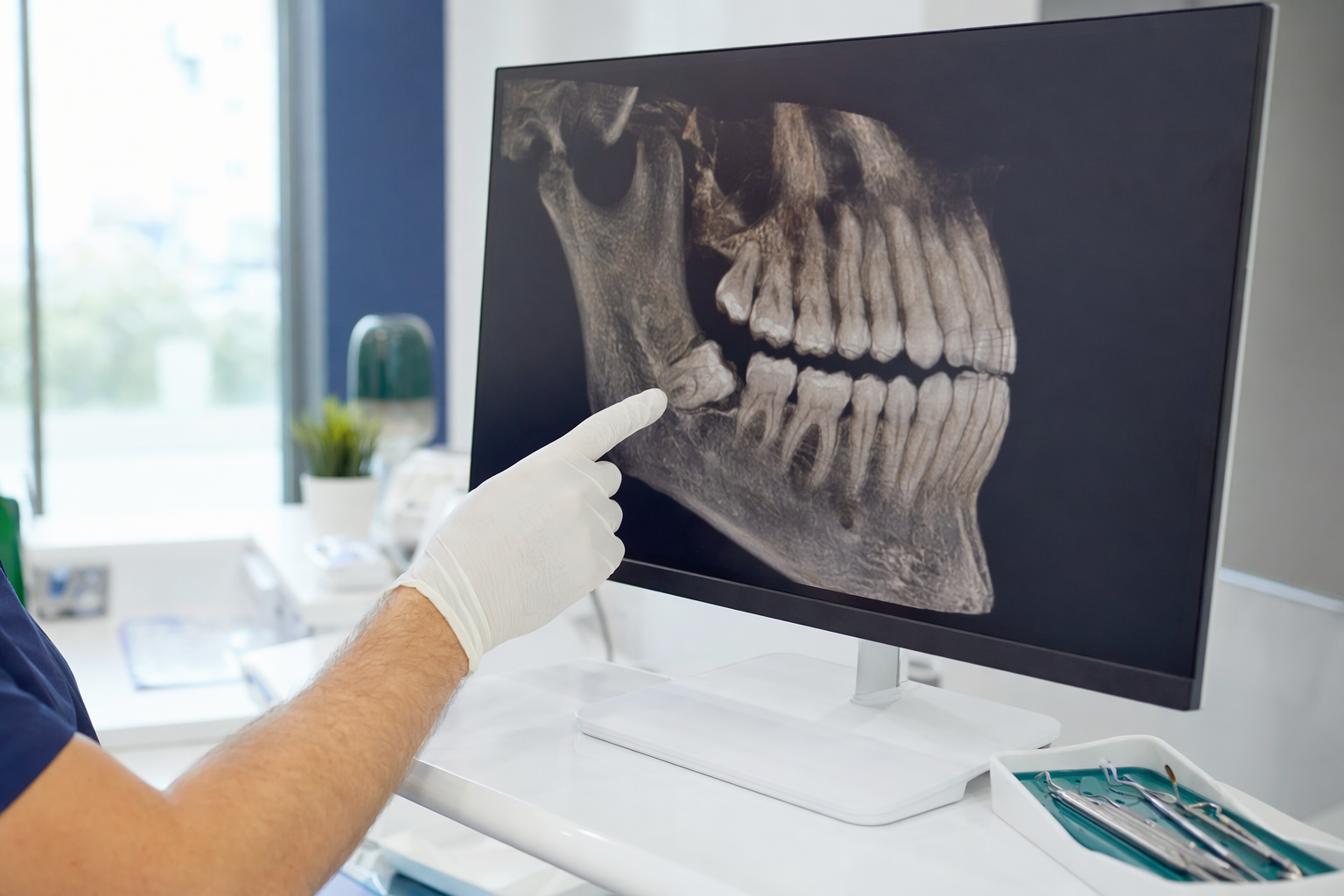
What wisdom teeth removal involves
Wisdom teeth are the last molars at the back of the mouth. Some grow in normally. Others stay partly or fully under the gums, come in at an angle, or crowd nearby teeth. In those cases, an oral surgeon may recommend removing one, two, three, or four teeth.
A typical visit starts with an exam and imaging. The surgeon explains what they see, whether the teeth are erupted or impacted, and what type of anesthesia or sedation may be offered. They should also explain the risks, benefits, alternatives, and the expected recovery in plain language.
On the day of surgery, the area is numbed. If needed, the surgeon may loosen gum tissue, remove a small amount of bone, divide the tooth into sections, and take it out. Stitches are sometimes placed. The exact steps depend on how the tooth is positioned, which is one reason one person’s experience can be very different from another’s.
- The procedure itself is usually focused on numbness and comfort
- Afterward, soreness and swelling are common for a short time
- The difficulty of the tooth often affects recovery more than the word “removal” itself

Does it hurt during the procedure?
In general, people should not feel sharp pain during the procedure because the mouth is numbed. They may still notice pressure, movement, pulling, or vibration. That can feel strange, but it is different from pain.
Some patients also have sedation. Sedation options vary by office and by case. A surgeon may discuss local anesthesia alone, nitrous oxide, oral sedation, or IV sedation. The right choice depends on the procedure, the patient’s health history, and the surgeon’s judgment. A good consultation includes time to ask about sedation options, possible side effects, and what recovery from sedation is typically like.
If you are comparing offices, it is reasonable to ask whether the surgeon is a board-certified oral and maxillofacial surgeon, who will be present for the procedure, and how discomfort is usually managed during and after surgery. You can start with general education in our help center and then use the free matching service if you want to compare surgeons in your area.
- Numbness is meant to block pain during surgery
- Pressure and pulling are commonly described sensations
- Sedation may help with anxiety or awareness, but options vary
What pain is like after wisdom teeth removal
After the numbness wears off, it is common to have soreness, swelling, and some jaw stiffness. Many people say the first 24 to 72 hours are the hardest. Swelling often peaks around day two or three, then slowly improves. Typical recovery is not a promise. Everyone heals differently.
A mild amount of oozing, trouble opening the mouth fully, and tenderness when chewing can also happen for a short time. Some people feel much better within a few days. Others, especially with deeply impacted teeth, may need a week or more before they feel close to normal.
Your surgeon should give written instructions about what is normal, what to avoid, and when to call the office. It is reasonable to ask about dry socket, infection, numbness, bleeding, and when you can return to school, work, the gym, or regular foods. If you have heavy bleeding, trouble breathing or swallowing, or a serious facial injury, call your local emergency number first.
A second opinion is always reasonable if the plan is unclear or rushed. You are the decision-maker. You can compare surgeons, confirm the plan in writing, and make sure you understand the expected recovery before scheduling.
- Typical hardest period: first 1 to 3 days
- Swelling often peaks around days 2 to 3
- Healing time varies based on the teeth, the procedure, and the person
How much does wisdom teeth removal usually cost?
In the US, wisdom teeth removal can range from a few hundred dollars for a simple extraction of one erupted tooth to several thousand dollars for removal of multiple impacted teeth with deeper sedation. These are ranges, not quotes. The real number depends on the case, the number of teeth, how difficult they are to remove, the type of sedation used, your insurance benefits, and local pricing.
As a very general example, one simple wisdom tooth extraction may fall around $200 to $600+, while one impacted wisdom tooth may be more like $350 to $800+ or higher. Removal of all four wisdom teeth, especially if they are impacted and sedation is used, may sometimes total roughly $1,000 to $3,500+ or more depending on the setting and region. Fees for imaging, consultation, pathology, medications, or follow-up may be separate.
Before you schedule, ask for the full treatment plan and full expected cost in writing. Ask what is included, what might cost extra, and how insurance is being estimated. You can read more about common fee ranges on our costs page.
- US prices vary widely by complexity and location
- Sedation can change the total cost
- Get the full plan and full price in writing before scheduling
How to choose a surgeon and what to ask
Choosing the right surgeon can matter as much as the procedure itself. Look for a board-certified oral and maxillofacial surgeon and verify credentials yourself. Ask how often they remove wisdom teeth, what type of anesthesia or sedation they offer, and who monitors you during the visit.
A clear consultation should cover: what the imaging shows, whether the teeth are erupted or impacted, what the main risks are, how discomfort is usually handled, and what the usual follow-up process looks like. You can also ask what warning signs should lead you to call the office, what your typical downtime might be, and when you can return to your normal routine.
If English is not your first language, it is reasonable to ask whether help is available in your preferred language. Oral Surgery Path is a free matching service for patients. We do not provide surgery or medical advice. We help people connect with surgeons for consultations, and the form asks for contact details and basic interest only. If you want to compare options, you can use Get Matched at no cost to you.
Wisdom teeth removal is usually numb during the procedure, but soreness and swelling afterward are common for a few days, and the best next step is to discuss your options with a board-certified oral and maxillofacial surgeon.
Common questions
Is wisdom teeth removal painful while it is happening?
Usually the goal is that you do not feel sharp pain because the area is numbed. People may still feel pressure, movement, or pulling.
How long does pain usually last after wisdom teeth removal?
Many people feel the most soreness in the first 1 to 3 days, with gradual improvement after that. Typical recovery varies and is not a promise.
Does removing impacted wisdom teeth hurt more?
In general, more complex removals can lead to more swelling or soreness afterward, but each case is different.
Will I be asleep for wisdom teeth removal?
Not always. Some procedures use local anesthesia alone, and some include sedation. The options depend on the case and the surgeon.
How much does wisdom teeth removal cost in the US?
Costs vary a lot. Simple removal may be a few hundred dollars per tooth, while multiple impacted teeth with sedation can total several thousand dollars. These are ranges, not quotes.
Should I get a second opinion before scheduling?
Yes. A second opinion is reasonable if you want another explanation of the plan, the risks, the sedation options, or the cost.