Quick answers
How long does the dental implant process take?
A dental implant is usually not one single visit. In many cases, it happens in steps: evaluation, implant placement, healing, and then the final tooth. The full timeline can be a few months, but some cases take longer depending on the bone, gums, and treatment plan.
What the implant process usually involves
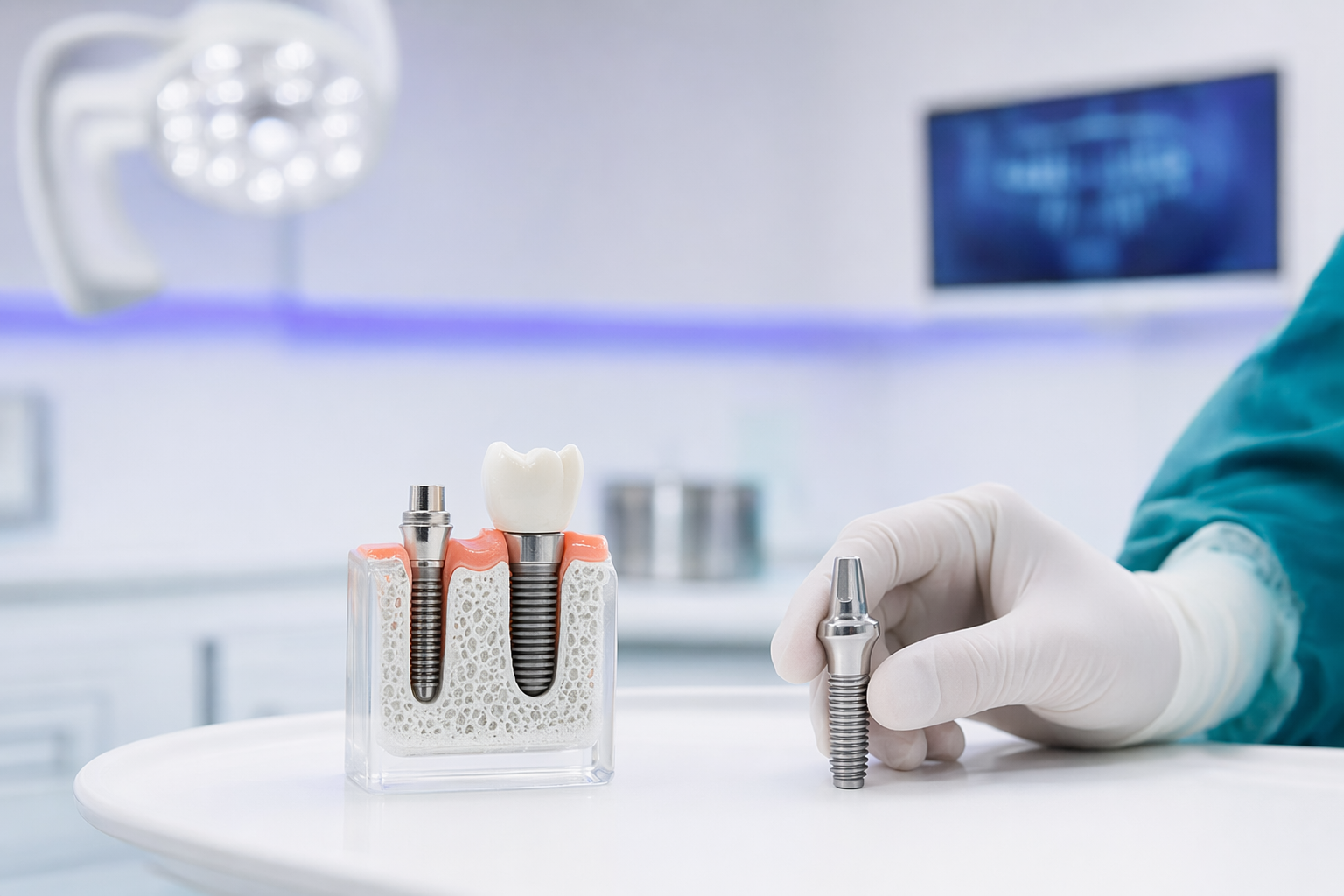
A dental implant is a small post placed in the jawbone to support a replacement tooth. The process often starts with a consultation and imaging. An oral surgeon or restorative dentist reviews the area, explains the options, and discusses whether anything needs to happen before the implant is placed.
In many cases, the next step is implant surgery. After that, the area needs time to heal. During healing, the implant may join with the bone. Later, a connector piece and the final crown, bridge, or denture may be placed.
Some people need extra steps first. For example, a surgeon may discuss removing a damaged tooth, treating the site, or adding bone grafting if there is not enough bone. Those added steps can change the timeline. This is why two people getting “an implant” may have very different schedules.
- Typical stages: consultation, surgery, healing, final tooth
- Some cases include tooth removal or bone grafting first
- The exact plan depends on the individual case
How long it can take from start to finish
A straightforward implant case may take a few months from the first visit to the final tooth. In general, many people hear estimates like 3 to 6 months, but that is only a broad range, not a promise. Some cases move faster. Others take 6 to 12 months or longer when extractions, grafting, or more complex reconstruction are involved.
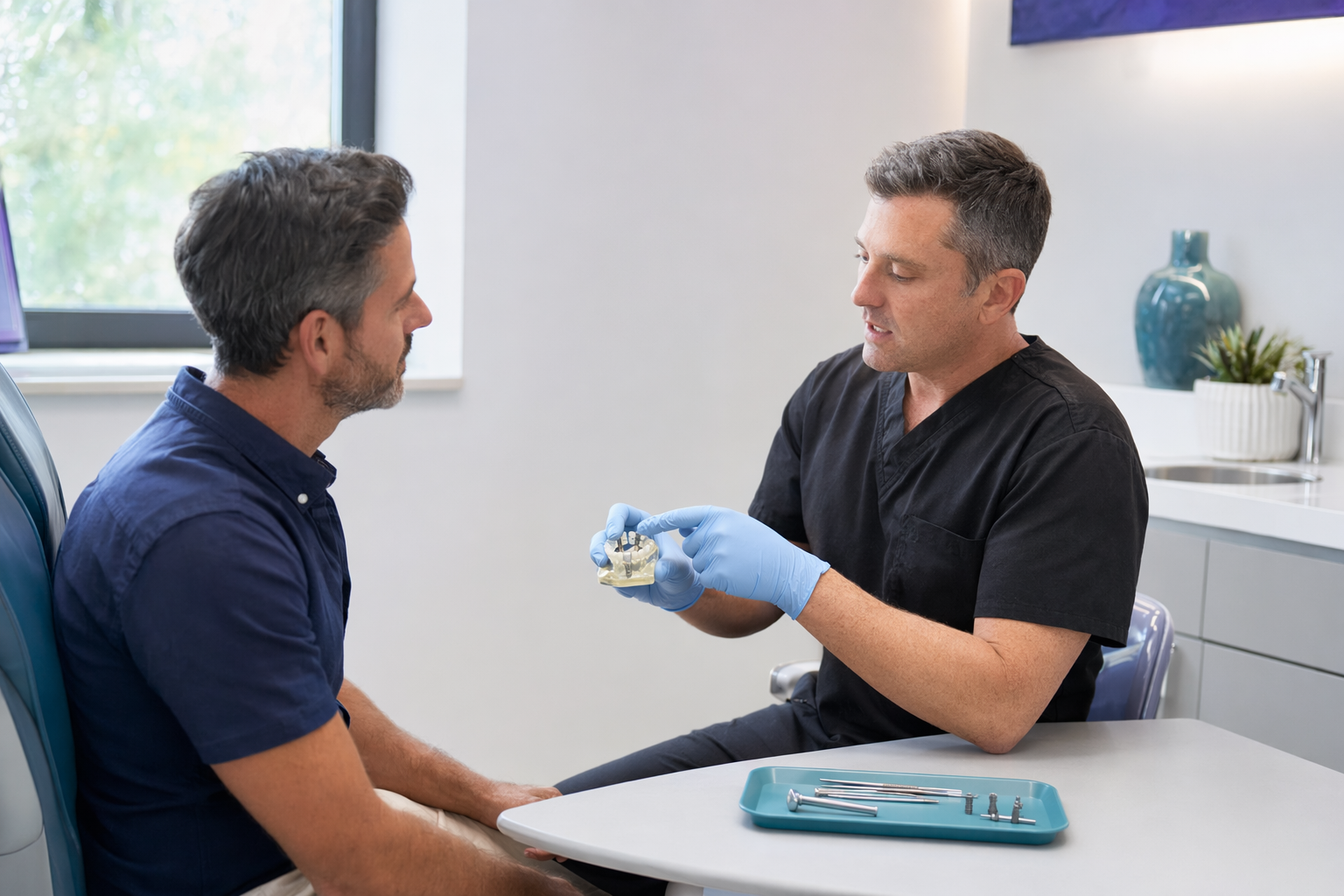
The consultation itself may happen in one visit. If the implant can be placed without other preparation, surgery may be scheduled soon after. Healing after implant placement often takes several months before the final restoration is attached, because the team may want to allow time for the implant site to stabilize.
If a tooth must be removed first, the surgeon may place the implant the same day in some cases, or may recommend waiting for healing. If bone grafting is needed, that may add weeks or months. A temporary tooth is sometimes possible, but not in every case. The surgeon and restorative dentist explain what is realistic for that specific plan.
If you want help comparing timelines from different offices, you can start with help or use the free matching service to find a board-certified oral and maxillofacial surgeon near you.
- Simple cases may be a few months
- Complex cases can take 6 to 12 months or longer
- Healing time is one of the biggest reasons the process is not immediate
What can make the timeline shorter or longer
Several things can affect timing. The first is the condition of the bone and gums. If the area is healthy and there is enough bone, treatment may move more directly to implant placement. If the site needs rebuilding first, the overall process may take longer.
The number of implants matters too. Replacing one tooth is often simpler than rebuilding several teeth or a full arch. The location also matters. Front teeth may involve more planning for appearance, while back teeth may have different bite forces and anatomy to consider.
Your schedule and the office schedule also play a role. Some of the process depends on when scans, follow-up visits, and the final restoration can be completed. Sedation planning may add another step, especially if the surgeon wants medical clearance from another doctor. That does not mean something is wrong. It just means planning can be different from person to person.
A second opinion is always reasonable, especially if one office gives a very different timeline or a very different price. Ask whether the surgeon is a board-certified oral and maxillofacial surgeon, and verify credentials yourself before scheduling.
- Bone quality and gum condition affect timing
- Single-tooth and full-mouth cases are very different
- Sedation planning and scheduling can add time
Typical recovery after implant surgery
Recovery after the surgery visit is usually much shorter than the full implant process. Many people expect a few days of soreness, swelling, or minor bleeding after surgery. Some return to work quickly, while others prefer a few days of lighter activity. Typical recovery is not a promise. Everyone heals differently.
It is common to have follow-up appointments so the surgeon can check healing. Even when the first week feels much better, the deeper healing of bone and soft tissue takes longer. That is one reason the final tooth may not be placed right away.
General instructions after surgery usually cover eating, cleaning the area, activity, and medicines. Follow the surgeon's written instructions carefully. If something seems unclear, call the surgeon's office and ask. For urgent warning signs such as heavy bleeding, trouble breathing or swallowing, or a serious facial injury, call your local emergency number first.
Questions to ask at the consultation include: how long typical healing takes in that office's experience, what is normal after surgery, when to call the surgeon, what sedation options are offered, and what risks and limits apply to the proposed plan.
- The surgery recovery is often days to weeks
- The full healing process is often months
- Call the surgeon's office with non-emergency recovery questions
Cost, consultations, and how to compare surgeons
Dental implant costs in the US vary a lot. For one implant, patients may hear rough ranges such as about $3,000 to $6,000 or more for the implant, abutment, and crown together. More complex cases, grafting, sinus lift procedures, multiple implants, or full-arch treatment can raise the total significantly. These are ranges, not quotes.
The real number depends on the case, the imaging needed, the type of sedation, the materials used, insurance details, and where you live. It can also depend on whether different parts of treatment are done by different offices. You can read more about broad price ranges at costs.
At the consultation, ask for the treatment plan and full expected cost in writing before you schedule. Ask what is included, what is not included, and what could create extra charges later. Ask who places the implant, who makes the final tooth, and how many visits are expected.
You can compare offices, ask about language support, and request a second opinion if you want one. Oral Surgery Path is a free educational and matching service, not a clinic. If you want help finding a board-certified oral and maxillofacial surgeon, you can use get matched. The service is free to patients, and help may be available in your own language.
- Ask for the plan and full cost in writing
- Confirm whether the surgeon is board-certified
- Ranges are helpful for planning, but they are not quotes
Dental implants often take several months because surgery is only one step and healing time is usually needed before the final tooth is placed.
Common questions
Can a dental implant be done in one day?
Sometimes part of the process can happen in one day, but the full process usually still includes healing time and later steps. Whether that is possible depends on the case and the surgeon's plan.
How long after a tooth extraction do people wait for an implant?
It varies. In some cases an implant may be placed at the same visit, while in others the surgeon may recommend a healing period first. That decision depends on the condition of the site.
How long does it take to recover after implant surgery?
Many people expect several days of soreness or swelling, with gradual improvement after that. Deeper healing usually takes longer, and everyone heals differently.
Why does bone grafting make the process longer?
Bone grafting may add time because the site may need to heal and develop enough support before the implant is placed or restored.
What should I ask at an implant consultation?
Ask who will do each step, whether the surgeon is board-certified, how many visits are expected, what sedation options are available, what the typical recovery is, what risks were discussed, and for the full cost in writing.
Is it worth getting a second opinion?
Yes. A second opinion is reasonable if you want to compare timelines, costs, or treatment approaches before deciding.