Quick answers
How long is wisdom teeth removal recovery?
Wisdom teeth removal is a surgery to take out one or more back molars, often under local anesthesia, IV sedation, or general anesthesia depending on the case. Recovery is usually measured in days to a few weeks, but the exact timeline varies by how difficult the teeth are to remove, the type of sedation used, and how each person heals.
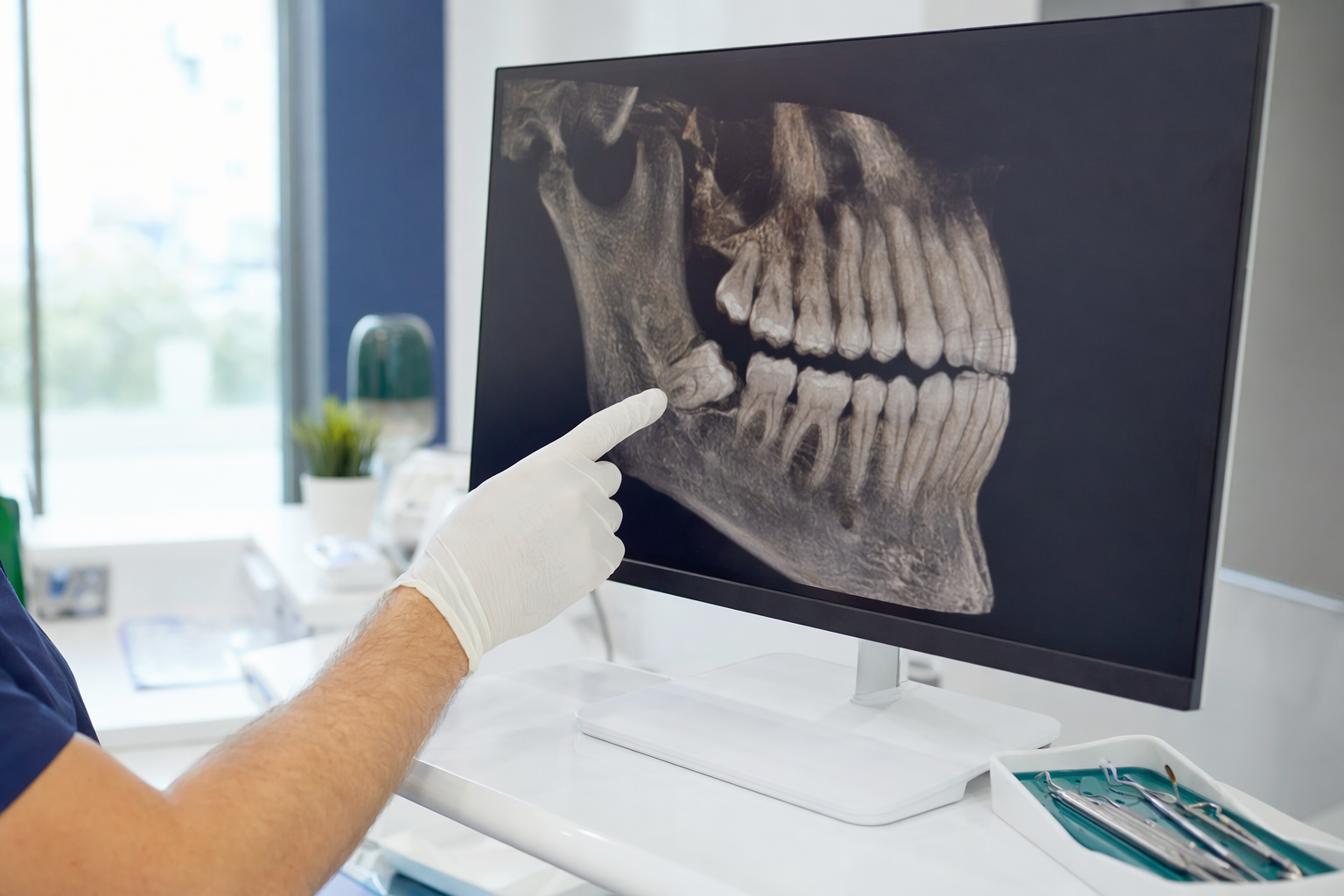
What the procedure involves, in simple terms
A wisdom tooth removal usually starts with a consultation and X-rays. The surgeon reviews the position of the teeth, explains whether the tooth is fully erupted or trapped under the gums, and talks through anesthesia or sedation options. You can ask about board certification, expected recovery, risks, and the full written cost before you schedule.
On the day of surgery, the area is numbed. If sedation is used, the surgeon or anesthesia team explains what to expect and how long someone should stay with you afterward. The surgeon may loosen the tooth, remove it in one piece, or divide it into smaller pieces if that makes removal easier. Stitches may be placed.
After surgery, it is normal to have some swelling, bleeding or oozing, soreness, and limited mouth opening for a short time. Recovery does not happen all at once. Most people feel a little better each day, but healing of the gum and bone continues after the first few days.
- Ask for the treatment plan in writing
- Ask who will provide sedation or anesthesia
- Verify the surgeon is a board-certified oral and maxillofacial surgeon

Typical wisdom teeth recovery timeline
The first 24 hours are usually the most noticeable. Mild bleeding or oozing, swelling, numbness from anesthesia, and soreness are common. Many people rest at home that day. If sedation was used, grogginess may last into the evening.
Days 2 to 3 are often when swelling peaks. Jaw stiffness, soreness when chewing, and tiredness can still be present. By days 3 to 7, many people notice clear improvement, even if the mouth still feels tender. Some return to school or desk work sooner, while others need more time.
During the second week, the gums often look and feel better, but the sites may still be sensitive. If stitches were placed, the surgeon explains whether they dissolve on their own or need removal. Deeper healing of the socket and bone can continue for several weeks or longer.
These are typical timelines, not a promise. A simple extraction may heal faster than an impacted tooth removal. Taking out all four wisdom teeth can feel different from removing one. Everyone heals differently.
- Day 1: rest, bleeding or oozing may happen
- Days 2 to 3: swelling often peaks
- Days 3 to 7: many people improve steadily
- Week 2 and beyond: gums continue healing
What is often normal, and when to contact the surgeon
In general, common short-term effects after wisdom teeth removal can include swelling, bruising, soreness, a bad taste from normal drainage, and difficulty opening the mouth fully. Some people also notice nearby teeth feeling tender for a while. These can be part of normal healing.
What matters most is the pattern. In many cases, discomfort slowly improves after the first few days. If symptoms are getting worse instead of better, many surgeons want to know. If you are not sure what is normal after your procedure, the safest step is to contact the surgeon's office and follow their instructions.
Call your local emergency number first for heavy bleeding that does not seem to stop, trouble breathing or swallowing, or a serious facial injury. For non-emergency concerns after surgery, contact the operating surgeon's office. This page is general education, not a diagnosis or personal medical advice.
- A slow, steady improvement is common
- Worsening pain or swelling is worth asking about
- Emergency symptoms need urgent help first
How cost fits into the decision
Recovery time is one part of the decision. Cost matters too. In the US, wisdom teeth removal can range from a few hundred dollars for a simpler single tooth extraction to several thousand dollars for multiple impacted teeth with sedation. These are ranges, not quotes.
The real number often depends on how many teeth are removed, whether they are impacted, the type of sedation or anesthesia, the surgeon's training, the facility, your area, and whether insurance contributes. Ask for the total in writing before scheduling. That should include the surgeon's fee, imaging, sedation or anesthesia, facility fees if any, and follow-up expectations.
You can read more about general price ranges on /costs/. It is also reasonable to get a second opinion if the treatment plan or price is unclear.
- Simple cases often cost less than impacted cases
- Sedation type can change the total price
- Insurance and location can change the final bill
Choosing a surgeon and getting help in your language
You are allowed to compare surgeons. Ask whether the surgeon is a board-certified oral and maxillofacial surgeon, and verify credentials yourself. Ask what the procedure involves, what sedation options are offered, what risks they want you to understand, how follow-up works, and how long recovery is typically expected in a case like yours.
A second opinion is always reasonable. It can help if you were told different things by different offices, if the price seems unclear, or if you simply want more confidence before booking. Try to get the proposed plan and the full cost in writing.
If you want help finding a surgeon, /get-matched/ is a free patient service. Participating surgeons pay a flat fee, but the matching service is free to you. Many patients also want help in a language they are comfortable with. Language support is often available, and you can explore more patient guides at /help/.
- Matching is free to the patient
- Many people ask for language support
- Written plans and written prices help avoid surprises
Wisdom teeth recovery often improves over several days to a few weeks, but the exact timeline and cost depend on the case, so it is smart to compare board-certified surgeons and get the plan and full price in writing.
Common questions
How many days should I expect to be off after wisdom teeth removal?
Many people plan for a few days of downtime, but the exact time varies. A simple case may feel easier than removal of multiple impacted teeth, and everyone heals differently.
When does swelling peak after wisdom teeth surgery?
In many cases, swelling is most noticeable around days 2 to 3, then slowly improves. That is a typical pattern, not a promise.
How long does the hole take to close after wisdom teeth removal?
The gum may look better within days to weeks, but the socket and bone can continue healing for several weeks or longer depending on the case.
Is it normal to still feel sore after a week?
Some tenderness can still be present after a week, especially after a more difficult extraction. If symptoms are worsening instead of improving, many surgeons want to hear from you.
How much does wisdom teeth removal cost in the US?
Costs vary widely. A simpler single-tooth removal may be a few hundred dollars, while multiple impacted teeth with sedation can cost several thousand dollars. These are ranges, not quotes.
Can I get a second opinion before scheduling wisdom teeth removal?
Yes. A second opinion is reasonable, especially if you want another explanation of the plan, risks, recovery, or price.