Quick answers
How much does a dental bone graft cost?
A dental bone graft is a procedure used to add or support bone in part of the jaw. Before you compare prices, it helps to understand the basic steps, what can affect the total cost, and how to get the treatment plan in writing from a board-certified oral and maxillofacial surgeon.
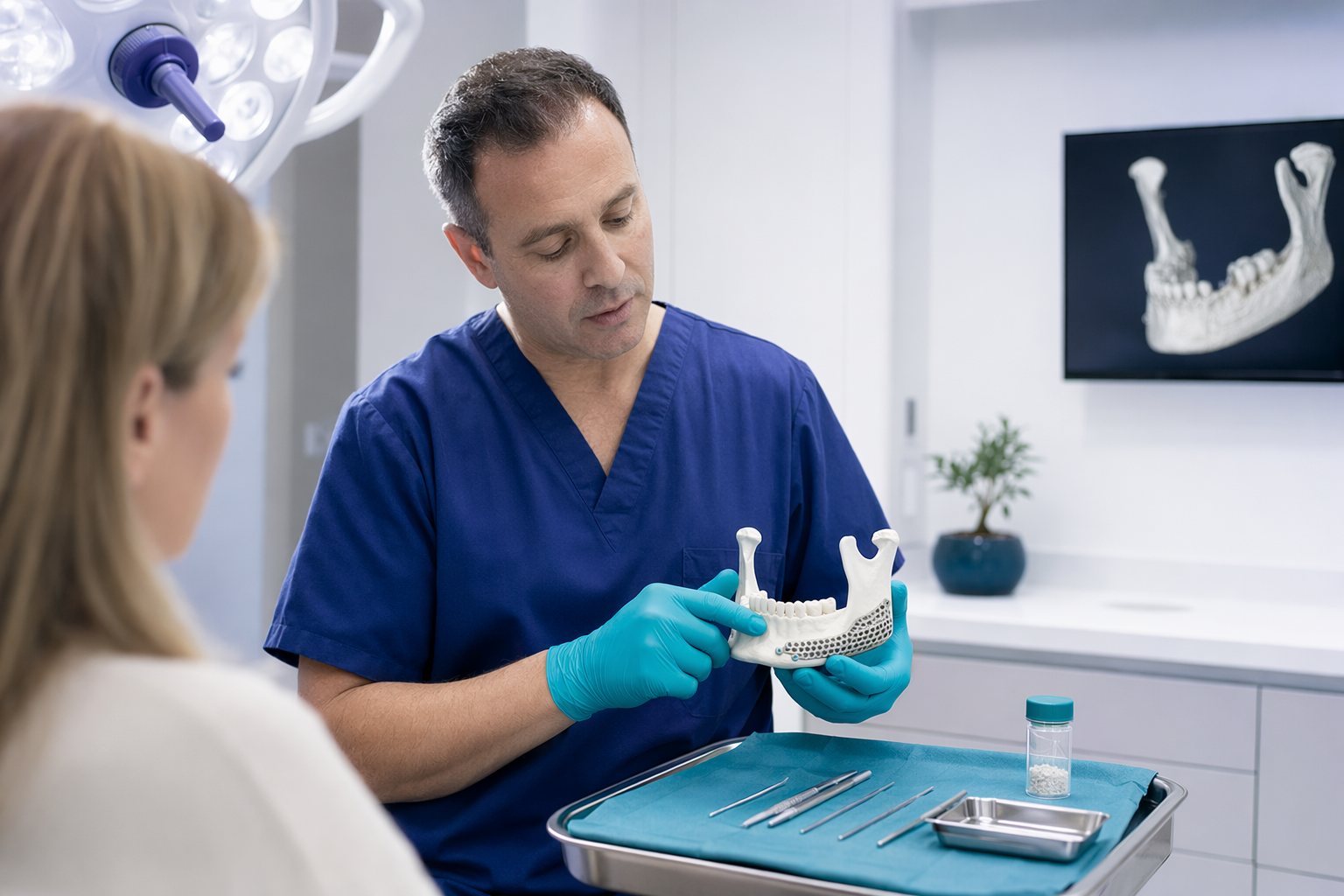
What a dental bone graft is, in plain language
A dental bone graft is usually done when a surgeon wants to build up or protect bone in the jaw. This may be discussed after a tooth removal, before a dental implant, or when the jawbone has become thinner or weaker in one area. The exact reason and technique depend on the case.
In simple terms, the procedure often involves these steps: the area is numbed or sedation is used, the surgeon opens the gum in the treatment area, places grafting material where more bone support is needed, and closes the site so it can heal. In some cases, a membrane or other materials may also be used.
Not all bone grafts are the same. A small socket graft after an extraction is often different from a larger graft done to prepare for implants. That is one reason the price can vary so much from one patient to another. A consultation with a board-certified oral and maxillofacial surgeon can explain the type of graft being proposed and why.
- A bone graft adds or supports bone in the jaw
- The steps and materials can vary by case
- Larger or more complex grafts usually cost more
How much does a dental bone graft cost in the US?
In the US, a dental bone graft often falls somewhere in the hundreds to low thousands of dollars. A small, straightforward graft may be around $300 to $1,200. A more involved graft, or one done with extra materials or sedation, may be around $1,000 to $3,500 or more. These are ranges, not quotes.
The real number depends on several things. It may depend on the size of the graft, where it is placed, the type of grafting material used, whether the graft is done at the same time as an extraction or implant-related procedure, the type of sedation, the surgeon's training, and local prices in your area. Fees for imaging, consultation, follow-up visits, or membranes may be separate.
Insurance may help in some situations and may not help in others. Coverage often depends on why the graft is being done and how the plan is coded. Before scheduling, ask for the expected total cost in writing, what is included, and what may be billed separately. You can read more general price information on /costs/.
- Typical US range: about $300 to $3,500+ depending on complexity
- Ranges are not quotes
- Ask what is included before you schedule
What can change the final price
A bone graft quote is not just about the graft itself. The total can change based on the consultation, 3D imaging or X-rays, the graft material, any membrane used, sedation or anesthesia, and how many areas are being treated. If the graft is part of a larger treatment plan, such as extraction or implant preparation, the estimate may include several separate fees.
This is also why it is reasonable to get a second opinion. One surgeon may recommend a different technique, office setting, or sedation approach than another. That does not automatically mean one plan is better for everyone. It means you should compare clearly written treatment plans and ask questions until the plan makes sense to you.
A good consultation should explain the proposed procedure in plain language, the likely timeline, the expected fees, and the risks and alternatives in general terms. You can use our free matching service at /get-matched/ if you want help finding a board-certified oral surgeon in your area. The matching service is free to patients, and language help is often available.
- Imaging and sedation can add to the total
- Membranes and extra materials may be billed separately
- A second opinion is always reasonable
Recovery: what is typical, and when to call the surgeon
Recovery after a dental bone graft is often measured in two different ways. The first is the short-term recovery, meaning how long swelling, soreness, and activity limits may last. The second is the deeper healing time, meaning how long the graft may take to become part of the jawbone. These are not the same thing.
Short-term recovery is often a matter of days to a couple of weeks. Mild to moderate soreness, swelling, and some small amount of bleeding or oozing can be common early on. Many people return to desk work or light activity fairly soon, but the exact timeline depends on the size of the procedure and the person. Typical, not a promise: everyone heals differently.
The deeper healing phase may take several months before the area is ready for the next step, such as implant placement, if that is part of the plan. The surgeon may schedule follow-up visits or imaging to check healing.
In general, patients are often told to contact the surgeon's office if they have worsening pain, increasing swelling after the first few days, fever, bad taste or drainage, ongoing bleeding that does not settle, or concerns about the wound. For emergencies such as heavy bleeding, trouble breathing or swallowing, or a serious facial injury, call your local emergency number first.
- Soreness and swelling are often short-term
- Bone healing itself may take months
- Everyone heals differently
How to compare surgeons and ask the right questions
You are allowed to slow down and compare options. Ask whether the surgeon is a board-certified oral and maxillofacial surgeon, and verify credentials yourself. Ask what type of bone graft is being proposed, why that approach is being considered, whether sedation is offered, and what the main fees are. You can also ask what follow-up care is included in the written estimate.
It is smart to ask for the full plan and total expected cost in writing before scheduling. Ask which parts are fixed, which parts may change during treatment, and whether imaging, sedation, membranes, or later visits are separate charges. If something is unclear, ask for it to be explained in simpler words. A careful office should be able to do that.
If English is not your first language, ask if language support is available. Many patients feel more comfortable when instructions and payment details are explained in their own language. If you want help getting started, visit /help/ or use /get-matched/ to request a free introduction to a board-certified oral surgeon near you.
- Verify board certification yourself
- Ask about sedation options and risks in plain language
- Get the treatment plan and full cost in writing
A dental bone graft can cost a few hundred to several thousand dollars in the US, depending on the type of graft, sedation, materials, and your area, so it is important to compare board-certified surgeons and get the plan and price in writing.
Common questions
Is a dental bone graft always expensive?
Not always. Some are relatively small and lower-cost, while others are more complex. The final price depends on the type of graft, materials, sedation, and your location.
Does insurance cover a dental bone graft?
Sometimes. Coverage varies by plan and by why the graft is being done. Ask the surgeon's office what may be covered and what costs could still be out of pocket.
How long does recovery usually take?
Short-term recovery is often days to a couple of weeks, while deeper bone healing may take several months. These are typical timelines, not a promise.
Should I get a second opinion before a bone graft?
A second opinion is always reasonable, especially if the plan or price is unclear. Comparing written treatment plans can help you make a more confident decision.
How do I choose the right surgeon?
Look for a board-certified oral and maxillofacial surgeon, verify credentials yourself, ask questions about the plan and sedation, and get the full cost in writing before scheduling.