Quick answers
How much does a dental implant cost?
A dental implant is usually not one single item. In plain terms, it often involves a small titanium post placed in the jawbone, a healing period while the bone bonds to it, and then a connector and replacement tooth added later. Cost depends on which parts you need, how complex the case is, and who performs each step.
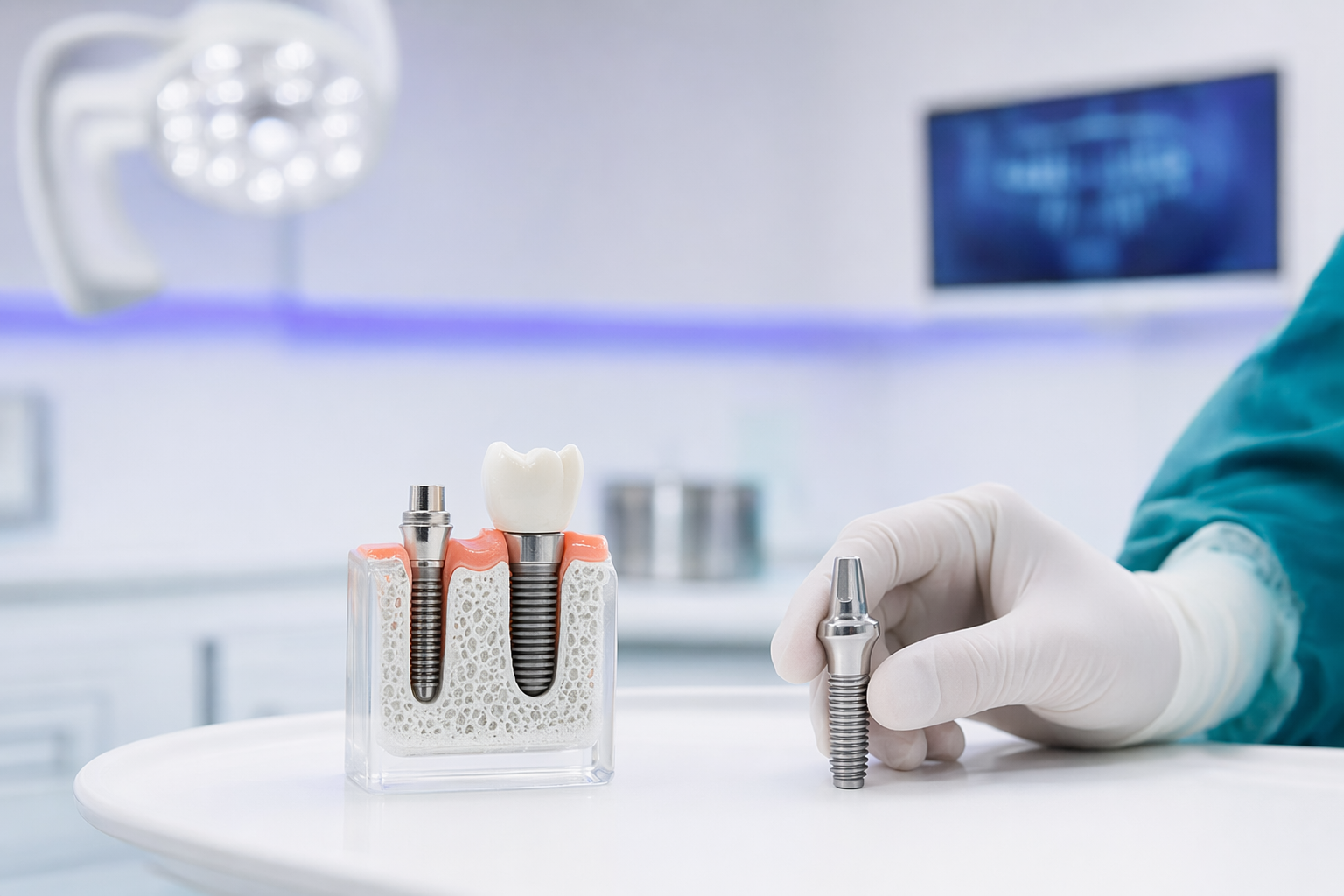
What a dental implant usually includes
People often ask for the cost of "an implant," but the full treatment can include several parts. First, an oral and maxillofacial surgeon or other dental specialist may place the implant post into the jaw. Then there is healing time. After that, another part called the abutment and the final crown or replacement tooth may be made and attached.
Some cases are straightforward. Others involve extra steps before or during implant placement. For example, a surgeon may discuss a bone graft, sinus lift, imaging, sedation, or removal of a damaged tooth first. That is why two people can both need a "dental implant" and get very different estimates.
This page is general education only. It cannot tell you what treatment you personally need. A board-certified oral and maxillofacial surgeon can examine you, explain the plan in plain language, and tell you which parts are included.
- Implant post
- Possible extraction of a tooth
- Possible bone graft or sinus lift
- Abutment and final crown
- Imaging, sedation, and follow-up visits
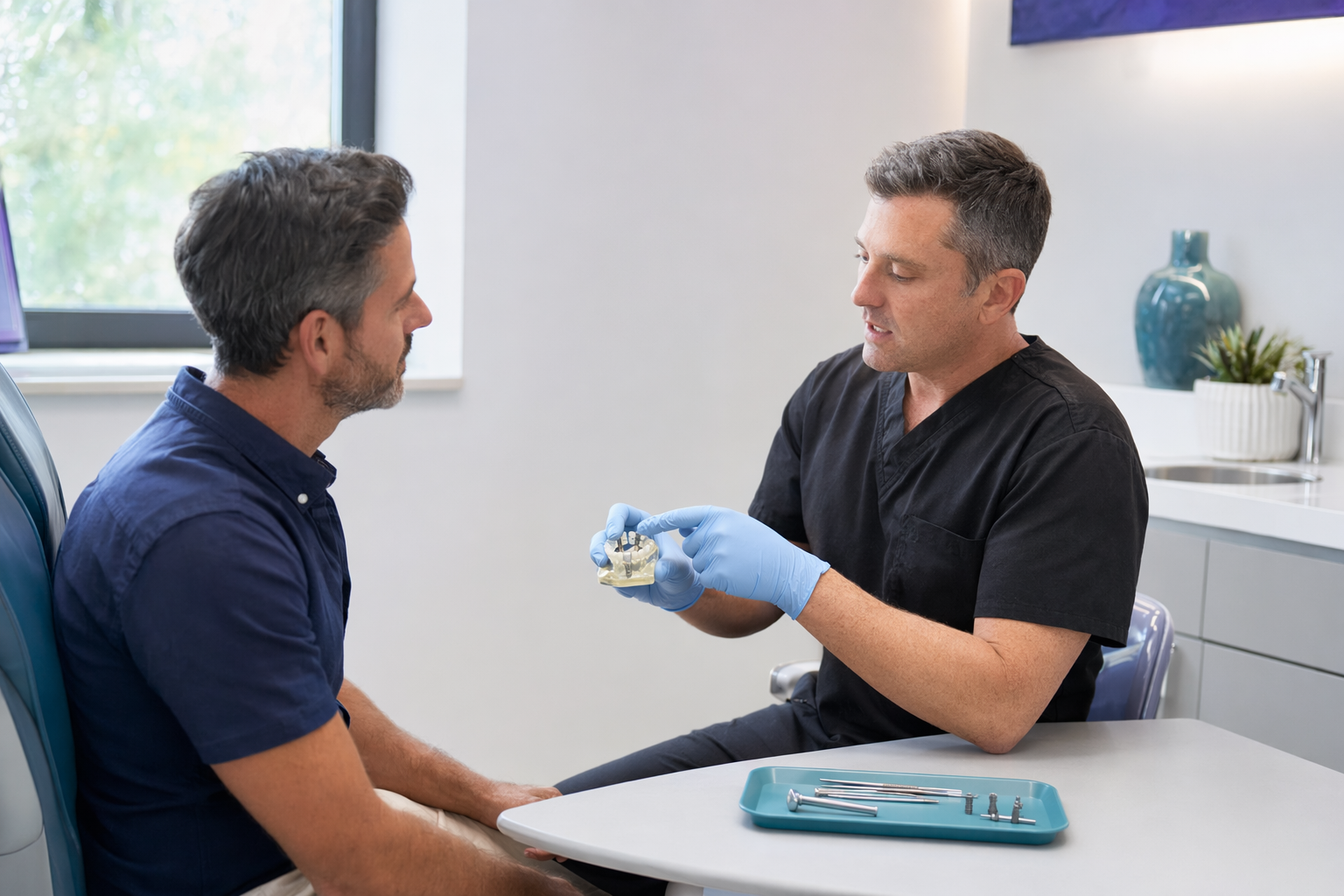
Typical US cost ranges
In the US, a single dental implant often ends up in the range of about $3,000 to $6,000 or more for the full process. That range may include the implant post, abutment, and crown, but not always. In more complex cases, the total can be higher.
If a tooth needs to be removed first, a surgical extraction may add roughly $300 to $1,500+ depending on difficulty and sedation. A bone graft may add around $400 to $3,000+ depending on the type and size. A sinus lift can add more. Sedation, 3D imaging, and specialist fees may be billed separately.
For people replacing several teeth, costs vary widely. Implant-supported bridges and full-arch implant options can range from several thousand dollars to $15,000 to $30,000+ per arch in some markets. These are ranges, not quotes. Your actual written estimate depends on the exact plan, materials, your location, and who provides each part of care.
For a broader look at surgery pricing, see /costs/.
- Single implant: often about $3,000 to $6,000+ total
- Extraction, bone graft, and sedation may cost extra
- Full-arch options can be much higher
- Ranges are not quotes
Why the real price can change a lot
The biggest reason is complexity. If the bone is limited, if the tooth has been missing for a long time, or if nearby anatomy requires a more careful approach, the treatment plan may involve more steps. The type of imaging used, the implant brand or restoration materials, and whether treatment is done in stages can also affect the price.
Location matters too. Fees in large cities are often higher than in smaller markets. The surgeon's training and the setting can matter as well. For example, a board-certified oral and maxillofacial surgeon may offer different sedation options and surgical planning tools than a general office.
Insurance can help in some situations, but many plans cover implants only partly or not at all. Sometimes the crown, extraction, or imaging may be covered differently from the implant itself. Before scheduling, ask for the full plan and full cost in writing, including what is and is not included.
If you are comparing offices, a second opinion is reasonable. You can also use our free service to get matched with a board-certified oral and maxillofacial surgeon in your area. Help may be available in your own language, and the matching service is always free to the patient.
- Complexity changes price
- Sedation and imaging may be separate charges
- Insurance coverage varies a lot
- Get the treatment plan and full cost in writing
Recovery and time off: what is typical
Recovery after implant surgery is usually easier than many people fear, but it still takes time. For many patients, the first 24 to 72 hours are when swelling, soreness, and minor oozing are most noticeable. Many people return to desk-type work within 1 to 3 days, while others prefer a little longer. Typical, not a promise; everyone heals differently.
The gum tissue may start feeling better within 1 to 2 weeks, but the deeper healing between the implant and bone usually takes several weeks to several months. That is why the final crown is often not placed on the same day in every case. Your surgeon may explain a staged timeline based on the procedure they recommend.
In general, some swelling, tenderness, and a limited diet for a short time are common topics after implant surgery. Patients are often told to follow the surgeon's written instructions closely and keep follow-up visits. If there is heavy bleeding, trouble breathing or swallowing, or a serious facial injury, call your local emergency number first. For concerns after a planned procedure, contact the treating surgeon's office.
If you want more plain-language guidance on preparing for surgery and what questions to ask, visit /help/.
- Many people take 1 to 3 days before returning to desk work
- Initial soreness and swelling are often most noticeable in the first few days
- Bone healing can take months
- Call your local emergency number first for heavy bleeding or trouble breathing/swallowing
How to compare surgeons and consultations
You are allowed to ask direct questions. In a consultation, ask who is doing each part of treatment, whether the surgeon is board-certified in oral and maxillofacial surgery, what sedation options are offered, what risks they commonly discuss, and what happens if extra procedures are needed once surgery starts. Then verify credentials yourself.
It also helps to ask for an itemized estimate. Ask whether the quote includes the implant post, abutment, crown, imaging, sedation, grafting, follow-up visits, and any temporary tooth option. If the office says some fees may change, ask under what circumstances. Clear answers now can prevent surprises later.
A second opinion is always reasonable, especially for a high-cost plan or if different offices recommend different approaches. Our role is educational and to help you connect with surgeons. We are not a clinic and do not provide surgery. If you want help finding a board-certified OMS near you, you can get matched for free.
- Ask whether the surgeon is board-certified in OMS
- Ask what is included in the written estimate
- Ask about sedation options and commonly discussed risks
- A second opinion is reasonable
A dental implant often costs about $3,000 to $6,000 or more for one tooth in the US, but the real price depends on the exact steps, sedation, grafting, insurance, and your area, so compare board-certified surgeons and get the full plan and cost in writing.
Common questions
Is a dental implant cheaper than a bridge?
Sometimes no. An implant often costs more upfront, but the comparison depends on the number of teeth involved, bone condition, and what treatment is included. A surgeon or dentist can explain the options for your case.
Does insurance cover dental implants?
Some plans cover part of the process, and some cover little or none. Coverage may differ for the implant, crown, extraction, imaging, or grafting, so ask for details in writing.
Why was I quoted more than the online range?
Online ranges are broad and not quotes. Your estimate may be higher because of grafting, sedation, imaging, complexity, local fees, or because the quote includes the final crown and follow-up care.
How long does the whole implant process take?
In many cases, it takes several months from placement to final tooth, though some timelines are shorter or longer. The exact schedule depends on healing and whether extra procedures are needed.
Do I need an oral surgeon for a dental implant?
Different dental professionals may be involved in implant treatment. Many people choose a board-certified oral and maxillofacial surgeon for the surgical part, especially when the case is more complex.
Can I get a second opinion before paying a deposit?
Yes. A second opinion is reasonable, especially for a costly or complex plan. It can help you compare the diagnosis explanation, treatment steps, sedation options, and written fees.