Quick answers
What is a sinus lift?
A sinus lift is a type of bone graft used in the upper back jaw, usually to create more bone below the sinus so a dental implant may have better support. In simple terms, an oral surgeon makes a small opening, gently lifts the sinus membrane upward, places graft material underneath, and then closes the area so it can heal.
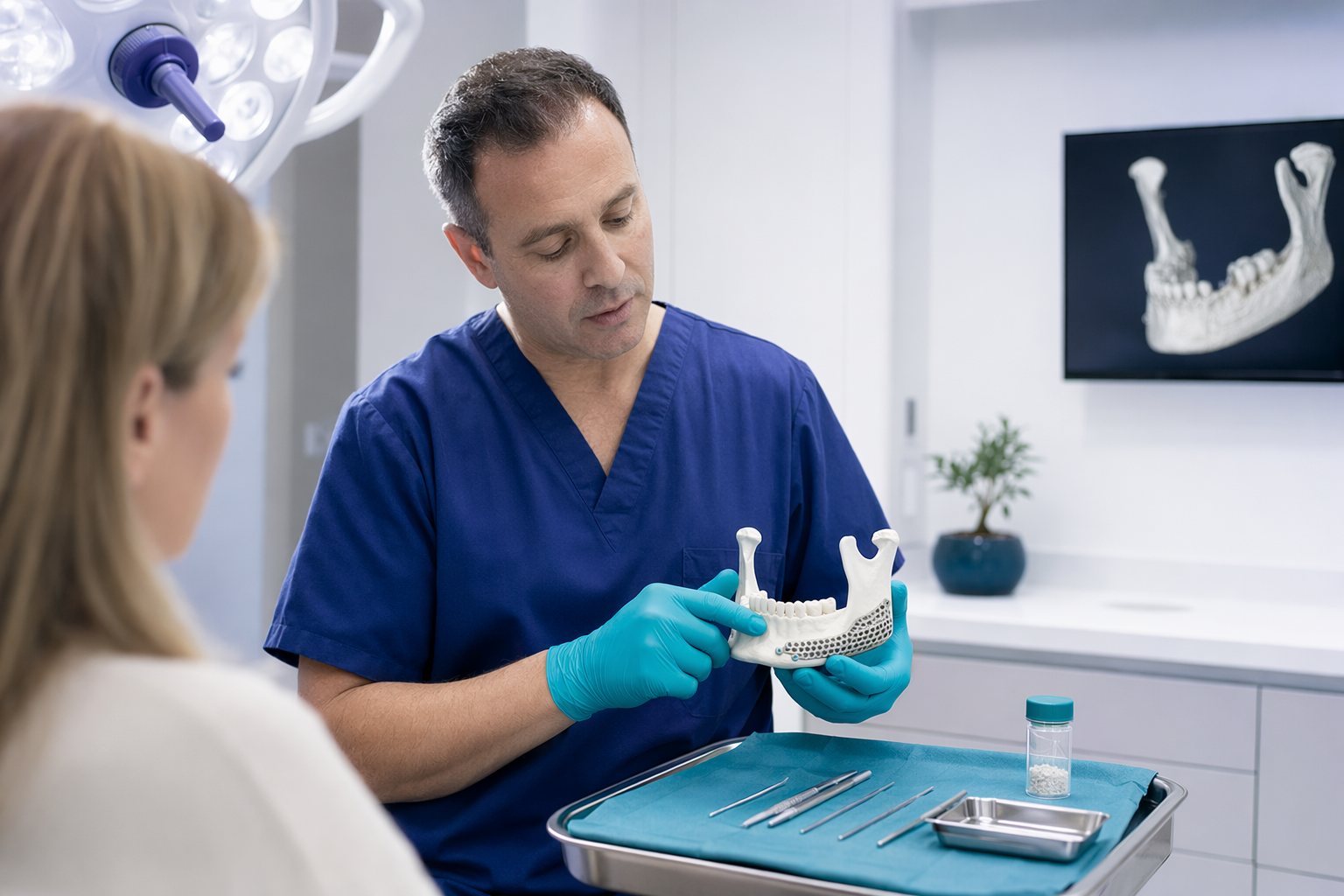
What the procedure is
Your maxillary sinus is the air space above your upper back teeth. When those teeth have been missing for a while, the bone in that area can become thinner, and the sinus can sit lower. In many cases, that leaves less room for an implant.
A sinus lift, also called sinus augmentation, is a procedure that adds bone in this part of the upper jaw. The goal is to increase bone height between the jaw and the sinus. This is general education only. Whether it is part of your treatment plan depends on your exam, scans, and the judgment of a licensed board-certified oral and maxillofacial surgeon.
The basic steps are usually: 1. numb the area and review the sedation plan, if any, 2. make a small opening in the gum and bone, 3. gently raise the thin sinus lining, 4. place bone graft material into the new space, and 5. close the site with stitches. In some cases, an implant may be placed at the same visit. In other cases, the surgeon may wait for healing first.
- Usually done in the upper back jaw
- Often discussed before some dental implants
- May be done with local anesthesia alone or with a sedation option, depending on the case
Why a surgeon may talk about a sinus lift
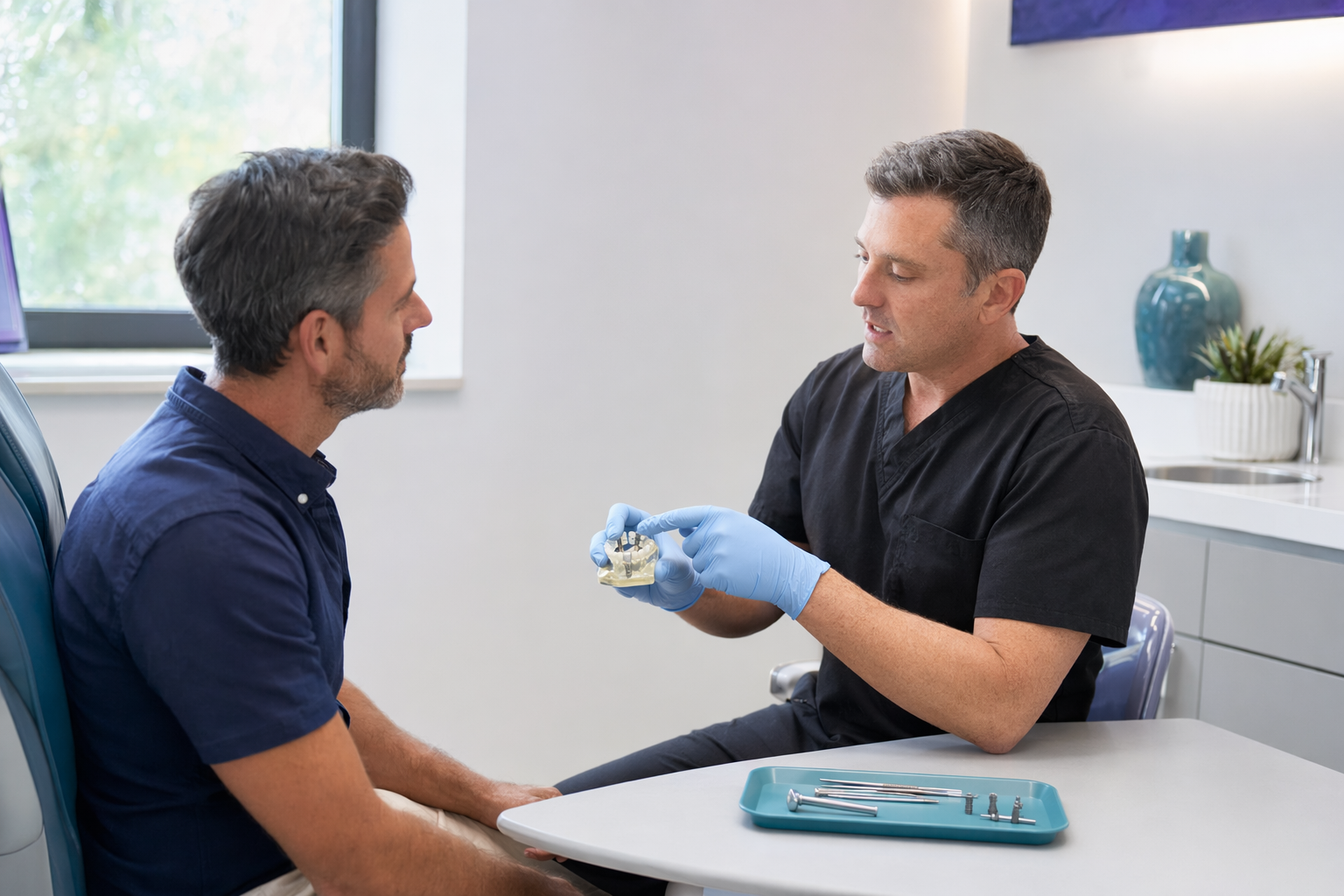
A surgeon may discuss a sinus lift when there is not enough bone height in the upper molar or premolar area for an implant plan. This can happen after tooth loss, long-term denture use, gum disease, or normal sinus anatomy. A 3D scan is often used to measure the area and help plan treatment.
This does not automatically mean you need surgery. It means the surgeon is looking at whether the available bone, sinus position, and implant plan fit together safely and predictably. A second opinion is always reasonable.
At a consultation, ask the surgeon to explain the goal in plain language. Ask what they see on the scan, whether the implant would be placed now or later, what sedation options are available, what risks they want you to understand, and what recovery is typically like. It is smart to choose a board-certified oral and maxillofacial surgeon and verify credentials yourself before scheduling.
- Ask to see the scan and have the plan explained step by step
- Ask whether treatment is staged or done in one visit
- Ask for the full plan and total expected cost in writing
Typical recovery and what people often notice
Recovery after a sinus lift is often manageable, but it is still surgery. Typical, not promised, recovery can include swelling, pressure, mild bleeding or oozing, and soreness for several days. Some people also notice nasal stuffiness, a small amount of blood-tinged drainage, or tenderness when chewing near the area. Everyone heals differently.
Many people feel the first few days are the most noticeable, with gradual improvement over about 1 to 2 weeks. Stitches may dissolve on their own or be removed at a follow-up visit. The bone graft itself usually needs much longer to mature. In many cases, healing for the graft is measured in months, not days.
Your surgeon should give you specific aftercare instructions. Follow those instructions exactly. In general, patients are often told how to keep pressure off the sinus area, what foods are easier at first, and when normal activity can resume. If something feels unclear, call the surgeon's office and ask.
Call the surgeon promptly if you have worsening swelling, fever, pus, bad taste that does not improve, bleeding that seems more than expected, or pain that is getting worse instead of better. If there is heavy bleeding, trouble breathing or swallowing, or a serious facial injury, call your local emergency number first.
- Typical recovery is a range, not a promise
- Short-term healing is days to weeks
- Bone-graft healing is often several months
How much does a sinus lift cost in the US?
A sinus lift in the US often falls somewhere in the low thousands of dollars, but the real number varies a lot. As a broad range, many people see fees from about $1,500 to $5,000+ for the sinus lift itself. If imaging, sedation, extraction, implant placement, or other grafting is part of the overall plan, the total can be higher. These are ranges, not quotes.
Why the difference? Cost often depends on how complex the case is, whether one side or both sides are treated, what graft material is used, whether sedation is added, the surgeon's training and setting, and where you live. Insurance may help in some situations and may not in others. Ask for a written breakdown.
Before you schedule, compare surgeons carefully. Confirm that the surgeon is board-certified, ask what is included in the fee, ask what is not included, and ask whether follow-up visits, imaging, sedation, and implant-related steps are separate charges. You can read more about common fee ranges on /costs/.
- Ask for a written estimate before scheduling
- Confirm whether sedation and imaging are separate fees
- Ranges are educational only, not a personal quote
How to compare surgeons and get help finding one
A consultation is the right place to slow down and ask questions. You are allowed to compare surgeons, get a second opinion, and take time to understand the plan. Ask the surgeon to explain why a sinus lift is being discussed, what the alternatives are in general terms, how long each stage may take, and what risks and benefits they want you to understand.
It is reasonable to ask: Are you board-certified in oral and maxillofacial surgery? How many visits are usually involved? What kind of sedation do you offer? What is the typical recovery like? When would implant placement happen? Can I get the full plan and cost in writing before I decide?
If English is not your first language, ask whether language help is available. Many offices can provide support in other languages or help you communicate more clearly. Oral Surgery Path is a free education and matching service. We are not a clinic, and we do not provide surgery. We can help you find a board-certified oral surgeon to speak with, and the matching service is always free to the patient. You can start at /get-matched/ or explore more common questions at /help/.
- Free matching to board-certified oral surgeons
- You can ask for language support
- A second opinion is always reasonable
A sinus lift is a bone-graft procedure in the upper back jaw that may create more bone below the sinus, and the best next step is to discuss the plan, risks, recovery, and written costs with a board-certified oral surgeon.
Common questions
Is a sinus lift the same as a dental implant?
No. A sinus lift is a bone-grafting procedure in the upper back jaw. It may be discussed before or along with an implant plan, but it is not the implant itself.
Does a sinus lift hurt?
During the procedure, the area is usually numbed and some cases involve a sedation option. Afterward, soreness, swelling, and pressure are common for a few days. Your surgeon should explain what is typical for your situation.
How long does healing take?
Short-term recovery is often about days to 1 or 2 weeks, but the bone graft usually needs longer to mature. In many cases, healing is measured in months. These are typical ranges, not a promise.
Can the implant be placed at the same time?
Sometimes yes, sometimes no. It depends on the amount of existing bone, the treatment plan, and the surgeon's judgment.
How do I choose the right surgeon?
Look for a board-certified oral and maxillofacial surgeon, verify credentials yourself, ask for the treatment plan and full cost in writing, discuss sedation options and risks, and consider getting a second opinion.
Can Oral Surgery Path tell me if I need a sinus lift?
No. Oral Surgery Path provides general education and free matching only. Whether surgery is appropriate for you is a decision between you and a licensed surgeon.