Quick answers
What should I bring to an oral surgery consultation?
An oral surgery consultation is usually a planning visit. You meet the surgeon, review the reason for the visit, talk about imaging and sedation options, and learn what the next steps, timing, and possible costs may look like.
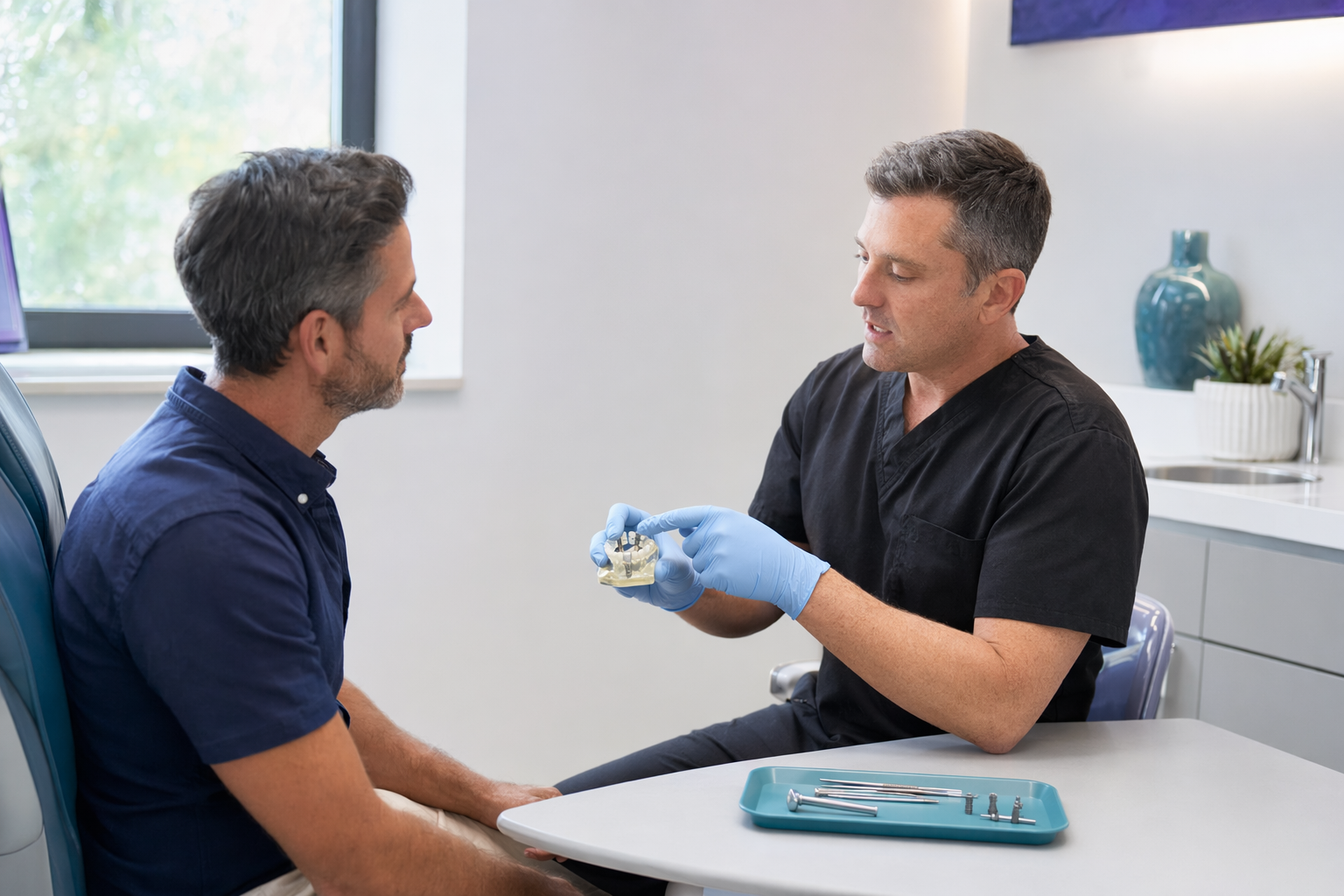
What happens at an oral surgery consultation
In plain terms, a consultation usually happens in a few steps. First, the office checks your basic information and the reason you were referred. Then the surgeon or team reviews any X-rays or scans, looks in your mouth or jaw area, and explains what they see in general terms.
Next, the surgeon may talk through possible treatment approaches, whether surgery is commonly considered in cases like yours, and what the procedure would involve if you choose to move forward. They may also explain where it would be done, how long it typically takes, and what kind of follow-up is common.
This visit is also your chance to ask questions. You can ask about board certification, the surgeon's experience with your type of procedure, sedation choices, recovery, and the full written cost before scheduling. If anything is unclear, ask for it in simpler language. Many offices can help in more than one language.
If you are still comparing options, a second opinion is reasonable. You can also use our free matching service at /get-matched/ to look for a board-certified oral and maxillofacial surgeon in your area.
- Consultations are for information and planning
- A second opinion is normal and reasonable
- Many offices can provide language support

What to bring with you
It helps to bring anything that makes the visit more complete and less stressful. If a dentist, orthodontist, physician, or emergency room referred you, bring the referral note if you have one. If you already have dental X-rays or a scan, the office may want those images or the imaging center information so they can review them.
Bring a photo ID, your insurance card if you plan to use insurance, and a simple written list of your current medicines and allergies. If you have questions, write them down ahead of time. Many people feel rushed or nervous in medical offices, and a written list can help you remember what matters most.
You may also want to bring a trusted family member or friend. Another person can help you remember what was said, especially if English is not your first language. If the office offers interpreter help, ask about that when you schedule.
Try not to bring original records you cannot replace unless the office specifically asks for them. In many cases, copies or digital access are enough.
- Photo ID
- Insurance card, if applicable
- Referral note, if you have one
- Prior X-rays or scan details, if available
- Written list of medicines and allergies
- Your questions on paper
Questions worth asking the surgeon
A consultation should leave you with a clear picture of the plan being discussed. You are allowed to slow the conversation down and ask for plain answers. Choosing a board-certified oral and maxillofacial surgeon matters, and it is smart to verify credentials yourself before booking.
Useful questions often include: What procedure is being considered, and why is it commonly recommended in cases like mine? What imaging is needed? What are the sedation options, and what are the general risks and benefits of each? What kind of recovery is typical, and what follow-up visits are usually needed?
You can also ask practical questions. Will the office provide written instructions? What is included in the estimate? What costs are separate, such as imaging, pathology, facility fees, or anesthesia? If insurance is involved, what part is the patient's responsibility?
If you want more ideas, our broader /help/ section can help you prepare for common oral surgery questions.
- Is the surgeon board-certified in oral and maxillofacial surgery?
- What exactly is included in the written estimate?
- What sedation options are available in this office or setting?
- What follow-up care is typically expected?
What about cost at the consultation
Many people worry about cost before anything else. That is understandable. A consultation may be free in some offices, but in others there is a consultation fee, and sometimes extra charges apply if new imaging is needed. In the US, a consultation might range from about $0 to $300, while additional imaging can add more depending on the type and your area. These are ranges, not quotes.
If surgery is later discussed, the real total depends on the procedure, how difficult the case is, the kind of sedation used, whether a hospital or surgery center is involved, insurance rules, and local pricing. The same procedure can cost very different amounts in different cities.
Before you schedule anything, ask for the full plan and full cost in writing. Ask what is included and what is billed separately. Our /costs/ page explains common oral surgery price ranges in plain language.
If you are comparing offices, use the same questions with each one. That makes it easier to compare surgeons, settings, and costs fairly.
- Consults may be free or may have a fee
- Imaging may be a separate charge
- Written estimates help you compare clearly
Planning ahead for surgery and recovery
Even if your first visit is only a consultation, it helps to ask what recovery usually looks like. Typical recovery depends on the procedure. Some people return to normal activities within a few days after minor surgery, while larger procedures can take weeks. These are typical timelines, not a promise. Everyone heals differently.
Ask what is commonly normal after surgery and what signs mean you should call the surgeon's office. Offices usually give written instructions about eating, activity, swelling, bleeding, and follow-up. Reading those instructions before the surgery date can make the process feel less uncertain.
If sedation is being discussed, ask whether you would need someone to drive you home and stay with you for a period after the procedure. Policies vary by office and sedation type, so it is best to confirm ahead of time.
If you have an urgent problem such as heavy bleeding, trouble breathing or swallowing, or a serious facial injury, call your local emergency number first. For non-emergency planning help, our free matching service can help you find a board-certified surgeon, and the service is free to patients.
- Recovery time depends on the procedure
- Ask what is normal and when to call the office
- Confirm ride-home rules if sedation is possible
Bring your ID, any referral or imaging you have, a list of medicines and questions, and use the consultation to compare board-certified surgeons, sedation options, recovery, and the full written cost.
Common questions
Do I need to bring X-rays to an oral surgery consultation?
If you already have recent X-rays or a scan, bring them or ask your dental office how to send them. If you do not have them, the surgeon's office will tell you whether new imaging is needed.
Should I bring my insurance card?
Yes, if you plan to use insurance. It can help the office check benefits, but you should still ask for the expected patient cost in writing.
Can I bring someone with me?
Usually yes. A family member or friend can help you remember information and ask questions, especially if you feel nervous or want language support.
What questions should I ask at the consultation?
Ask about board certification, the proposed procedure, imaging, sedation options, general risks, typical recovery, follow-up care, and the full written cost before scheduling.
How much does a consultation usually cost?
In the US, some consultations are free and others may range up to a few hundred dollars, with extra imaging charged separately in some cases. These are ranges, not quotes.
Is it okay to get a second opinion?
Yes. A second opinion is common, especially before surgery, sedation, or a large out-of-pocket cost.