Procedures
Dental bone grafting: why it's needed, healing, and cost
Dental bone grafting is a procedure used to add or support bone in the jaw. It is often discussed when there is not enough bone for a future dental implant, after a tooth is removed, or when the jawbone has changed over time.
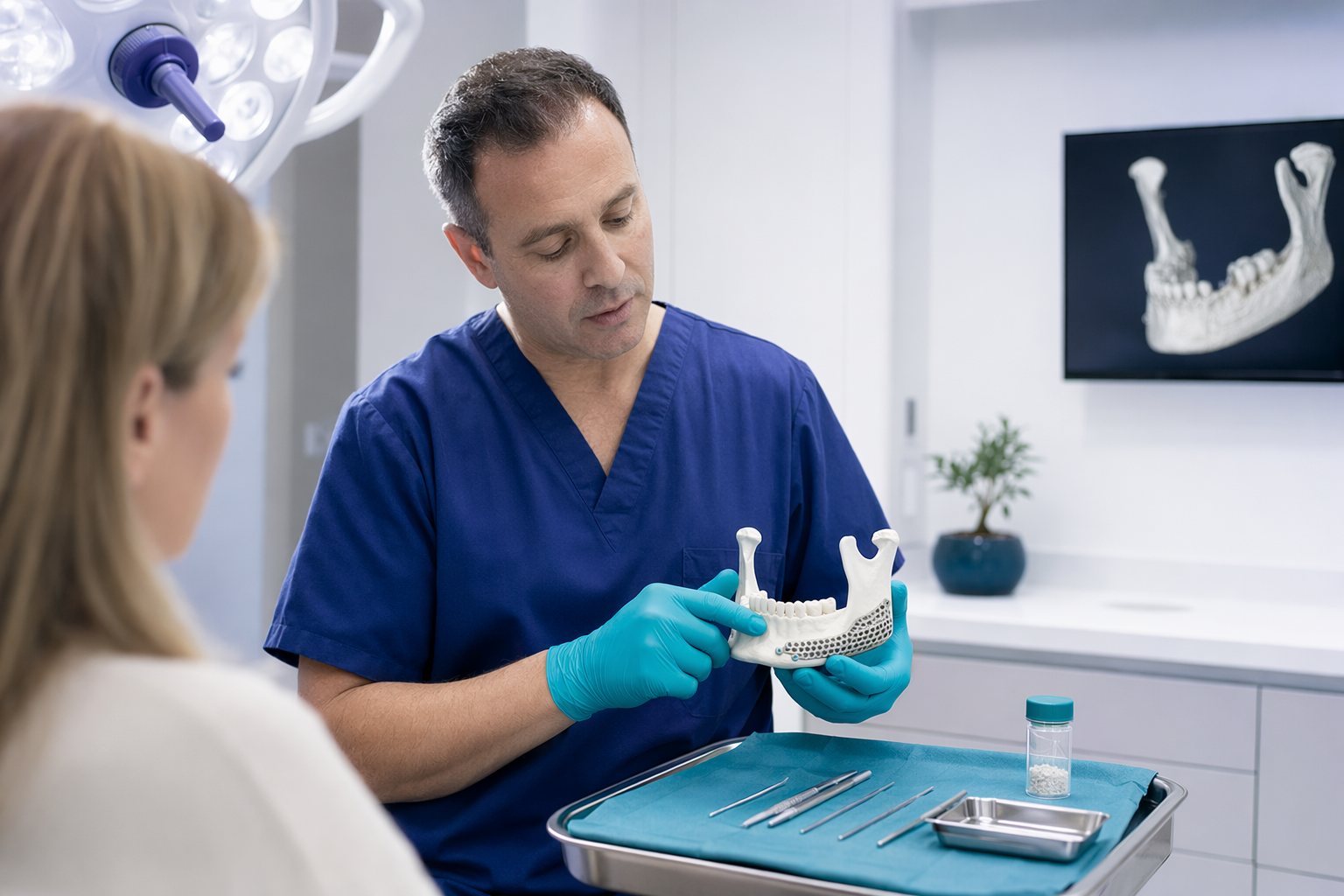
What dental bone grafting is
In simple terms, a bone graft places graft material into an area of the jaw where more bone support is needed. The goal is to help the body build or maintain bone in that area over time. An oral and maxillofacial surgeon may discuss this before an implant, at the time of an extraction, or in other situations where bone volume matters.
The basic steps are usually straightforward. The surgeon examines the area, reviews imaging, explains the plan, and talks about anesthesia or sedation options. During the procedure, the graft material is placed in the site and the area is closed so it can heal.
The graft material can come from different sources. In general, it may be your own bone, donor bone processed for medical use, animal-derived material processed for medical use, or a synthetic material. The right choice depends on the surgical plan, the size and location of the area, and the surgeon's judgment.
If you are early in the process, it can help to review the broader list of procedures and then speak with a board-certified oral and maxillofacial surgeon about what is being proposed in your case.
- Bone grafting is meant to support bone where more structure is needed
- It may be done before an implant or at the time of tooth removal
- The exact material and approach vary by case
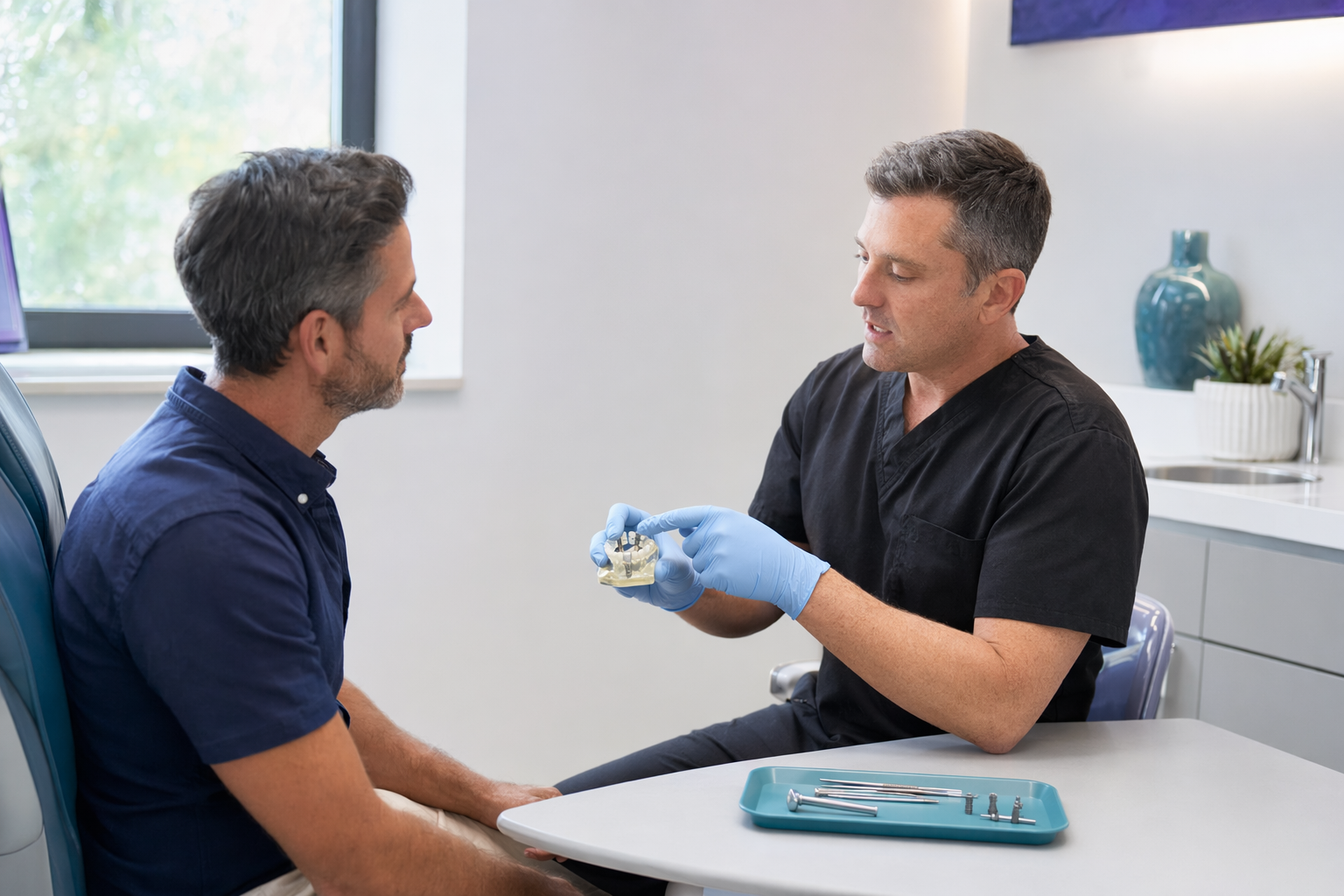
Why a surgeon may recommend it
A jawbone can lose height or width after a tooth is removed. Bone can also change because of infection, gum disease, trauma, long-term missing teeth, or normal remodeling over time. When that happens, there may not be enough bone in the right shape or position for the next step of treatment.
One common reason for grafting is to prepare a site for a dental implant. In many cases, implants need a certain amount of healthy bone support. A graft may also be used to preserve the shape of the bone after an extraction, which is sometimes called socket preservation.
Some grafts are small and limited to one tooth area. Others are more complex, such as ridge augmentation or sinus-related grafting in the upper jaw. The name of the procedure matters because it affects healing, cost, and whether treatment is done in one stage or several stages.
This page is general education only. Whether a person needs bone grafting, and what type, is a decision made with a licensed surgeon after an exam and imaging.
- Missing teeth can lead to bone shrinkage over time
- Implant planning is a common reason bone grafting is discussed
- Small grafts and larger grafts can have very different timelines
What to expect at the consultation and on procedure day
A consultation usually includes imaging, a discussion of the treatment goal, and a written plan. Ask the surgeon to explain what type of graft is planned, whether it is being done with another procedure, and what the expected stages are. It is also reasonable to ask about risks, alternatives, and what could change the final timeline.
Sedation is another important topic. Some bone grafts are done with local anesthesia only, while others may involve deeper sedation depending on the procedure and setting. You can review general information here: sedation options for oral surgery. The surgeon and anesthesia team decide what is appropriate for the procedure and the patient.
On the day of surgery, the team typically confirms the plan, reviews instructions, and completes the procedure in the office or surgical setting. Afterward, you are usually given written aftercare instructions and a follow-up plan.
A second opinion is always reasonable, especially if the plan is complex or expensive. When comparing surgeons, look for a board-certified oral and maxillofacial surgeon and verify credentials yourself before scheduling.
- Ask what kind of graft is planned and why
- Ask whether treatment is one stage or multiple stages
- Ask for the plan and full cost in writing before you book
Healing and recovery: typical timeline
Recovery has two parts. First, there is early healing after the procedure. Second, there is the slower process of the graft maturing and integrating with the jaw. These are not the same thing.
Early recovery often involves soreness, swelling, and a soft-food period. Many people feel better over the first several days, but the area can stay tender longer than that. Bruising can happen. Small particles of graft material may sometimes be noticed in the mouth in some cases, depending on the type of graft and the site.
The longer healing phase usually takes months, not days. For many grafts, the surgeon may want to wait several months before placing an implant or moving to the next step. Typical timelines vary widely based on the size of the graft, the location in the jaw, the material used, and how the site heals. These are typical patterns, not a promise. Everyone heals differently.
It is important to follow the surgeon's written instructions closely and attend follow-up visits. In general, people are told to contact the surgical office if pain, swelling, bleeding, or drainage seems to be getting worse instead of better, or if something does not seem right. For emergencies such as heavy bleeding, trouble breathing or swallowing, or a serious facial injury, call your local emergency number first.
- Early recovery is usually days to a couple of weeks
- Bone maturation often takes several months
- Healing time depends on the type and size of the graft
Cost of bone grafting in the US
Bone grafting costs vary a lot. A small socket graft done at the time of an extraction may cost a few hundred to over a thousand dollars. Larger ridge grafts or more complex grafting can be several thousand dollars. In broad terms, many patients may see ranges from about $300 to $4,000+ depending on the procedure. These are ranges, not quotes.
The real number depends on the size of the graft, the material used, whether membranes or special supplies are needed, whether it is done with an extraction or implant, the type of anesthesia or sedation, the surgeon's training, and local prices in your area. Insurance may help in some situations and may not help in others. Coverage rules differ widely.
Ask for the total expected cost in writing before scheduling. That should include the procedure itself and any separate charges for imaging, sedation, follow-up, or future implant-stage treatment if that is part of the larger plan. You can also compare general costs on our site before your consultation.
If you want help finding practices to contact, our matching service is free to patients. You can start here: get matched. Help is often available in languages other than English.
- Small grafts may cost hundreds
- Larger or staged grafts can cost thousands
- Sedation, materials, and location affect the final price
How to compare surgeons and make an informed choice
Bone grafting is not just about price. Experience, planning, communication, and follow-up matter too. Ask whether the surgeon is a board-certified oral and maxillofacial surgeon, and verify that credential yourself through reliable sources. It is also fair to ask how the office handles questions after surgery and what support is available if you need instructions repeated in your own language.
You are allowed to slow the process down and compare options. Ask what the goal of the graft is, what the timeline may look like, what the main risks are, and what could delay the next step. If implants are part of the plan, ask whether the graft and implant are expected to be done at different times.
A good consultation should help you understand the plan in plain language. You should know what procedure is being proposed, what it may cost, what the typical recovery looks like, and who to contact after surgery. If anything is unclear, ask for it again in simpler terms.
This site does not provide surgery or medical advice. We provide education and a free way to connect with surgeons so you can ask questions directly and decide what works for you.
- Verify board certification yourself
- Get the treatment plan and price in writing
- A second opinion is reasonable for any major decision

What to expect with oral surgery
Most procedures follow this path. Your surgeon will confirm the details for your case.
- 1 Consultation & imaging
The surgeon examines you, reviews X-rays or a 3D scan, explains your options, and answers your questions. Ask about board certification, the plan, sedation, and the full cost before you agree to anything.
- 2 Choosing sedation
Many oral surgeries use local anesthesia, IV sedation, or general anesthesia depending on the case and your comfort. The surgeon explains the options, the risks, and how you'll feel during and after.
- 3 The procedure
On the day, the surgical team prepares you, confirms the plan, and performs the procedure. Most outpatient oral surgeries take from under an hour to a few hours depending on complexity.
- 4 Recovery & aftercare
You go home the same day with written aftercare instructions for swelling, pain, diet, and rest. The surgeon explains what's normal and exactly when to call if something isn't.
- 5 Follow-up
A follow-up visit checks healing and removes sutures if needed. For implants or jaw surgery, the full timeline can run weeks to months as the bone heals.
A dental bone graft adds support to the jaw when more bone may be needed, and the main things to understand are the type of graft, the healing timeline, the cost range, and the importance of choosing a board-certified oral surgeon.
Common questions
Is bone grafting always needed before a dental implant?
No. Some people have enough bone already, and some do not. Whether grafting is recommended depends on the site, the bone available, and the surgeon's evaluation.
How long does a bone graft take to heal?
Early recovery may be days to a couple of weeks, but the graft itself often needs months to mature. The timeline depends on the type and size of the graft and how the area heals.
Is bone grafting painful?
People often have soreness and swelling after the procedure, but the experience varies. The surgeon explains anesthesia, sedation options, and what recovery is typically like for that type of graft.
How much does dental bone grafting cost?
Costs vary widely. A small graft may be a few hundred dollars, while more complex grafting can be several thousand. These are ranges, not quotes, and the final cost depends on the case, sedation, and location.
Can I get a second opinion?
Yes. A second opinion is reasonable, especially for a complex or high-cost treatment plan.
How do I find the right surgeon?
Look for a board-certified oral and maxillofacial surgeon, verify credentials yourself, compare written treatment plans, and ask questions until the plan and cost are clear.