Surgical care
Bone Grafting & Sinus Lift
Bone grafting and sinus lift are procedures that add or support bone in the upper or lower jaw, often so a dental implant can be placed later. In simple terms, the surgeon makes space, places graft material where bone is thin, protects the area while it heals, and then checks whether the site is ready for the next step.
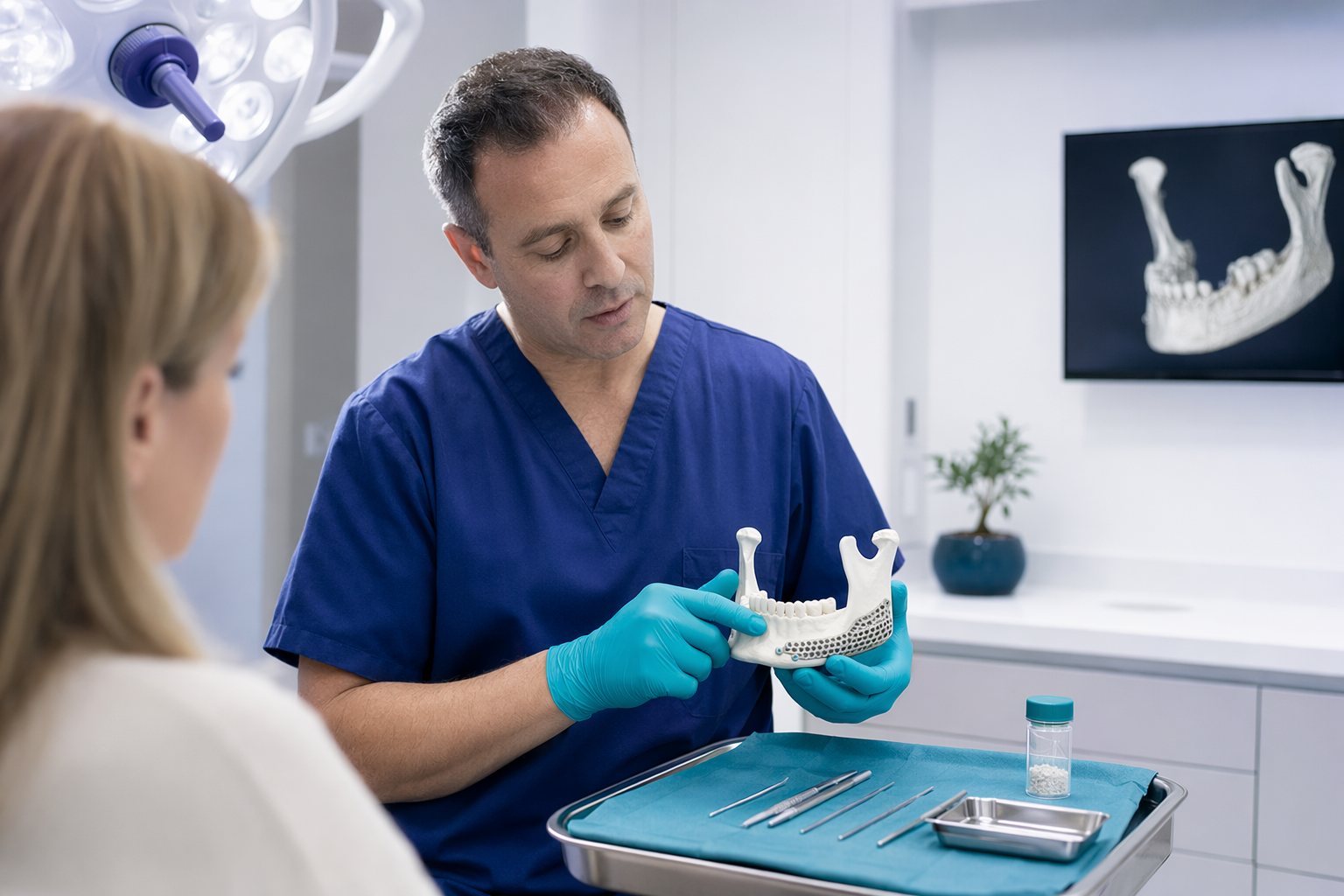
What bone grafting and a sinus lift involve
A bone graft is used when part of the jaw does not have enough height, width, or density to support an implant in a stable way. A sinus lift is a specific type of graft in the upper back jaw. The sinus membrane is gently moved upward, and graft material is placed underneath to create more bone height.
The exact steps depend on the location and the amount of bone loss. In many cases, the surgeon numbs the area, opens the gum, prepares the site, places graft material, and closes the area with stitches. Some cases are done at the same time as an implant. Other cases are staged, which means the graft heals first and the implant is placed later.
Graft material can come from different sources. A surgeon may explain synthetic material, donor material, animal-derived material, or in some cases the patient's own bone. Which option is used depends on the surgical plan, the amount of bone needed, and the surgeon's judgment.
If you are comparing options, it can help to review the broader list of procedures and services so you understand where bone grafting fits into a larger implant plan.
- Bone grafting rebuilds or supports lost jawbone
- A sinus lift is usually done in the upper back jaw
- Some cases are one stage, others need healing before the implant
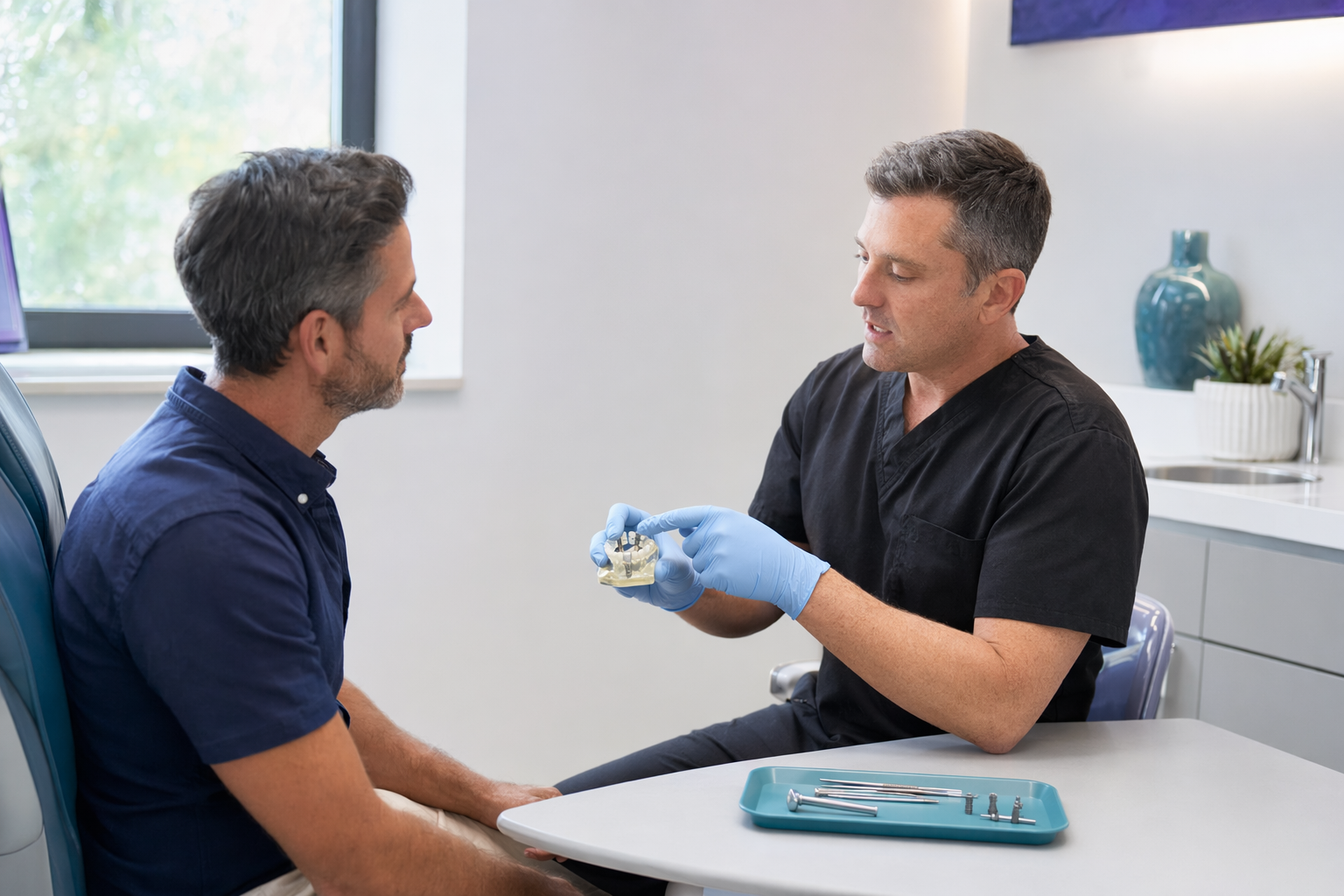
Why a surgeon may discuss these procedures
People are often told about bone grafting or a sinus lift when there has been bone loss after a tooth is removed, after gum disease, after long-term tooth loss, or because the sinus sits low in the upper jaw. The goal is not the graft itself. The goal is to create a foundation that may support an implant or help preserve the shape of the jaw.
This is one reason a consultation matters. The surgeon may review imaging, measure the available bone, and explain whether the site looks suitable for an implant now or whether more support may be needed first. That decision is individual and should come from a licensed, board-certified oral and maxillofacial surgeon who has examined the case.
A second opinion is always reasonable, especially if the treatment plan feels confusing, the timeline is long, or the cost seems much higher than expected. You are allowed to ask why the graft is being recommended, whether there are alternatives, and what could happen if treatment is delayed.
- Common reasons include bone loss, long-term missing teeth, or low sinus height
- Imaging is often used to measure bone before planning treatment
- A second opinion is appropriate if you are unsure
Consultation, sedation, and questions to ask
A consultation is the time to slow things down and get the plan in plain language. Ask the surgeon to explain what part of the jaw is being treated, what type of graft they plan to use, whether the implant is expected at the same visit or later, and what the healing checkpoints will be. Ask for the plan and full cost in writing before you schedule.
It is also reasonable to ask about sedation options. Depending on the case, the discussion may include local numbing, medication to help with anxiety, or deeper sedation methods. Risks, benefits, limits, and recovery expectations should be explained clearly. This page is general education only, so the right approach for any one person should be decided with the surgeon.
Choose a board-certified oral and maxillofacial surgeon and verify credentials yourself. Ask how often they perform bone grafting and sinus lift procedures, who provides anesthesia if used, and what follow-up care is included. If English is not your first language, ask whether help is available in your language. Many offices can provide language support.
If you want help finding offices to compare, get matched with surgeons in your area. The matching service is free to patients and only collects contact details and basic interest information.
- Ask for the treatment plan and full cost in writing
- Ask about sedation options, risks, and follow-up visits
- Verify board certification yourself
Recovery: typical timeline, what is normal, and when to call
Recovery after bone grafting or a sinus lift is usually a process of days for early healing and months for the graft to mature. Typical, not a promise: many people have swelling, tenderness, mild bleeding or oozing, and some congestion or pressure if the sinus area was treated. The first few days are often the most noticeable. Stitches may dissolve on their own or be removed later, depending on the case.
Healing time varies. In many cases, gum tissue starts settling within 1 to 2 weeks, while the grafted bone may need several months before the next stage is considered. Everyone heals differently. Smoking, overall health, the size of the graft, and whether an implant is placed at the same time can all affect the timeline.
The surgeon's office should tell you what is expected after the procedure and what restrictions apply. In general, patients are often told to protect the area, keep follow-up visits, and avoid anything that could disturb the graft. The exact instructions come from the treating surgeon, not from a website.
Call the surgeon's office if you have symptoms they told you to report, or if pain, swelling, drainage, fever, or bleeding seems worse instead of better. For heavy bleeding, trouble breathing or swallowing, or a serious facial injury, call your local emergency number first.
- Early swelling and tenderness are common after surgery
- Soft-tissue healing may take 1 to 2 weeks; bone healing often takes longer
- Everyone heals differently, and timelines are not guarantees
Cost, insurance, and how to compare surgeons
Costs for bone grafting and sinus lift procedures in the US vary a lot. Honest ranges, not quotes: a smaller bone graft may fall around $300 to $1,500 per area, while a larger graft can be $1,500 to $3,500+. A sinus lift often ranges around $1,500 to $5,000+ depending on complexity. If imaging, sedation, membranes, extractions, or implant placement are separate, those can add to the total.
The real number depends on the case, the amount and type of graft material, sedation type, imaging, whether the procedure is done with an extraction or implant, whether insurance contributes anything, and your local market. Dental insurance varies widely. Some plans may help with parts of the treatment, while others may not. Ask the office for a written estimate that lists what is included and what is billed separately.
When comparing surgeons, look at more than the price. Confirm board certification, ask what follow-up care is included, ask who handles complications if they happen, and ask whether the office can explain costs in your preferred language. A low estimate is not always the better value if important parts of care are left out.
If you are early in the process, start with services or procedures to understand your options. When you are ready to compare local offices, get matched. The service is free, and you decide which surgeon to contact.
- Bone grafting and sinus lift costs are ranges, not quotes
- Ask what is included: imaging, sedation, materials, follow-up, and implant stages
- Compare credentials, communication, and written pricing, not just the lowest number

Bone grafting and sinus lift procedures add bone to the jaw, often to support a future implant, and the best next step is a written consultation with a board-certified oral surgeon you have carefully compared.
Common questions
Is a sinus lift the same as a bone graft?
A sinus lift is a specific type of bone graft done in the upper back jaw, under the sinus area.
Can an implant be placed at the same time as the graft?
Sometimes, yes. In other cases, the graft heals first and the implant is placed later. The timeline depends on the surgical plan.
How long does healing usually take?
Soft tissue may improve over 1 to 2 weeks, but the grafted bone often needs several months before the next stage. Typical only, not a guarantee.
Does bone grafting hurt?
Many people expect soreness and swelling after surgery. The surgeon should explain pain control and what recovery usually feels like for that procedure.
Will insurance pay for it?
Sometimes a plan may help with part of the treatment, but coverage varies a lot. Ask the office for a written estimate and a benefits check if they offer one.
How do I choose a surgeon?
Look for a board-certified oral and maxillofacial surgeon, verify credentials yourself, ask for the plan and full cost in writing, and consider getting a second opinion.