Surgical care
Dental Implant Surgery
Dental implant surgery is a procedure to place a small titanium post in the jawbone where a tooth is missing. In simple terms, the surgeon evaluates the area, places the implant in the bone, allows healing, and then your restoring dentist adds the visible tooth or teeth later.
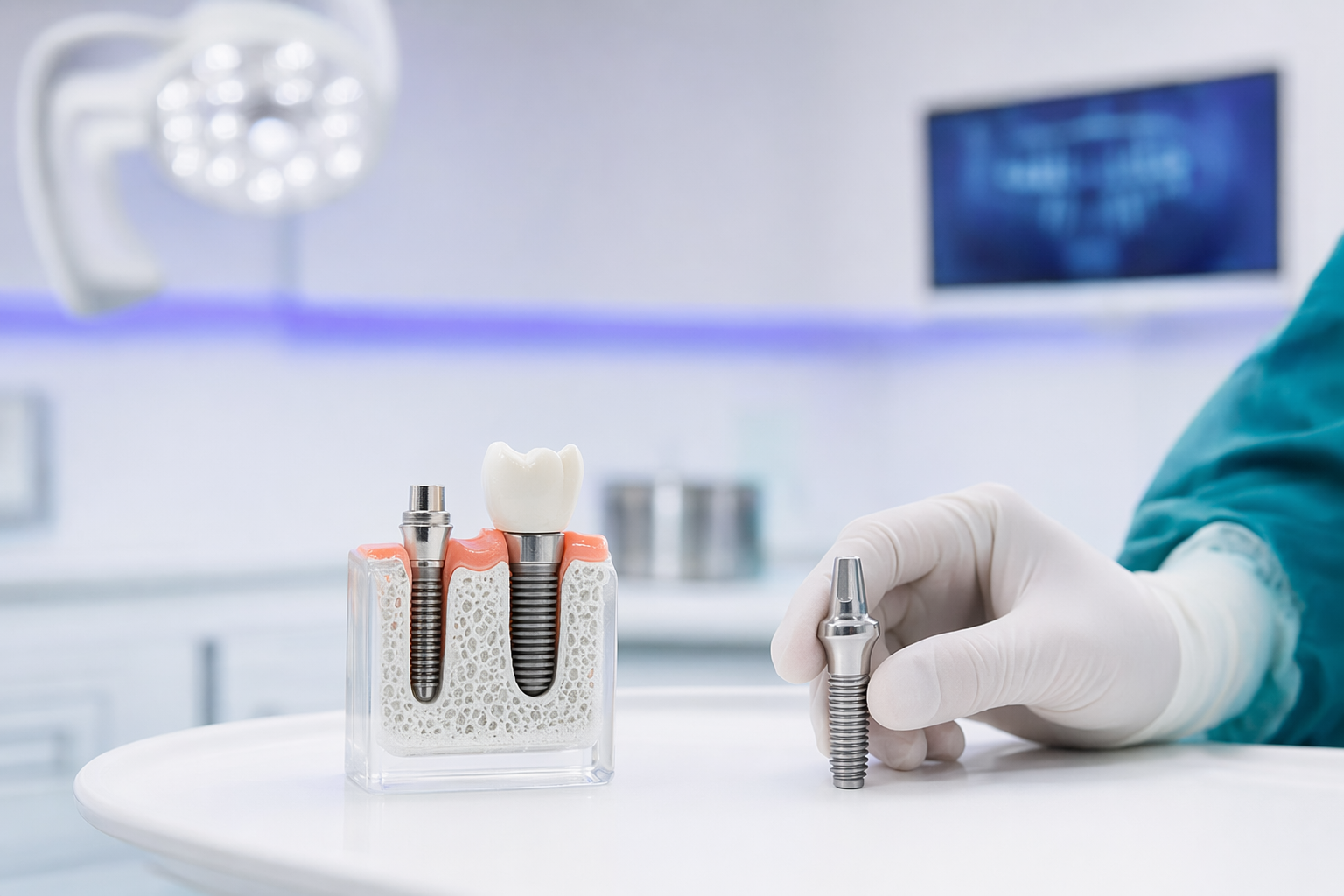
What dental implant surgery involves
A dental implant is an artificial tooth root. It is usually made of titanium. During surgery, an oral and maxillofacial surgeon places the implant into the jawbone through the gum. Over time, the bone may grow around the implant and help hold it in place. After healing, a dentist may attach a connector and a crown, bridge, or full-arch prosthesis.
Implants can be used for one missing tooth, several missing teeth, or in some cases a full upper or lower arch. Some people need one stage of surgery. Others may need more than one step, such as a tooth removal first, a bone graft, or extra healing time before the final tooth is attached.
The exact plan depends on the amount of bone, the location in the mouth, the number of teeth being replaced, and the surgeon's exam and imaging. This page is general education only. A board-certified oral and maxillofacial surgeon can explain what may be possible in your case.
- Single implant for one missing tooth
- Multiple implants for several teeth
- Full-arch implant support for a full upper or lower set of teeth
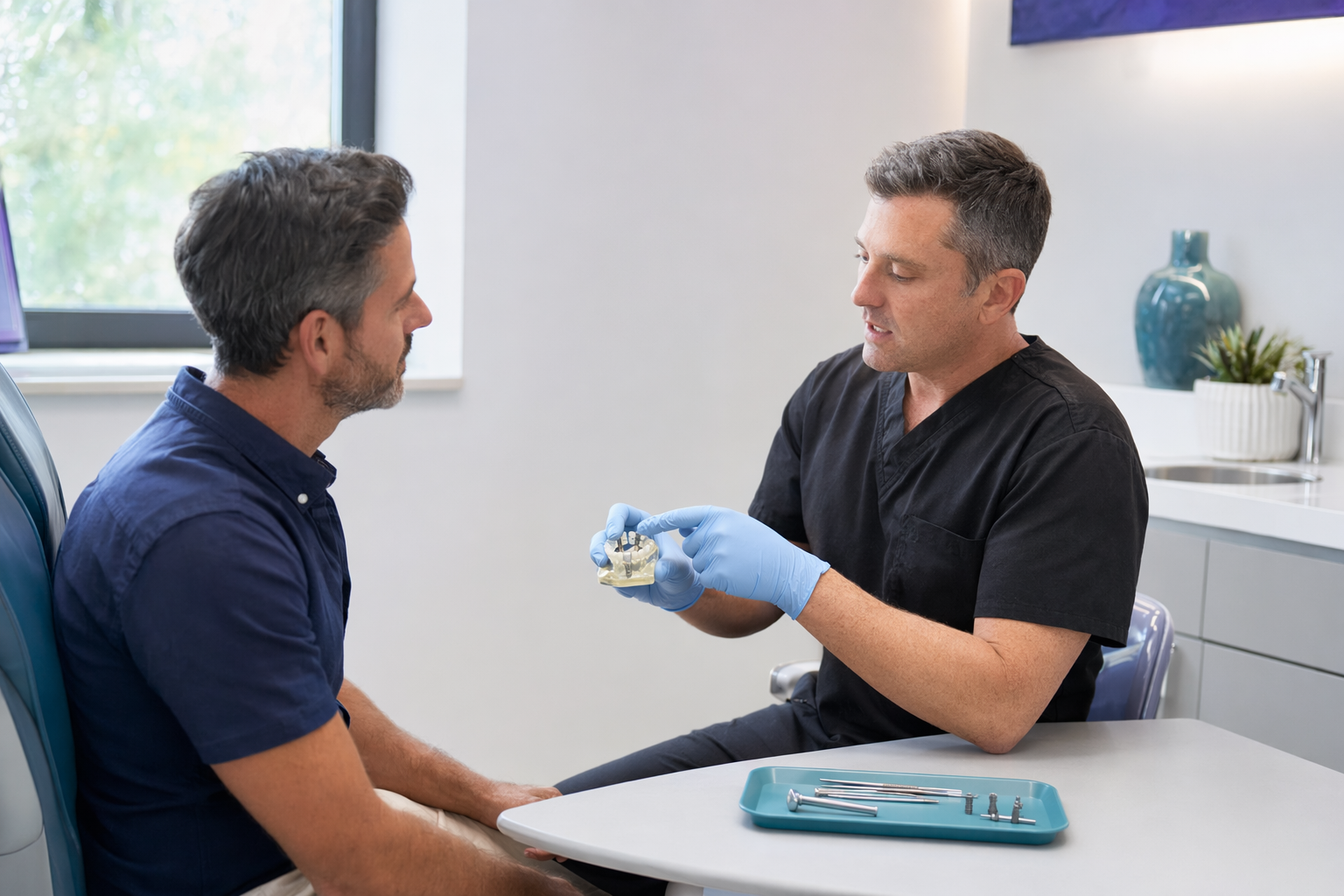
What happens before, during, and after the procedure
The process usually starts with a consultation. The surgeon may review imaging, examine the area, and explain whether implant placement may be straightforward or more complex. You can ask how many visits may be needed, whether grafting may be part of the plan, what type of sedation may be offered, and what risks and alternatives were discussed.
On the day of surgery, the surgeon numbs the area. Some offices also offer additional sedation options. The gum is opened, the bone is prepared, and the implant is placed. In some cases, a healing cap is placed. In others, the gum is closed over the implant during healing. The visible replacement tooth is often not placed by the surgeon that same day unless your team has planned for that.
After surgery, it is common to have some swelling, soreness, minor bleeding, and a limited diet for a period of time. Follow-up visits are often part of the process so the surgeon can check healing. If you are comparing treatment paths, you can review more general procedure information on /procedures/ and service overviews on /services/.
- Ask who is doing each part: surgery, restoration, and follow-up
- Ask whether the implant, abutment, and final tooth are all included in the written plan
- Ask about sedation choices, recovery expectations, and possible delays
Recovery and healing: honest timelines
Typical recovery after implant placement is often measured in two parts. The first part is early recovery, which is the first few days to two weeks. During this time, many people focus on swelling, tenderness, and returning to normal daily activities. The second part is bone healing, which can take several months before the final tooth is attached. These are typical timelines, not a promise. Everyone heals differently.
Mild swelling, bruising, jaw stiffness, and discomfort can be normal in the early period. Some people return to desk work quickly, while others prefer more time depending on the number of implants, whether grafting was done, and the type of sedation used. A surgeon will usually give detailed aftercare instructions for eating, cleaning the area, and activity.
Call the surgeon's office if you have concerns about pain that seems to worsen instead of improve, bleeding that does not seem to slow, fever, a bad taste or drainage, or new swelling after initial improvement. If there is heavy bleeding, trouble breathing or swallowing, or a serious facial injury, call your local emergency number first.
If you are nervous about the process, it is reasonable to ask for the recovery plan in writing before scheduling. You can also ask what is considered normal after surgery and what symptoms should lead to a same-day call.
- Early recovery is often days to 2 weeks
- Bone healing often takes months
- Typical timelines are not a guarantee
Cost of dental implant surgery
Dental implant costs in the US vary a lot. Honest ranges are more useful than a single number. For one implant surgery, a common range is about $1,500 to $3,500 for the surgical placement itself. If you include the implant part, abutment, and crown from start to finish, a single-tooth total is often around $3,000 to $6,500 or more. Multi-implant and full-arch treatment can be much higher.
If bone grafting, sinus lift procedures, extractions, IV sedation, temporary teeth, or complex imaging are part of the case, the total can increase. Full-arch implant treatment may range from about $15,000 to $40,000+ per arch depending on the number of implants, the type of restoration, the materials used, and where you live. These are ranges, not quotes.
The real number depends on the case, sedation type, your area, who is doing each part of treatment, and whether any insurance benefits apply. Before you schedule, ask for the full plan and full cost in writing. Ask what is included, what is not included, and what could change the price later. A second opinion is always reasonable, especially for larger treatment plans.
- Single implant surgery alone: often about $1,500 to $3,500
- Single-tooth total with final restoration: often about $3,000 to $6,500+
- Full-arch treatment: often about $15,000 to $40,000+ per arch
- Ranges are not quotes
How to compare surgeons and use our free matching service
You are the decision-maker. It is smart to compare more than one office, especially for complex or expensive implant treatment. Look for a board-certified oral and maxillofacial surgeon and verify credentials yourself. Ask who will perform the surgery, what imaging is needed, what sedation options are offered, what risks were reviewed, and how follow-up care works.
It is also reasonable to ask practical questions. Will the office coordinate with your general dentist or prosthodontist. What happens if grafting is needed. How many visits are expected. Is there language support if English is not your first language. Many people feel more comfortable when they can discuss surgery in their own language.
Oral Surgery Path is a free education and matching service. We are not a dental practice or surgical provider. If you want help finding a board-certified surgeon near you, you can use /get-matched/. The form asks for contact details and basic interest only. Matching is free to the patient. Before you book anything, confirm the surgeon's credentials and get the treatment plan and total expected cost in writing.
- Verify board certification yourself
- Ask for the treatment plan and cost in writing
- A second opinion is reasonable
- Matching is free to the patient

Dental implant surgery places an artificial tooth root in the jaw, and the best next step is to compare board-certified surgeons, ask clear questions, and get the full plan and cost in writing before scheduling.
Common questions
How long does dental implant surgery take?
It varies. A single implant may be much shorter than a case with multiple implants or grafting. The surgeon can explain the expected visit length for your plan.
Is dental implant surgery painful?
The area is usually numbed during the procedure, and some offices offer sedation options. After surgery, soreness and swelling are common, but the experience varies from person to person.
Can I get an implant the same day a tooth is removed?
Sometimes that may be possible, and sometimes a surgeon may prefer healing first. It depends on the bone, infection risk, tooth location, and the overall treatment plan.
How long do I have to wait for the final tooth?
In many cases, the final restoration is placed after a healing period that may take several months. The timeline depends on the case and whether grafting or other steps are involved.
Will insurance pay for dental implants?
Some plans may help with parts of care, while others may not. Coverage varies widely, so ask the office for a written estimate and check your own benefits directly.
Why choose a board-certified oral and maxillofacial surgeon?
Board certification is an important credential to verify when comparing surgeons. It can help you evaluate training and qualifications, especially for surgical cases that may involve bone grafting, sedation, or complex anatomy.