Surgical care
Facial Trauma & Reconstructive Surgery
Facial trauma and reconstructive surgery is used to repair injuries to the face, jaws, mouth, and surrounding bones and soft tissues. In simple terms, the process usually starts with an exam and imaging, then a surgeon explains the injury, possible repair options, how the bones or tissues may be stabilized, and what recovery may look like.

What facial trauma and reconstructive surgery involves
This type of surgery can include treatment for broken facial bones, jaw fractures, injuries to the teeth and tooth-supporting bone, cuts to the lips or face, and damage inside the mouth. The exact plan depends on where the injury is, how severe it is, and whether the goals are to improve function, appearance, or both.
In many cases, the first steps are an exam, photos or scans, and a discussion of what structures were injured. A board-certified oral and maxillofacial surgeon may talk through whether repair could involve repositioning bone, using small plates and screws, closing soft-tissue wounds, or rebuilding an area after injury.
Some care happens urgently. Some reconstruction is done later, after swelling goes down or after other injuries are managed. If there is heavy bleeding, trouble breathing or swallowing, or a serious facial injury, call your local emergency number first.
You can learn more about related surgical care on our procedures and services pages.
- Common areas involved: jaw, cheekbone, eye socket area, nose area, lips, and mouth
- Treatment may focus on bite, speech, breathing, facial balance, and healing
- Not every injury needs the same timing or type of repair
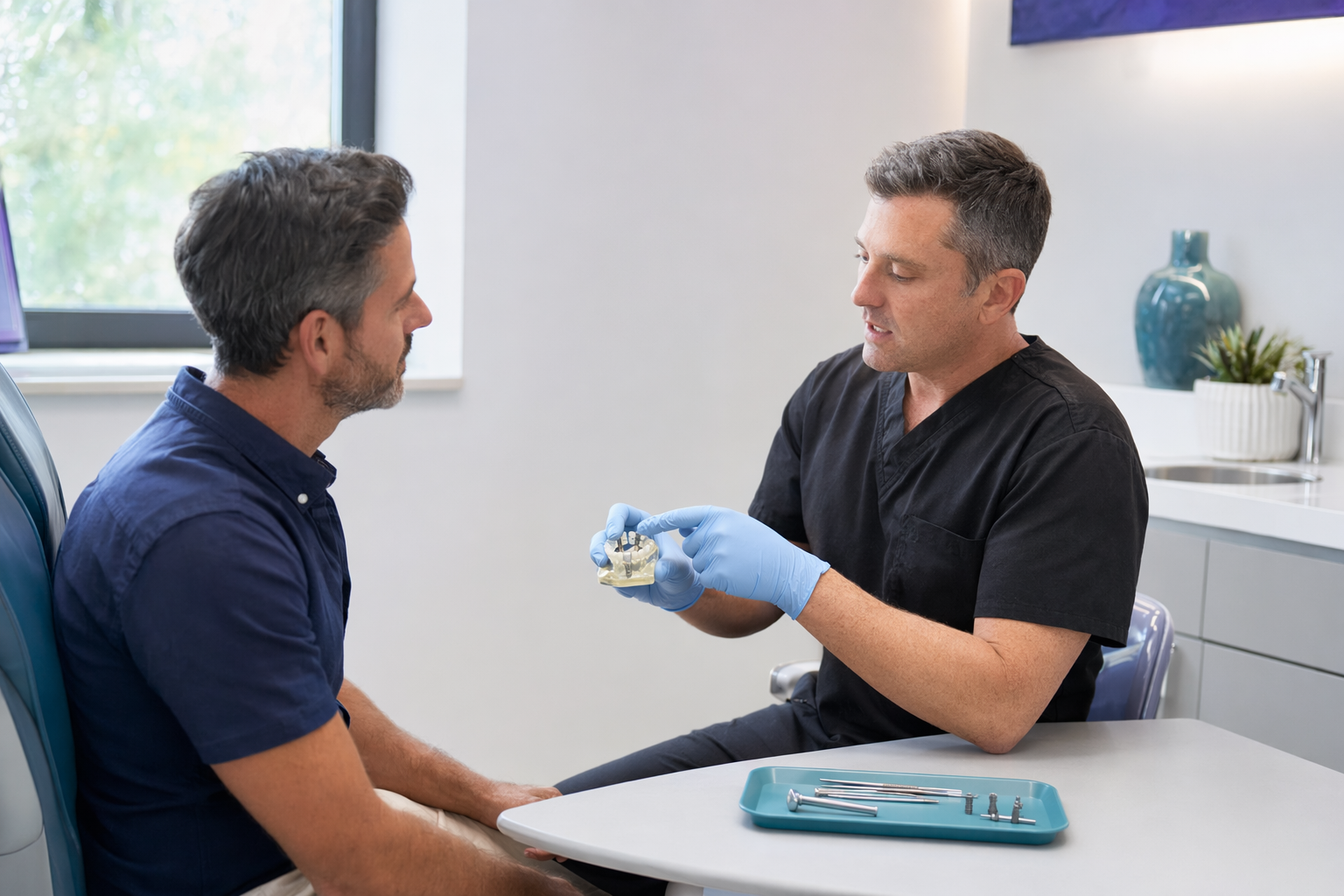
What the consultation is usually like
A consultation is the time to understand the injury and compare your options. The surgeon may review imaging, examine how the jaw opens and closes, look at the bite, and explain what could happen with and without surgery. This page is general education only. The decision about treatment belongs to you and your licensed surgeon.
Ask whether the surgeon is a board-certified oral and maxillofacial surgeon, and verify credentials yourself. It is also reasonable to ask how often they treat facial trauma, whether hospital care may be involved, what kind of anesthesia or sedation may be used, and what risks and benefits they want you to understand.
A second opinion is always reasonable, especially when the plan is complex or expensive. Many patients feel calmer after hearing the same recommendation from more than one qualified surgeon. If language is a concern, ask whether interpreter help is available. Many offices can arrange support in the patient's preferred language.
If you want help finding surgeons to compare, get matched. The matching service is free to patients and only collects contact details and basic interest information.
- Ask for the treatment plan in writing
- Ask what the goals are: function, appearance, comfort, or all three
- Ask about sedation options, risks, and where the procedure would take place
How treatment and setting can vary
Facial trauma care is not one single procedure. A smaller injury may be treated in an office or outpatient setting. More complex injuries may be treated in a surgery center or hospital. The setting often depends on the injury, the need for imaging, the type of anesthesia, and whether other specialists are involved.
In general, repair may include aligning broken bone, securing it with fixation hardware, closing cuts, removing damaged teeth when needed, or reconstructing missing bone or soft tissue. In some cases, treatment happens in stages rather than all at once.
It is smart to ask exactly what is included in the proposed plan. For example, ask whether imaging, facility fees, anesthesia, follow-up visits, and any hardware are included. Before you schedule, get the full plan and total expected cost in writing.
When comparing surgeons, look for clear explanations, not pressure. You should understand who will perform the surgery, where it will happen, how follow-up works, and what changes in appearance or function the surgeon expects to discuss with you.
- Office, surgery center, and hospital pricing can differ a lot
- Complex reconstruction may involve more than one stage
- Written details matter more than a verbal estimate
Typical recovery and what to expect
Recovery depends on the type of injury and the kind of repair performed. Swelling, bruising, soreness, and temporary limits on chewing or jaw movement are common after many facial trauma procedures. Typical early healing is often measured in days to weeks, while bone healing and final settling can take longer. These are typical timelines, not a promise. Everyone heals differently.
Many people want to know what is normal. Mild to moderate swelling, color changes from bruising, tiredness, and temporary numbness or stiffness may happen during recovery, depending on the procedure. The surgeon's aftercare instructions usually explain eating, cleaning the mouth or incision areas, activity limits, and follow-up visits.
It is important to know when to call the surgeon's office. In general, patients are often told to contact the treating team for worsening pain, increasing swelling after initial improvement, fever, drainage, trouble opening the mouth, problems with the bite, or questions about healing. For heavy bleeding, trouble breathing or swallowing, or a serious new injury, call your local emergency number first.
Before surgery, ask what recovery usually looks like for a case like yours, how long swelling may last, when work or school is commonly resumed, and what signs would make the office want to hear from you sooner.
- Early recovery often involves swelling and bruising
- Bone healing can take longer than soft-tissue healing
- Follow-up appointments are an important part of reconstruction
Costs, insurance, and how to compare surgeons
The cost of facial trauma and reconstructive surgery in the US can vary widely. Honest ranges are often broad because injuries range from simple soft-tissue repair to complex fracture reconstruction in a hospital. As a very general guide, smaller outpatient facial injury procedures may sometimes fall in the hundreds to low thousands of dollars, while fracture repair or more complex reconstruction can reach several thousand to well over $10,000. These are ranges, not quotes.
The real number depends on the case, the procedure complexity, imaging, hardware, sedation or anesthesia type, facility fees, follow-up care, insurance rules, and where you live. If the injury was related to an accident, billing may involve medical insurance rather than dental benefits in some situations. The surgeon's office can explain how they bill, but you should still confirm your own coverage details directly with your insurer.
When you compare surgeons, focus on four basics: board certification, experience with trauma cases, clarity of the written plan, and the full written cost. A good consultation should help you understand not just the surgery, but also the risks, the recovery path, and what results the surgeon believes are realistic to discuss.
If you are starting from scratch, get matched to compare board-certified oral and maxillofacial surgeons in your area. The service is free, and many patients appreciate having help finding offices that can explain options clearly and, when available, communicate in their own language.
- Ranges are not quotes
- Ask whether imaging, anesthesia, facility fees, and hardware are included
- A second opinion is reasonable before scheduling

Facial trauma and reconstructive surgery repairs injuries to the face and jaws, and it is worth comparing board-certified surgeons, understanding the written plan and cost, and knowing that recovery and pricing vary by case.
Common questions
What injuries can an oral and maxillofacial surgeon treat?
They may treat injuries involving the jaws, facial bones, mouth, teeth-supporting bone, and facial soft tissues. The exact scope depends on the surgeon, the injury, and the care setting.
Is facial trauma surgery always done right away?
Not always. Some injuries are treated urgently, while others may be evaluated first and repaired later. Timing depends on the specific injury and the overall situation.
How much does facial trauma or reconstructive surgery cost?
Costs vary a lot. Smaller procedures may be in the hundreds to low thousands, while more complex fracture repair or reconstruction can cost several thousand to well over $10,000. These are general US ranges, not quotes.
Will insurance cover facial trauma surgery?
Sometimes, but coverage depends on the injury, the policy, the setting, and whether the claim is processed through medical or dental benefits. Confirm details with the surgeon's office and your insurer.
How long is recovery?
Typical recovery depends on the procedure. Early healing may take days to weeks, while bone healing and final settling can take longer. Everyone heals differently.
Should I get a second opinion?
Yes. A second opinion is reasonable, especially for complex injuries, hospital-based treatment, or large costs.