Surgical care
Wisdom Tooth Surgery
Wisdom tooth surgery is the removal of the third molars, the teeth at the very back of the mouth. Some are fully erupted and easier to remove, while others stay partly or fully under the gums or bone and may need a more involved surgical approach.
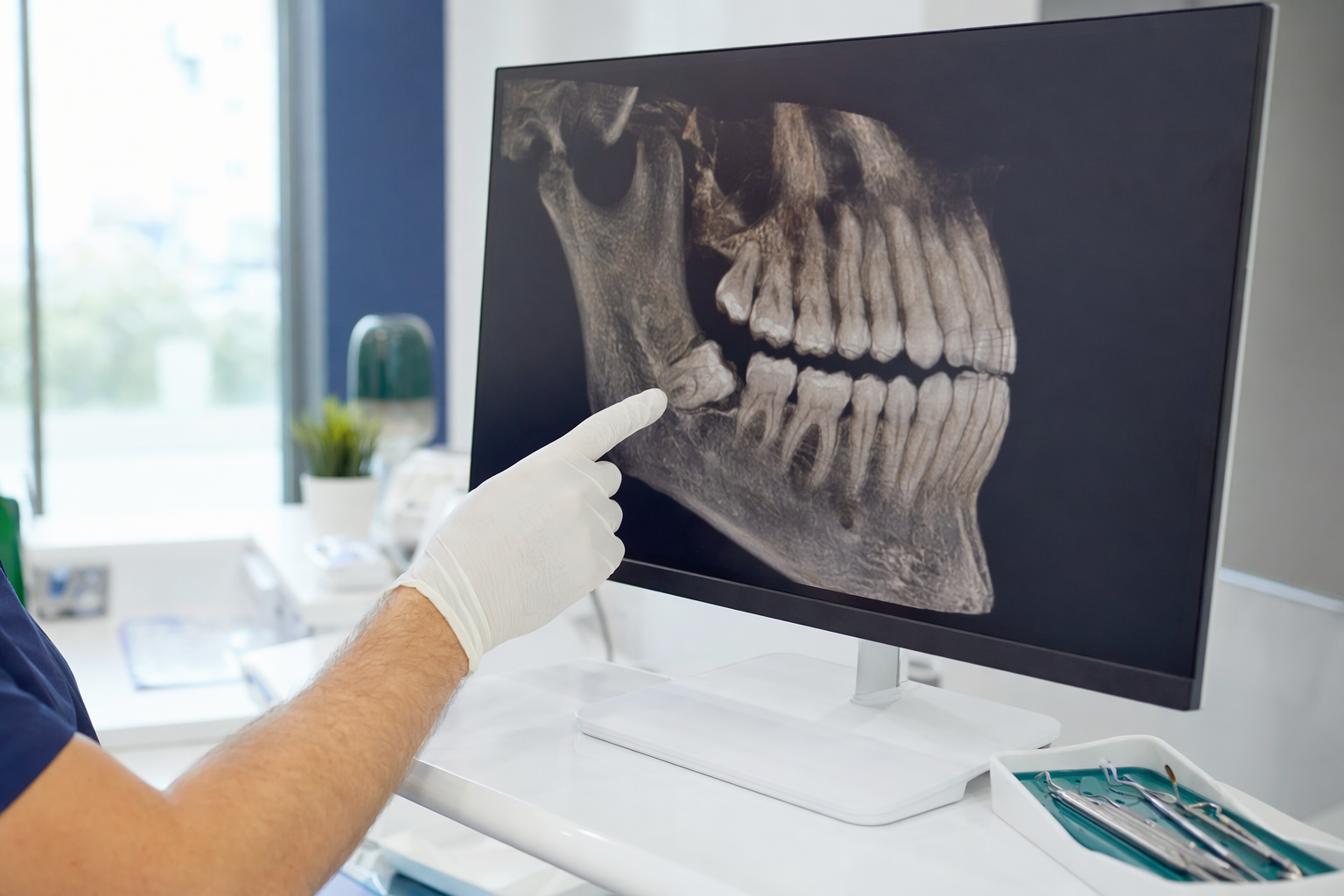
What wisdom tooth surgery involves
In plain terms, the process usually starts with an exam, imaging, and a discussion of the plan. The surgeon explains which wisdom teeth are being considered, whether they are erupted or impacted, and what type of anesthesia or sedation may be available. This page is general education only. A licensed surgeon decides what is appropriate in your case.
On the day of surgery, the area is numbed. Depending on the plan, you may have local anesthesia alone, or local anesthesia with another sedation option such as nitrous oxide or IV sedation. The surgeon then removes the tooth. If a tooth is trapped under gum or bone, a small opening may be made to reach it. In some cases, the tooth is removed in sections. Stitches may be placed afterward.
Many people hear "wisdom tooth surgery" and imagine one single procedure, but there is a range. A fully erupted wisdom tooth can be different from a deeply impacted tooth close to nearby structures. That is one reason costs, timing, and recovery can vary. You can learn more about oral surgery topics on our services and procedures pages.
- Erupted teeth are above the gumline
- Impacted teeth are partly or fully under gum or bone
- Sedation options can vary by office, case, and health factors

Why a surgeon may discuss removal
Wisdom teeth are often discussed when they are causing problems, are hard to clean, or appear likely to affect nearby teeth or gum tissue. Sometimes people have pain, swelling, repeated irritation, or food trapping around the area. Other times, the issue is found on an exam or X-ray before symptoms become obvious.
Not every wisdom tooth situation is the same. Some people keep wisdom teeth without surgery. Others are told that removal may make sense because of position, infection risk, decay, crowding concerns, or damage to nearby teeth. The decision is personal and should be made with a board-certified oral and maxillofacial surgeon or another qualified dental professional who has examined you.
If you are unsure, a second opinion is reasonable. You are allowed to ask why surgery is being suggested now, what the alternatives are, what the surgeon sees on imaging, and what could happen if you wait. Clear answers matter.
- A second opinion is always reasonable
- Ask the surgeon to explain the reason in simple terms
- Verify that the surgeon is board-certified
Consultation, sedation, and questions to ask
A consultation usually includes imaging review, a discussion of symptoms, and a step-by-step explanation of the procedure. The surgeon may explain whether the teeth appear close to important structures, how long the procedure may take, and what kind of aftercare is typical. If English is not your first language, language help is often available. It is okay to ask for an interpreter or translated instructions.
Sedation is one of the most common concerns. In general, options may include local anesthesia only, nitrous oxide, oral medication in some settings, or IV sedation. Availability depends on the office, the surgeon's training, the complexity of the case, and your overall health. The surgeon should explain the purpose, limits, and risks of each option in plain language.
Useful questions include: Is the surgeon board-certified in oral and maxillofacial surgery? What type of anesthesia or sedation is offered? What are the main risks and possible complications? What is included in the fee? Will I need time off work or school? When can I eat normally again? Can I get the treatment plan and full cost in writing before I schedule?
If you want help finding practices to compare, our matching service is free to patients. You can start at Get Matched. You share contact details and basic interest only, not medical records, insurance numbers, or financial account information.
- Ask for the full plan and total expected cost in writing
- Confirm who will provide anesthesia or sedation
- Request written recovery instructions before the procedure
Cost of wisdom tooth surgery
Wisdom tooth surgery costs vary widely in the US. Honest ranges are more useful than single numbers, because the real total depends on how many teeth are removed, whether they are erupted or impacted, how difficult the case is, the type of sedation used, your location, and whether insurance contributes. These are ranges, not quotes.
As a broad guide, a simple erupted wisdom tooth removal may fall around $200 to $600 per tooth in some areas. A more involved surgical extraction of an impacted wisdom tooth may be around $400 to $1,200 or more per tooth. IV sedation or general anesthesia can add several hundred to well over $1,000 depending on time, setting, and local pricing. Imaging, consultation fees, pathology, medications, and follow-up care may be separate.
Insurance can lower out-of-pocket cost in some cases, but coverage rules differ. Before booking, ask for a written estimate that lists the surgeon's fee, imaging, sedation or anesthesia charges, facility fees if any, and what is not included. That helps you compare offices fairly and avoid surprises.
- Ranges are not quotes
- Sedation type can change the total significantly
- Ask for itemized pricing before scheduling
Recovery, what is typical, and when to call the surgeon
Recovery is usually measured in days to a couple of weeks, but everyone heals differently. Typical early recovery includes numbness wearing off, swelling, mild to moderate discomfort, limited jaw opening, and some oozing or light bleeding during the first day. Many people feel the first few days are the most inconvenient, with gradual improvement after that.
It is common to be given written instructions about rest, eating, oral hygiene, and activity. People are often told to start with softer foods and return to normal eating gradually. The exact timeline depends on the number of teeth removed, whether they were impacted, the type of sedation used, and your own healing pattern. Typical is not a promise.
Dry socket, infection, prolonged numbness, and sinus-related issues in upper wisdom teeth are examples of complications a surgeon may discuss in general. If you have questions after surgery, call the treating surgeon's office for guidance. If there is heavy bleeding, trouble breathing or swallowing, or a serious facial injury, call your local emergency number first.
The best next step is to compare qualified surgeons carefully. Choose a board-certified oral and maxillofacial surgeon, verify credentials yourself, ask for the plan and total cost in writing, and consider a second opinion if anything is unclear. You can explore more options through our procedures page or use our free matching service to find offices to contact.
- Typical recovery is not the same for every person
- Call the surgeon's office with post-op concerns
- For heavy bleeding or breathing trouble, call emergency services first

Wisdom tooth surgery removes back teeth that are erupted or impacted, and the right plan, sedation option, cost, and recovery expectations should be reviewed with a board-certified oral surgeon before you schedule.
Common questions
Is wisdom tooth surgery always necessary?
No. Some wisdom teeth are monitored without surgery. Whether removal is recommended depends on the exam, imaging, symptoms, and the surgeon's judgment.
What is the difference between erupted and impacted wisdom teeth?
An erupted wisdom tooth has come through the gums. An impacted wisdom tooth is partly or fully trapped under gum or bone, which can make removal more involved.
Will I be asleep for wisdom tooth surgery?
Not always. Some procedures are done with local anesthesia only, while others may involve nitrous oxide or IV sedation. Options vary by case and office.
How long does recovery usually take?
Many people feel better over several days, with continued healing over one to two weeks or longer. Typical recovery varies and is not a promise.
How much does wisdom tooth surgery cost?
In the US, costs can range from a few hundred dollars for a simpler extraction to well over a thousand per tooth for more complex impacted cases, plus possible sedation fees. These are ranges, not quotes.
Can I get a second opinion before scheduling?
Yes. A second opinion is reasonable, especially if the plan, timing, sedation, or cost is unclear.