How we've helped
He asked the right jaw-surgery questions
Corrective jaw surgery usually involves several steps, not one quick appointment. In plain terms, a surgeon studies the bite and jaw position, explains what may be moved, reviews anesthesia or sedation options, and outlines the expected healing process before any date is set.
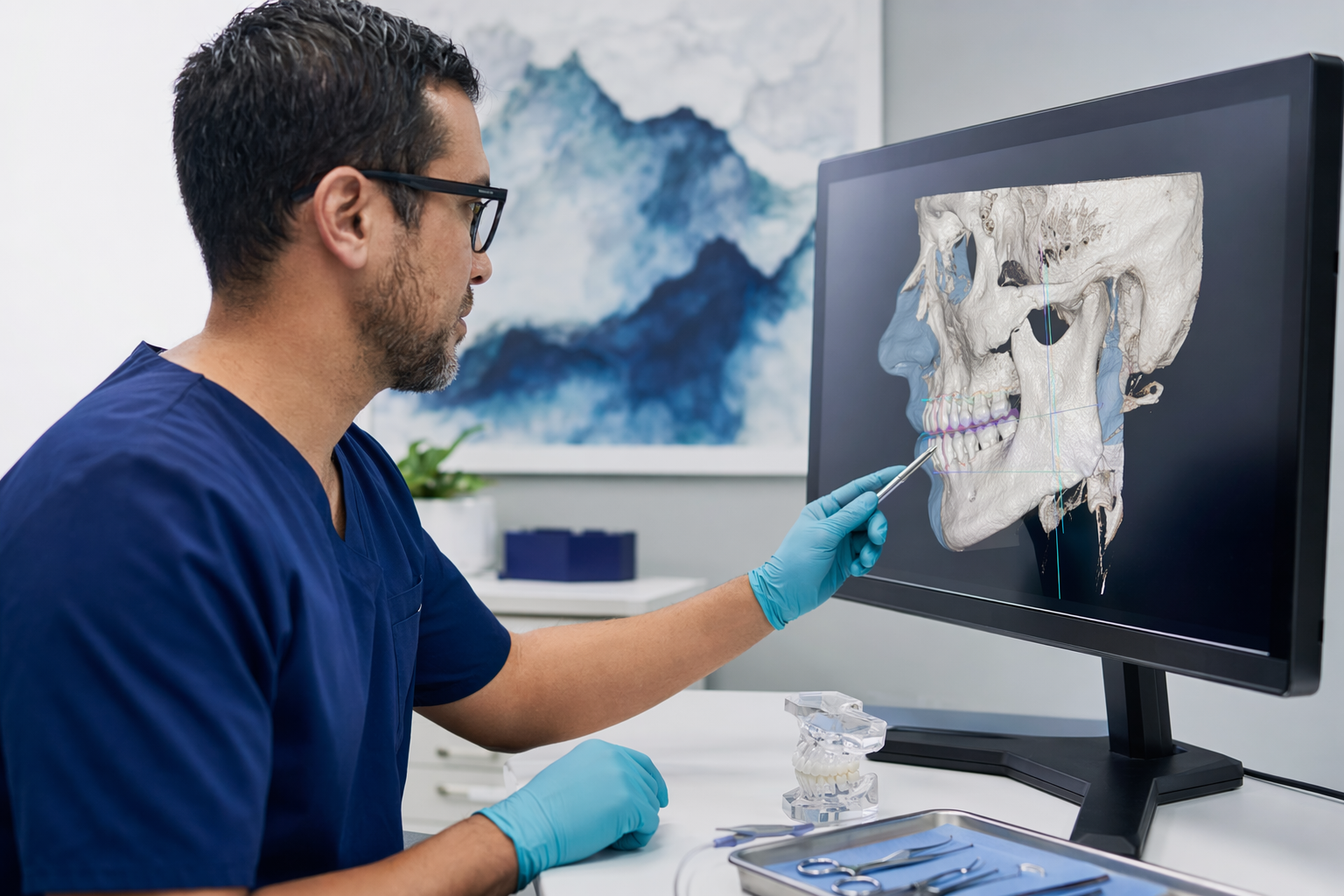
An anonymized story about asking better questions
This is an illustrative, anonymized story. It is not a guarantee of outcome, timing, or cost. It shows how one patient prepared for conversations about corrective jaw surgery and what kinds of questions helped him feel more informed.
A patient we will call Daniel had been told he might need jaw surgery as part of a larger treatment plan. He felt overwhelmed. The words sounded serious, and he was not sure what the process actually involved. Instead of rushing, he decided to slow down and learn the basics first.
He started with simple questions. What part of the jaw might be changed? Who would be involved in planning? What kind of anesthesia might be used? What would recovery typically look like? He also wanted to know how to compare surgeons, and whether getting a second opinion was reasonable. In many cases, it is.
Like many people, Daniel also wanted plain language. He preferred short explanations, written instructions, and time to think before scheduling. That is often a good approach when you are comparing options and trying to understand a major procedure.
- This story is educational only
- It does not tell you whether you personally need surgery
- Final decisions belong to you and a licensed board-certified surgeon

What he wanted explained before talking about price
Before asking about cost, Daniel wanted to understand the process itself. A consultation for corrective jaw surgery often includes a review of the bite and jaw concerns, imaging or records that help with planning, a discussion of the surgical plan in general terms, and a chance to ask questions about anesthesia, risks, and recovery. Some patients also coordinate with other dental specialists as part of that planning.
He wrote down his questions ahead of time. That helped him stay focused when he felt nervous. He asked how the surgeon would explain the goal of surgery in plain English, what the day of surgery might look like, whether the procedure would likely be done in a hospital or surgical setting, and what support he would need at home afterward.
He also asked about credentials. That mattered to him. He wanted a board-certified oral and maxillofacial surgeon and he wanted to verify credentials himself before moving forward. He looked at the surgeon's background, asked how often similar procedures were performed, and made sure the written plan matched what had been discussed.
If you are still learning the basics, it may help to read general information about procedures first and then bring your questions to a consultation.
- Ask for the plan in writing
- Ask who will provide anesthesia
- Ask what follow-up visits are typically involved
The questions he asked about sedation, risks, and second opinions
Daniel was especially anxious about sedation. He did not want vague reassurance. He wanted clear explanations. So he asked what type of anesthesia or sedation might be used in cases like his, who would monitor him, what preparation instructions are usually given, and what common short-term effects patients are often told to expect afterward.
He also asked about risks in a calm, practical way. He did not expect a risk-free procedure, and no ethical surgeon should promise that. Instead, he wanted to hear how risks are usually explained, what warning signs typically lead patients to call the surgical office, and how after-hours concerns are handled. For emergencies such as heavy bleeding, trouble breathing or swallowing, or a serious facial injury, people should call their local emergency number first.
A second opinion was another important topic. Daniel worried that asking for one might offend the first surgeon. In reality, many patients seek a second opinion for major treatment decisions. It can help confirm the plan, clarify choices, and improve confidence. He used that second consultation to compare communication style, credentials, and how clearly costs and next steps were presented.
He also asked whether language support was available. That mattered in his family. Many patients are more comfortable discussing a complex procedure in their own language, and help is often available. If you want help finding a surgeon to speak with, the matching service is free for patients.
- Ask what is normal after surgery and what is not
- Ask how to reach the office after hours
- Ask if interpreter or language support is available
How he thought about cost and getting the full number in writing
Only after he understood the process did Daniel turn to cost. That order helped him. Corrective jaw surgery can involve surgeon fees, facility fees, anesthesia fees, imaging, follow-up visits, and sometimes related orthodontic or dental costs. The real number depends on the details of the case, the type of anesthesia used, insurance arrangements, and where in the US the treatment takes place.
For broad planning, patients may hear honest US ranges, not quotes. In many cases, corrective jaw surgery costs can range from several thousand dollars to much more when hospital-based care, complex planning, or multi-part treatment is involved. A rough range some patients encounter is about $10,000 to $40,000+, but that is only a general educational range, not a personal estimate.
Daniel learned to ask for the full expected cost in writing before scheduling. He asked what was included, what might be billed separately, whether insurance preauthorization was part of the process, and what could change the final amount. That written detail made comparison easier and reduced surprises.
If you are reviewing examples like this one, you can also browse other patient stories and use them as question guides, not as promises about what your own case will cost or involve.
- Ranges are not quotes
- Ask what fees are separate
- Confirm the expected total before scheduling
What he learned about recovery and decision-making
Recovery was the last major topic on Daniel's list. He wanted honesty, not a perfect-sounding timeline. A surgeon may explain that swelling, soreness, diet changes, time away from work or school, and follow-up appointments are common parts of recovery after jaw surgery. Typical timelines vary widely, and everyone heals differently.
He asked what the first few days are often like, when many patients begin feeling more like themselves, and when normal routines may gradually return. He also asked what concerns usually lead patients to contact the surgeon's office. That helped him understand both the expected course and the importance of following the specific instructions given for his own case.
In the end, the most helpful part was not one single answer. It was the process of asking careful questions, comparing consultations, and refusing to schedule until he felt he understood the plan. He treated himself as the decision-maker. He chose a board-certified oral and maxillofacial surgeon, verified credentials, reviewed the written plan and cost, and moved forward only when he was ready.
That may be the main takeaway from this anonymized story. Ask plain questions. Get plain answers. And remember that educational resources can help you prepare, but they do not replace a consultation with a licensed surgeon.
- Typical recovery timelines are not a promise
- A second opinion is reasonable
- Written plans help you compare clearly
This page shows how one anonymized patient prepared smart questions about jaw surgery, sedation, recovery, credentials, and cost before deciding anything.
Common questions
Is this a real patient testimonial?
No. It is an anonymized, illustrative case study meant for education. It does not predict your result, recovery, or cost.
What should I ask at a jaw surgery consultation?
Many patients ask about the surgical plan, board certification, anesthesia or sedation options, risks, recovery, follow-up visits, and the full expected cost in writing.
How much can corrective jaw surgery cost in the US?
Costs vary a lot by case, anesthesia, facility, insurance, and region. Broad educational ranges may be around $10,000 to $40,000+, but ranges are not quotes.
Is it okay to get a second opinion?
Yes. For a major procedure, a second opinion is often reasonable and can help you compare plans, communication, and costs.
Can Oral Surgery Path tell me if I need jaw surgery?
No. Oral Surgery Path provides education and free matching only. Whether surgery is appropriate is a decision between you and a licensed board-certified surgeon.
What if I have an emergency after surgery?
For heavy bleeding, trouble breathing or swallowing, or a serious facial injury, call your local emergency number first.