How we've helped
She understood her wisdom teeth surgery before the day
Wisdom teeth removal is a surgery to take out one or more back molars, often after an exam and X-rays show they may not have enough room or may affect nearby teeth or gums. This anonymized story is illustrative, not a guarantee, and shows how one patient used plain-language information to understand the process before surgery day.
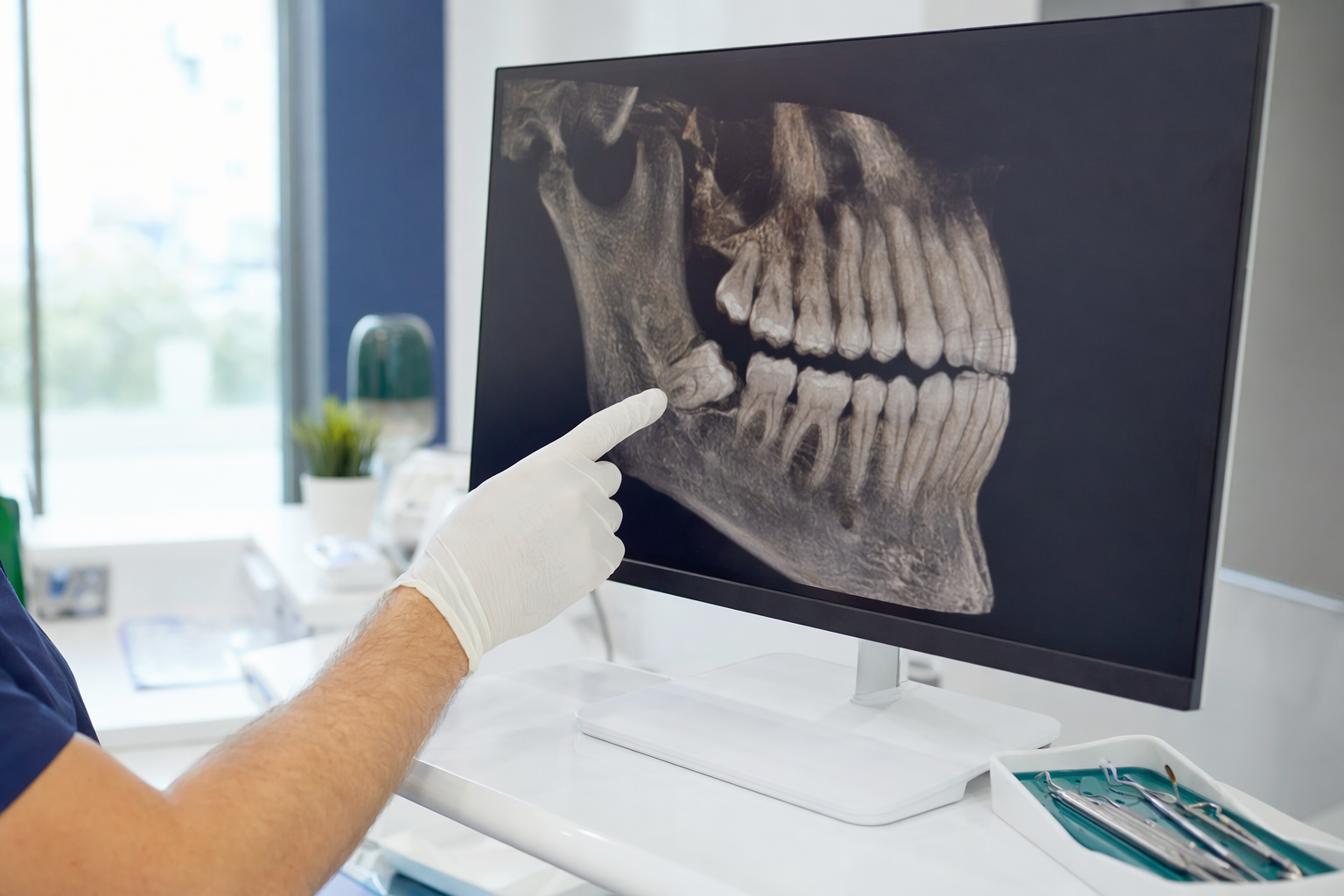
What the surgery usually involves, in plain language
Before talking about cost or matching, it helps to know what wisdom teeth surgery usually looks like. In many cases, the process starts with a consultation. The surgeon reviews images, explains which teeth are involved, and talks through the plan in simple steps.
On the day of surgery, a patient may receive local numbing medicine, sedation, or another anesthesia option depending on the case and the surgeon's recommendation. Then the surgeon removes the tooth or teeth, cleans the area, and places stitches if needed. After that, the patient goes home with written instructions and a plan for follow-up.
This page is general education only. It does not say whether any one person needs surgery. That decision belongs to the patient and a licensed, board-certified oral and maxillofacial surgeon.
- Consultation first
- Images reviewed
- Sedation options explained
- Written aftercare instructions

An anonymized story: understanding before the day
A patient we will call Maya had been told she might need her wisdom teeth removed. What worried her most was not only the surgery itself. It was not knowing what would happen, how long recovery might take, and what questions to ask.
She started with plain-language guides and procedure overviews so the words felt less unfamiliar. Reading a clear summary of procedures helped her understand the basic sequence: consultation, imaging review, anesthesia discussion, the surgery itself, and recovery at home.
That did not replace a real surgical consultation. But it helped her feel more prepared to listen, take notes, and ask direct questions. She also learned that a second opinion is reasonable, especially if the plan, timing, or price is unclear.
- Illustrative story only
- Education first, then consultation
- A second opinion is reasonable
What she asked at the consultation
At her consultation, Maya focused on simple, practical questions. She asked which wisdom teeth were part of the plan, what type of sedation might be used, what common risks the surgeon discusses with patients, and what the first few days of recovery are typically like.
She also asked whether the surgeon was board-certified in oral and maxillofacial surgery and verified credentials herself. That mattered to her. It made the conversation feel clearer and more grounded.
Before scheduling, she asked for the treatment plan and full cost in writing. She wanted to compare details, not just hear a number out loud. That gave her a better way to weigh her options and make her own decision.
- Ask about board certification
- Confirm sedation options and risks
- Get the plan and full cost in writing
Recovery: typical, not a promise
Maya also wanted an honest picture of recovery. In many cases, the first 24 to 72 hours are the most uncomfortable. Swelling, soreness, and limited jaw opening can happen. Many people gradually improve over the first week, but complete healing can take longer. Everyone heals differently.
Her surgeon's office explained what is commonly normal after surgery and what symptoms should prompt a call. In general, patients are often told to contact the surgeon's office if they have worsening pain, fever, bad taste or odor, heavy bleeding that does not slow, or other concerns based on the written instructions they were given.
For urgent problems like heavy bleeding, trouble breathing or swallowing, or a serious facial injury, the right step is to call the local emergency number first. Educational websites are not a substitute for emergency care or for direct instructions from a licensed surgeon.
- Typical soreness and swelling early on
- Recovery varies by person
- Call the surgeon's office with concerns
- For emergencies, call the local emergency number first
Cost, comparing surgeons, and getting help in your language
Cost was another source of stress for Maya, so she looked for honest ranges instead of guessing. In the US, wisdom teeth removal can vary widely based on how many teeth are involved, how difficult the case is, the type of sedation used, whether imaging is included, insurance, and local pricing. A broad range many patients see is about $250 to $800 per tooth for simpler cases and roughly $1,000 to $3,000 or more for more complex multi-tooth surgical cases with sedation. These are ranges, not quotes.
What helped most was comparing surgeons carefully instead of rushing. She looked for a board-certified oral and maxillofacial surgeon, verified credentials, asked for the full written plan, and made sure the office explained the steps clearly. If a patient does not understand the plan, it is fair to pause and ask again.
Some patients also want language support. Help is often available in a patient's own language, and the matching service is free to the patient. If someone wants to explore options, they can get matched with participating surgeons. Reading other anonymized experiences on stories may also help people feel less alone while they prepare.
- US prices vary a lot
- Ranges are not quotes
- Matching is free to the patient
- Language help may be available
This page shows how one anonymized patient felt more ready for wisdom teeth surgery by learning the steps, asking clear questions, comparing board-certified surgeons, and getting the plan and cost in writing.
Common questions
Does this story mean my recovery will be the same?
No. This is an anonymized, illustrative story. Recovery is typical for some people, not a promise for anyone.
How do I know if a surgeon is board-certified?
Ask directly and verify credentials yourself before scheduling. A board-certified oral and maxillofacial surgeon can explain their training and qualifications.
What should I ask before booking wisdom teeth surgery?
Many patients ask which teeth are involved, what sedation options are offered, what common risks are discussed, what recovery is typically like, and what the full written cost will be.
How much does wisdom teeth removal cost?
It varies by the case, number of teeth, sedation type, insurance, and location. Broad US ranges may run from a few hundred dollars per tooth to several thousand dollars for more complex surgical cases. These are ranges, not quotes.
Can Oral Surgery Path tell me if I need surgery?
No. Oral Surgery Path is an education and free matching service, not a clinic or surgical provider. Whether surgery is appropriate is a decision between you and a licensed surgeon.