Guides
Oral Surgery for Non-English Speakers
If you do not speak English well, you can still get clear information before oral surgery. A consultation usually includes reviewing the problem area, discussing possible treatment steps, talking about sedation options, explaining risks and benefits, and going over cost and scheduling in language you can understand.

What an oral surgery consultation usually includes
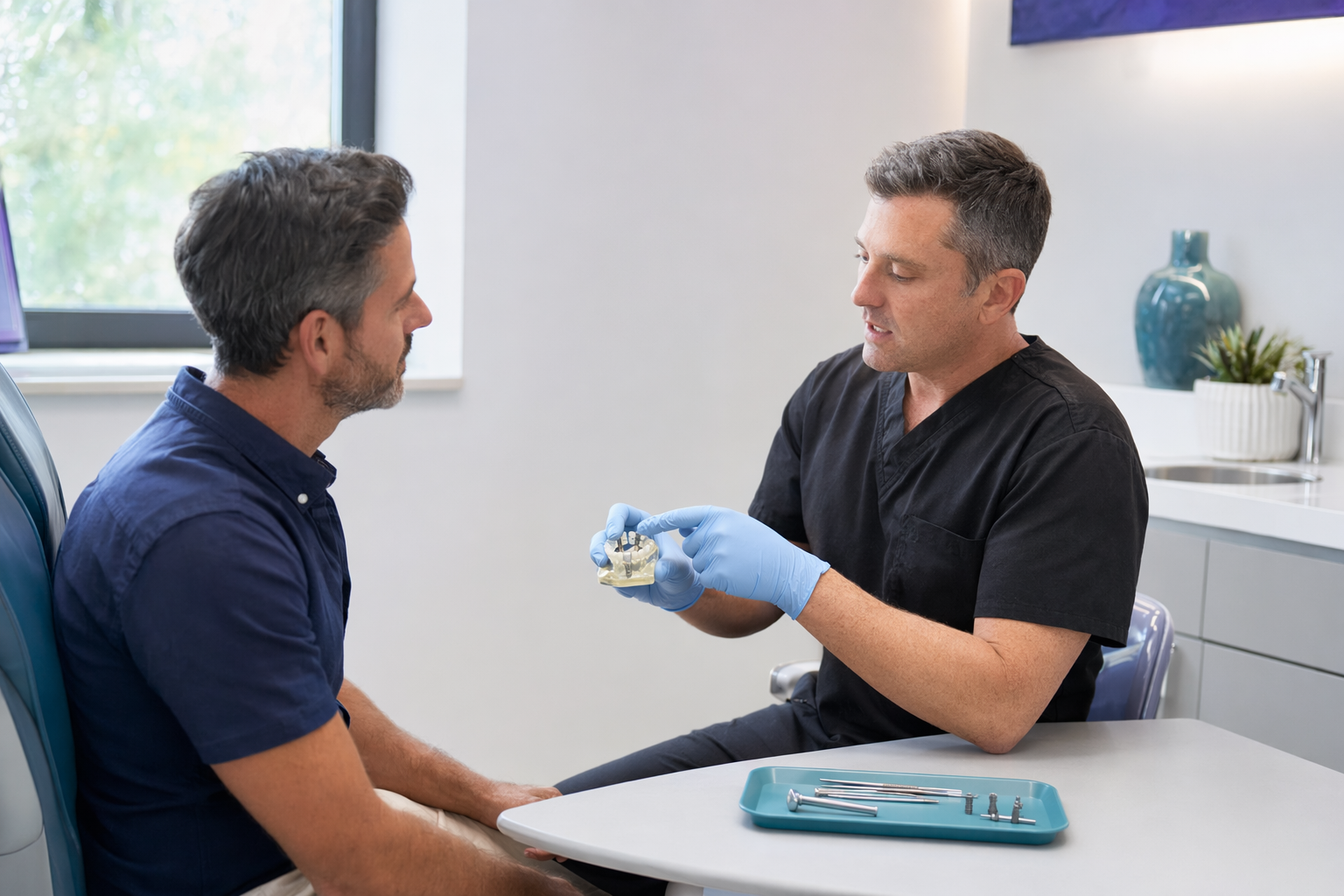
Oral and maxillofacial surgery can include wisdom teeth removal, dental implants, surgical tooth removal, bone grafting, jaw surgery, and repair after facial injury. At a first visit, a surgeon or office team often reviews X-rays or scans, explains what procedure may be involved, discusses anesthesia or sedation choices, and explains what recovery may look like. They may also discuss timing, follow-up visits, and cost.
If English is not your first language, the goal is the same. You should be able to understand what is being proposed, why it may be considered, what the alternatives are, and what the next steps would be. You do not have to guess. You can ask for language help before the appointment and again when you arrive.
You can also start by learning the types of procedures on our procedures page and general educational topics in our guides. This site is for education and free matching only. Decisions about surgery are between you and a licensed board-certified oral and maxillofacial surgeon.
- A consultation should explain the procedure in plain language
- You should understand sedation options, recovery, risks, and cost before scheduling
- A second opinion is always reasonable
How to ask for language support
Many offices can help patients who speak Spanish and other languages. Some have bilingual staff. Some use professional phone or video interpreters. Some can provide translated paperwork. It is reasonable to ask what language support is available before you book the visit.
When you call or request an appointment, keep it simple. You can say: "I need an interpreter for my consultation" or "Do you have someone who speaks my language?" You can also ask whether forms are available in your language and whether the surgeon can explain the treatment plan through an interpreter.
If you want help finding offices that may be able to communicate in your language, you can use our free matching service. Matching is free to the patient. You share contact details and basic interest only, not medical records, insurance numbers, or financial account information.
- Ask for an interpreter before the appointment
- Ask whether consent and payment forms are available in your language
- Ask whether follow-up instructions can be explained clearly after surgery
Understanding consent forms and treatment plans
A consent form is not just paperwork. It is part of the discussion about what procedure may be done, what sedation might be used, what common risks and possible complications exist, and what recovery may involve. You should not feel rushed into signing something you do not understand.
Before signing, ask the surgeon or office to explain the plan in plain words. It is okay to ask them to repeat information slowly. It is okay to ask for an interpreter. It is okay to ask for written instructions. It is also okay to take time and compare surgeons before deciding.
A helpful approach is to confirm the key points in your own words. For example: what tooth or area is being treated, whether sedation is planned, what you may need to do before surgery, who will take you home if sedation is used, and what follow-up visit may be needed. Choose a board-certified oral and maxillofacial surgeon and verify credentials yourself before scheduling.
- Ask what the procedure is called and what area will be treated
- Ask what type of sedation or anesthesia may be used
- Ask for the full treatment plan and total estimated cost in writing
Cost, written estimates, and comparing surgeons
Costs for oral surgery in the US can vary a lot. The real number depends on the procedure, how complex the case is, whether sedation is used, your location, and insurance details. In general, oral surgery can range from a few hundred dollars for a simple extraction to several thousand dollars for more involved treatment. These are ranges, not quotes.
Before you schedule, ask for the plan and full cost in writing. Ask what is included and what may be separate, such as imaging, sedation, facility charges, follow-up visits, bone graft materials, or implant components. Written estimates help you compare offices more clearly.
You are the decision-maker. Compare surgeons. Ask whether the surgeon is board-certified in oral and maxillofacial surgery, where the procedure will be done, and what payment policies apply. If anything feels unclear, get a second opinion before moving forward.
- US oral surgery prices are ranges, not promises
- Ask what is included and what might cost extra
- Verify board certification yourself
Recovery, follow-up, and when to get urgent help
Recovery depends on the procedure. Many people have swelling, soreness, minor bleeding, and a soft-food period after oral surgery. Some return to school or desk work in a few days after simpler procedures, while more involved surgery can take longer. Typical timelines are not a promise. Everyone heals differently.
Before you leave the office, make sure you understand the aftercare instructions. Ask for them in plain language and, if possible, in your language. Ask who to call with questions, what symptoms are expected, what warning signs matter, and when your follow-up visit may be.
For urgent situations, contact the surgeon's office right away. For emergencies such as heavy bleeding, trouble breathing or swallowing, or a serious facial injury, call your local emergency number first.
If you are still early in the process, our guides and procedures pages can help you prepare questions. You can also use get matched to look for a board-certified oral and maxillofacial surgeon. The service is free, and a second opinion is always reasonable.
- Ask for aftercare instructions in language you understand
- Typical recovery times vary by procedure and person
- For heavy bleeding, trouble breathing or swallowing, or serious injury, call emergency services first

If you need oral surgery and do not speak English well, you can ask for language help, take time to understand the consent form and cost, and choose a board-certified surgeon only after the plan is clear.
Common questions
Can I bring someone with me to help translate?
Many offices allow a family member or friend to come, but you can also ask whether the office offers a professional interpreter. For important discussions and consent, clear communication matters.
What if I do not understand the form I am asked to sign?
Do not sign until the office explains it in language you understand. Ask for an interpreter, a slower explanation, or written information you can review.
Can I ask for the cost before scheduling surgery?
Yes. Ask for the treatment plan and total estimated cost in writing. Prices are ranges, not quotes, and can vary by procedure, sedation, insurance, and location.
How do I know if the surgeon is qualified?
Ask whether the surgeon is board-certified in oral and maxillofacial surgery, then verify credentials yourself before scheduling.
Is it okay to get a second opinion in my language?
Yes. A second opinion is reasonable, especially if the plan, cost, or consent discussion is not clear to you.
Does Oral Surgery Path provide surgery?
No. Oral Surgery Path is an educational website and a free matching service. It is not a dental or medical practice, and it does not provide treatment.