Surgical care
Anesthesia & Sedation
Anesthesia and sedation are ways an oral surgeon may help keep you comfortable during oral or maxillofacial surgery. In simple terms, the visit usually includes a consultation, a review of sedation choices, the procedure itself, and a recovery period where you are monitored before going home.
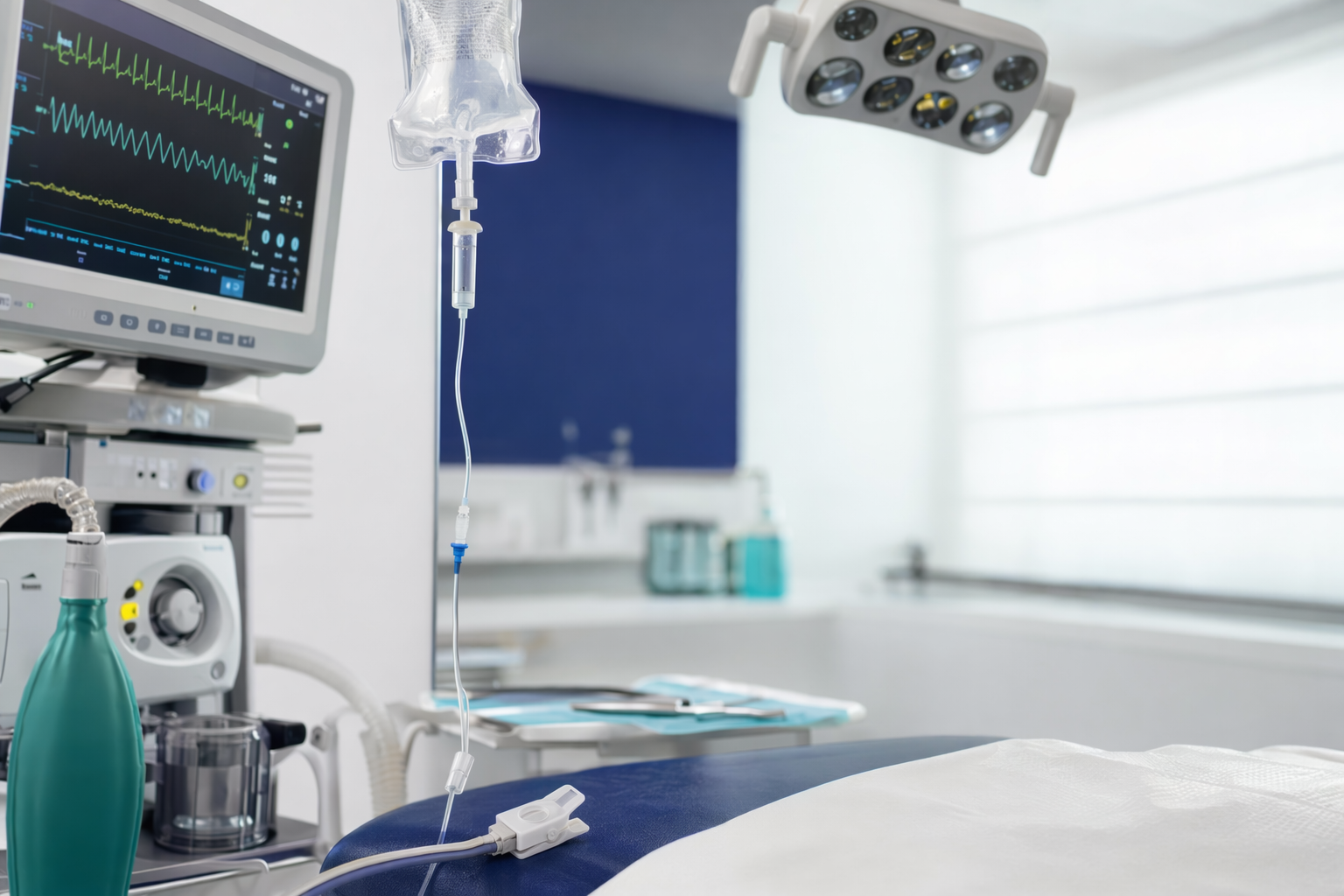
What anesthesia and sedation mean in oral surgery
People often use these words together, but they can describe different levels of comfort and awareness during surgery. In many oral surgery offices, options may range from local anesthesia that numbs one area, to nitrous oxide, to oral sedation, to IV sedation, and in some settings general anesthesia.
A typical process starts with a consultation. The surgeon explains the procedure, what type of anesthesia or sedation may be used, what you may feel, how long the visit may take, and what recovery is usually like. You can also ask whether the procedure is commonly done in the office or another setting.
The right plan depends on the procedure, your health history, the surgeon's training, and the office setup. This page is general education only. It is not medical advice, and the final decision should be made with a licensed, board-certified oral and maxillofacial surgeon.
- Local anesthesia numbs the surgical area
- Sedation may help with relaxation or reduced awareness
- General anesthesia is a deeper level used in some cases
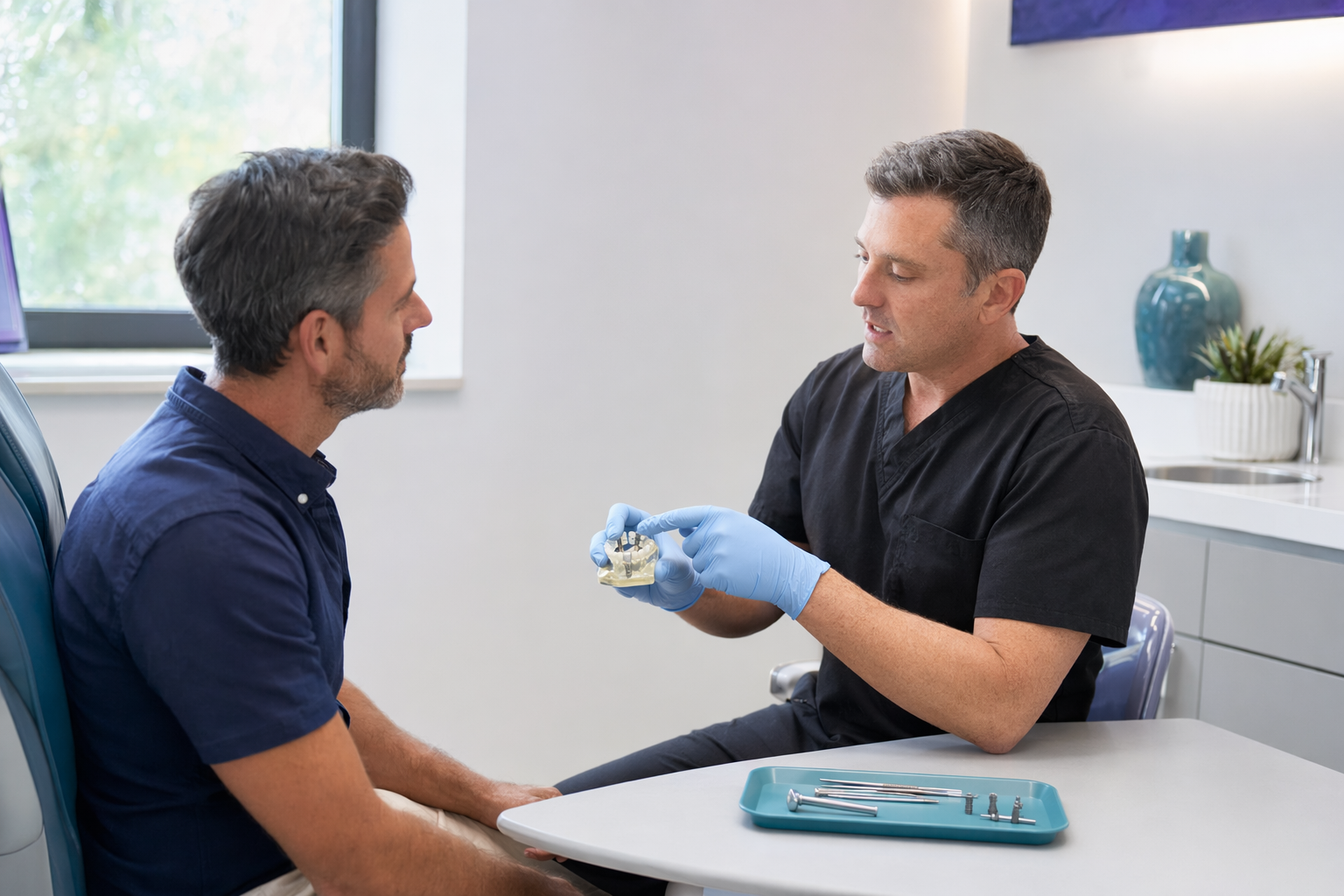
Common sedation options you may hear about
Local anesthesia is the most basic option. The surgeon numbs the area being treated so you should not feel sharp pain there, though you may still notice pressure or movement. For some procedures, local anesthesia alone may be enough.
Nitrous oxide, sometimes called laughing gas, may be used to help a patient relax while staying awake. Oral sedation involves medicine taken before the procedure. IV sedation is given through a vein and is often used for a deeper level of relaxation. General anesthesia is a different level again, where the patient is not aware of the procedure in the usual way.
Not every office offers every option. Ask what is available, who provides the anesthesia, how you will be monitored, and what training and emergency equipment the office has. You can learn more about oral surgery care on our services and procedures pages.
- Ask which options are offered for your procedure
- Ask who will monitor you during surgery
- Ask what the typical recovery area process looks like
What the day of surgery is usually like
The exact steps vary, but many visits follow a similar pattern. First, the team checks your paperwork and reviews the plan. Then the surgeon or staff prepares you for the chosen anesthesia or sedation. Monitoring equipment may be used during the procedure, especially for deeper sedation.
After the surgery, you usually spend some time in recovery before you leave. Many people feel sleepy, groggy, numb, or unsteady for a while, especially after IV sedation or general anesthesia. Offices commonly require a responsible adult to drive the patient home after certain types of sedation.
Your surgeon's office should give written instructions before you leave. Read them carefully. Make sure you understand what is typical after surgery, what medicines are expected, what eating and drinking rules apply, and who to contact if you have a concern.
- Bring your questions to the consultation
- Confirm transportation plans in advance if sedation is being used
- Get the aftercare instructions in writing
Typical recovery and when to call the surgeon
Recovery from anesthesia or sedation depends on the type used, the procedure performed, and the individual person. Many people feel more alert within hours, but it can take longer to feel fully back to normal. Typical recovery times are not a promise. Everyone heals differently.
It is common after oral surgery to have some numbness, swelling, tiredness, and limited activity for a period of time. The surgeon's written instructions should explain what is expected for the first day, the first few days, and the first week. Follow-up timing varies by procedure.
Call the surgeon's office if their instructions say to call for symptoms such as uncontrolled pain, ongoing vomiting, fever, worsening swelling, or bleeding that does not slow as expected. If there is heavy bleeding, trouble breathing or swallowing, or a serious facial injury, call your local emergency number first.
- Typical recovery is different from guaranteed recovery
- Written aftercare instructions matter
- Emergency symptoms should be treated as emergencies
Cost, consultations, and how to compare surgeons
Cost for anesthesia and sedation in oral surgery can vary a lot. In the US, a separate sedation or anesthesia fee may range from about $150 to $1,500+ depending on the type used, procedure length, office setting, your area, and whether other fees are billed separately. Total surgery costs can be much higher when the procedure itself, imaging, facility fees, and follow-up visits are included. These are ranges, not quotes.
Insurance may help in some situations, but coverage rules differ widely. Before scheduling, ask for the full expected cost in writing, including the procedure, anesthesia or sedation, imaging, facility charges if any, and follow-up care. Also ask what may change the final total.
You are allowed to compare surgeons and get a second opinion. Ask whether the surgeon is board-certified in oral and maxillofacial surgery, and verify credentials yourself. Ask which sedation options they offer, why a certain level may be considered, what the main risks and benefits are in general, and what recovery usually looks like for that procedure. If language is a concern, ask whether help is available in your preferred language. If you want help finding practices to contact, our matching service is free to patients at get matched.
- Get the treatment plan and full cost in writing before scheduling
- Verify board certification yourself
- A second opinion is always reasonable

Anesthesia and sedation can help keep you comfortable during oral surgery, but the type used, the recovery, and the cost should all be discussed clearly with a board-certified oral surgeon before you schedule.
Common questions
Will I be completely asleep during oral surgery?
Not always. Some procedures may use local anesthesia only, while others may involve nitrous oxide, oral sedation, IV sedation, or general anesthesia. The plan depends on the procedure, the office, and the surgeon's judgment.
Is sedation included in the surgery price?
Sometimes, but not always. Ask for a written cost breakdown that shows the procedure fee, sedation or anesthesia fee, imaging, and any other charges.
How long does it take to recover from sedation?
Many people feel more alert within hours, but full recovery can take longer depending on the sedation type, the procedure, and the person. Typical timelines are not a guarantee.
Can I drive myself home after sedation?
Many offices require a responsible adult to drive the patient home after certain kinds of sedation. Ask the surgeon's office about their rules before the appointment.
What should I ask at the consultation?
Ask what sedation options are offered, who will monitor you, what the office setup is, what recovery is usually like, what the main risks are in general, and what the full expected cost will be in writing.
How do I choose a surgeon for sedation and oral surgery?
Look for a board-certified oral and maxillofacial surgeon, verify credentials yourself, compare written treatment plans and costs, and consider getting a second opinion before scheduling.